Analyst warns the Republican Party faces trouble in 2026 if wages don’t rise
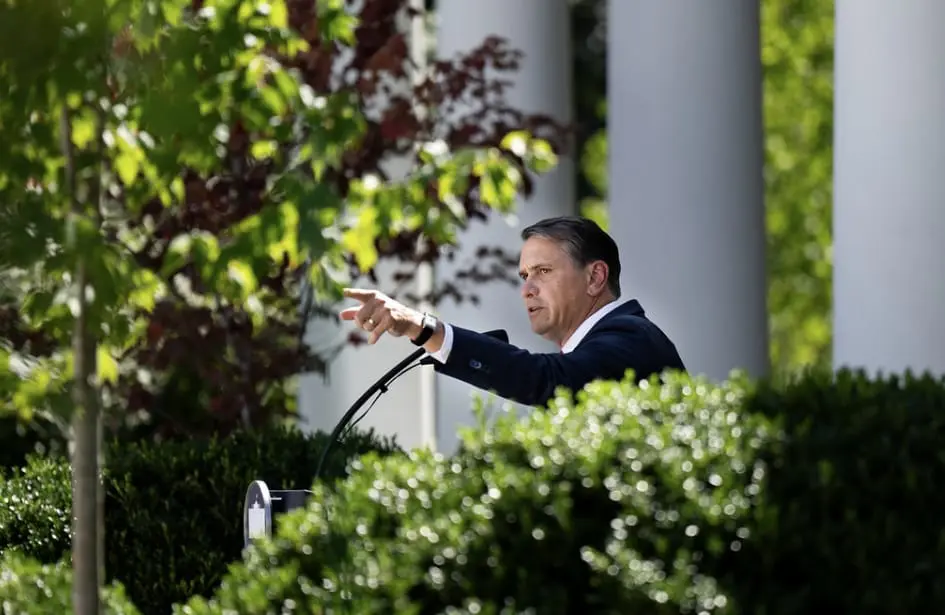
Republicans could lose their edge in the 2026 midterms unless they deliver real wage growth for middle-income Americans, political analyst Jonathan Draeger argued in a Nov. 11 RealClearPolling piece.


Republicans could lose their edge in the 2026 midterms unless they deliver real wage growth for middle-income Americans, political analyst Jonathan Draeger argued in a Nov. 11 RealClearPolling piece.
Draeger said the GOP’s early advantages under President Donald Trump are fading as working Americans fail to feel the benefits of a growing economy. He pointed to early polling showing that once gave Trump a clear edge on three issues central to his 2024 victory — foreign policy, immigration, and inflation — but said more recent surveys suggest voters have grown less confident in his economic leadership, even as those issues remain top concerns.
An October 2024 Economist/YouGov poll found one in four respondents cited inflation and prices as their top issue. Thirteen percent said it was immigration, and 11% named jobs and the economy. In the same survey, former Vice President Kamala Harris led voters’ trust on health care, abortion, and climate change, while Trump led on key foreign policy and economic issues.
“While neither candidate led on every issue, Trump won because his issues were the most important to Americans,” Draeger said.
But nearly a year into his presidency, Trump’s advantage has weakened. In an Oct. 31-Nov. 3, 2025, Economist poll, inflation and prices remained the top concern at 25%, jobs and the economy were second at 13%, health care sat at 12% and immigration dropped to 8%.
Draeger said the decline in concern over immigration — five points overall and 15 points among Trump supporters — likely reflects the administration’s early success in closing the border and deporting hundreds of thousands of illegal immigrants.
Economic confidence, by contrast, has not kept pace with Trump’s early momentum on immigration. Draeger noted that Trump’s approval rating on the economy (-13.8) now trails his overall approval (-11), according to RealClearPolitics Average. The disapproval persists even though inflation has held near 3% for more than a year and a half, and GDP grew 2% year over year in both the first and second quarters of 2025 – figures that typically indicate a stable economy, he said.
But a clearer view of how Americans are faring comes from inflation-adjusted wages, not top-line growth, Draeger noted. From early 2020 to mid-2025, real wages rose only about 2.5%, while inflation-adjusted GDP climbed roughly 15%. The data, he said, show that most economic gains are bypassing the median wage earner and instead concentrating among Americans with major investments in stocks and real estate.
“Since only 10% of Americans own 87% of corporate equities and mutual funds,” he explained, “the people benefiting from the strong stock market, but low wage growth, are too narrow a group to sustain broad political support.”
Draeger argued that the gap between rising GDP and slow wage growth is driving Trump’s push for deportations and higher tariffs, with the White House arguing that restricting foreign labor will eventually lift domestic wages. But so far, Draeger said, those gains “have not appeared.”
With wages stagnant, voters are now split evenly on which party they trust more on the economy, according to the Oct. 31-Nov. 3 Economist poll. Draeger also noted that health care is becoming increasingly important to voters — a major advantage for Democrats, who are trusted on the issue by 44% of voters, compared with just 27% for Republicans.
“The issues that helped Trump win in 2024 are now evenly split between the parties,” Draeger argued, “while Democrats hold an advantage on issues that have become more important to voters.”
Democrats currently lead the RealClearPolitics Generic Congressional Ballot by 4.1 points, their strongest showing since Trump took office.
Unless Republicans can make headway on health care and deliver visible economic gains for working Americans, Draeger warned, “Republicans will face problems in 2026 and beyond.”




Comments