Discover the origins of Catholic schools in the US
Catholic schools as they are known today in the U.S. did not begin as one educational option among many. These schools took shape around a simple but demanding premise.

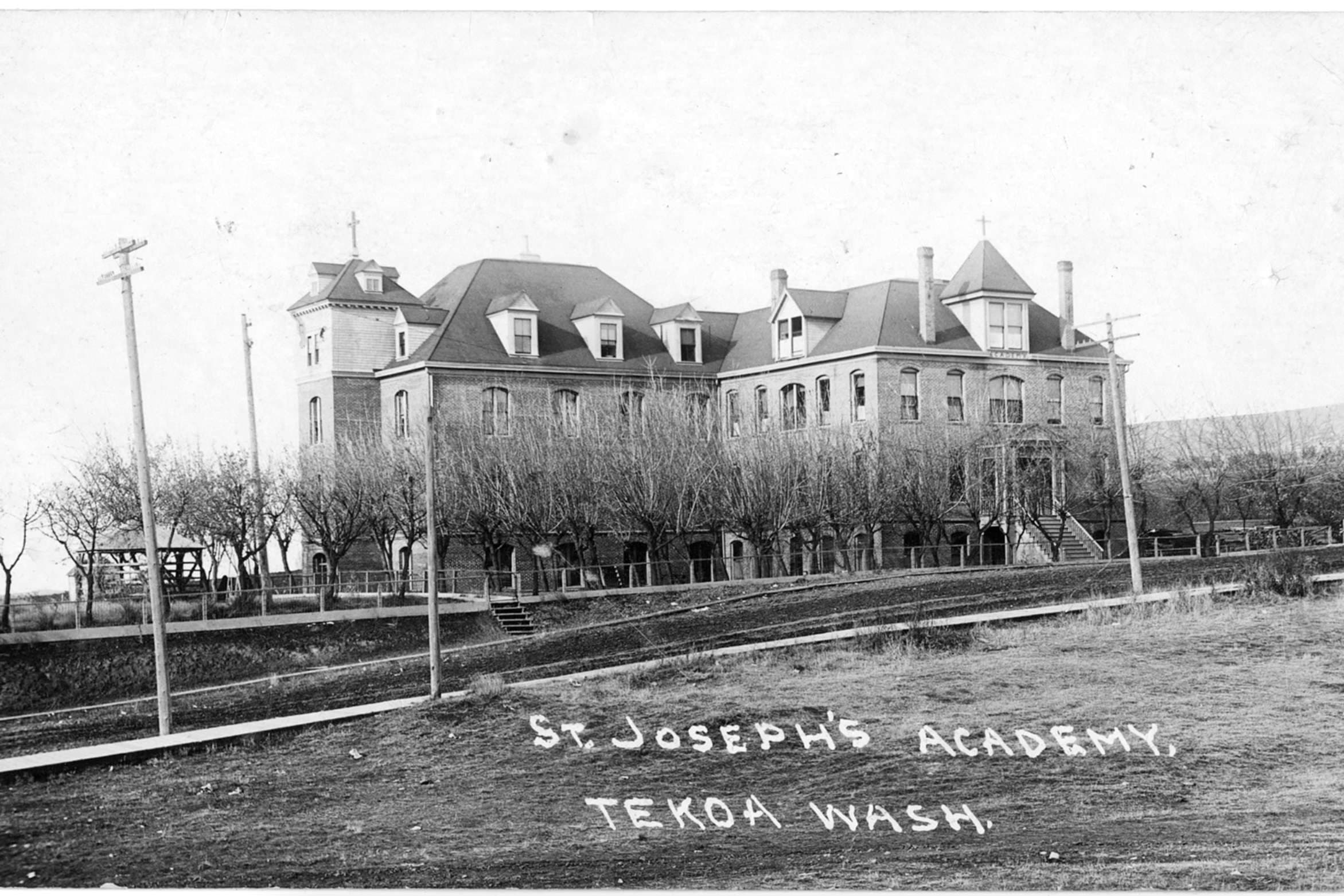
When Americans today debate “school choice” or “religion in education,” the terms of the discussion often rest on a tidy binary: public schools as religiously neutral, religious schools as voluntary alternatives.
Catholic schools as they are known today in the U.S. did not begin as one educational option among many. These schools, which are celebrated Catholic Schools Week Jan. 25-31, took shape around a simple but demanding premise: that children on the margins of American life deserved an education that took their faith seriously, affirmed their dignity, and recognized their place in the nation they were helping to build.
That premise emerged in the early 19th century, amid a social climate shaped by suspicion of immigrants and open hostility toward Catholics.
Common schools
In the 1830s and 1840s, Horace Mann and a circle of Protestant reformers set out to build something new: tax-supported “common schools” that would bind a young nation together through shared moral instruction. They saw these schools as the “great equalizer” places where children of every background could learn the virtues of citizenship and character.
What emerged carried a distinct vision of moral formation. Protestant assumptions about Scripture, morality, and American identity shaped the schools’ curriculum. Catholicism, when it appeared at all, was cast in opposition — foreign, hierarchical, superstitious, and ill-suited to republican life.
Mann and his allies described the system as “nonsectarian,” insisting that the Bible could “speak for itself.” But in practice, the school day followed a recognizably Protestant routine, with King James Bible readings every morning, Protestant prayers to open the session, and hymns to close it.
In Ruth Miller Elson’s review of the era’s most used schoolbooks, widely referenced in academic works on education history, she reveals how consistently Catholicism was framed as the foil to American virtue. The Church was portrayed as tyrannical, the pope as the antichrist, Jesuits as scheming conspirators, and Catholic devotion as idolatrous superstition. History texts described the “Roman Catholic religion” as sealing the Roman Empire’s “degeneracy and ruin,” and in civics and patriotism classes, the message was clear that a true American would never submit to “papal infallibility” or offer allegiance to St. Peter.
Common schools outlined a civil and moral vision shaped by Protestant assumptions and offered it to children as the nation’s shared, universal inheritance.
For Catholic families, their choices were limited to enrolling their children in schools that openly disparaged their faith or keeping them out of school altogether.
A Catholic influx
The crisis unfolded alongside the largest wave of Catholic immigration in American history.
Beginning in the 1840s, the Great Famine drove more than 1.5 million Irish Catholics to American shores, many arriving destitute, malnourished, and grieving. Hundreds of thousands of German Catholics followed, fleeing the failed revolutions of 1848 and deepening economic hardship. By the late 19th century, new waves arrived from southern and eastern Europe. Italians left behind poverty and chronic unemployment in regions such as Sicily and Calabria, while Poles fled landlessness and political repression in territories divided among Russian, Prussian, and Austrian rule, settling largely in the industrial cities of the Northeast and Great Lakes.
Together, Irish, German, Italian, and Polish immigrants transformed American Catholicism from a small minority of roughly 200,000 in 1820 into a community numbering more than 4 million by 1870.
These Catholics entered a society that often met them with suspicion or open hostility. Nativist movements such as the Know-Nothing movement spoke of Catholics as incompatible with American life. In tenement-packed cities, Irish Catholic families faced disease, discrimination, and accusations of clannishness; German Catholics endured prejudice for their language and customs; Italian Catholics were labeled "swarthy,” a racial slur; and Polish Catholics were often stereotyped as clannish or overly insular.
Immigrant families faced pressure to assimilate quickly — and to leave behind the faith, language, and customs that had sustained them.
In response, Catholic parishes, organized around shared languages and cultures, became lifelines. They offered worship in familiar language, stability in unfamiliar cities, and schools that protected faith and identity at a moment when assimilation often came at the cost of both.
The tipping points
The religious tensions embedded in public education reflected a broader national conflict, and it reached a breaking point in two controversies that brought the issue into public view.
In New York, Catholic leaders — led by John Hughes, soon to be archbishop — petitioned for access to public education funds that were already flowing to Protestant-run schools. Hughes argued that Catholic parents were being taxed to sustain schools that daily undermined their children’s faith. The request was denied amid nativist rhetoric. Hughes drew the conclusion that if Catholic children were to be educated without religious compromise, the Church would have to build its own schools and do so without a penny of public money.
Archbishop John Hughes is considered by some the grand architect of what would become the Catholic school system. Responding to the widespread anti-Catholicism of his time, particularly in the existing public schools, Archbishop Hughes built a parallel Catholic school system in New York.
In Philadelphia, the conflict turned deadly. When Bishop Francis Patrick Kenrick, an Irish immigrant himself, asked for an accommodation for Catholic students to be permitted to use their own translation of Scripture — or to be excused from Protestant Bible readings — nativist mobs answered with arson and murder. Bishop Kenrick himself had to flee the city in disguise. Two Catholic churches were burned, at least 20 people died, and thousands of mostly Irish immigrants were displaced.
For Catholic leaders, this became a pastoral crisis. What did it mean to entrust children’s formation to institutions that treated their faith as an obstacle to full belonging?
The Third Plenary Council of Baltimore
The decisive moment came in 1884, at the Third Plenary Council of Baltimore. In the council’s decrees, the establishment of Catholic schools was described as a necessity.
The council warned that common schools, while offering real secular benefits, often placed faith and morals at risk. The council calls for multiplying Catholic schools "till every Catholic child in the land shall have within its reach the means of education.”
It declared that Catholic education was central to the Church’s responsibility to safeguard both the faith and the future of its people. Pastors were expected to establish and maintain a school within two years of the council’s promulgation, and parents were expected to send their children to the new schools.
The council also addressed immigrant realities practically, urging for instruction in newcomers’ native languages — an acknowledgment of the linguistic barriers many families faced, including adults who spoke little to no English and children who were often illiterate in any language. Instruction in native languages was meant to ensure that faith was not lost in translation.
The emphasis was pastoral as much as practical on effective evangelization and what the bishops described as a zeal for souls, writing that “the special Providence of God towards our country, which has made the work and the need so great” has never failed to “inspire our people with a zeal equal to the demand.”
Schools of and for the poor
The response took shape slowly.
The first widespread Catholic schools in America were often built by struggling immigrant parishes, where families, often in tenements and working grueling factory shifts, still managed to contribute spare pennies, haul bricks after work, and volunteer evenings to construct simple structures, frequently in church basements or improvised additions due to limited space and resources.
Parents entrusted their children to the care of religious sisters who lived vows of poverty yet taught with unstinting generosity. Around them, immigrant parishes became the center of communal life. Each community gathered around its own church and school, forming networks that reached beyond Sunday Mass to deliver job leads, child care, a loan when rent was due, and a shared memory of “the old country,” alongside an education that preserved faith and belonging.
By the early 20th century, the mandate from Baltimore had taken root and Catholic schools had become one of the largest educational systems in the country, enrolling millions of children — nearly all of them from immigrant, working-class, and marginalized families who had arrived with almost nothing.
These schools offered a place where faith and American belonging did not pull in opposite directions. They gave children — and, through them, their families — a sense of being recognized rather than tolerated. They opened a path forward: economically, through skills that led to steadier work; socially, through a form of belonging that did not require abandoning the past; and spiritually, through the same faith that had sustained families across oceans and through years of hardship.
The larger ambition
It is tempting to describe Catholic schools as solely a defensive response to anti-Catholicism. But that understates their ambition.
To insist that poor immigrant children deserved an education that honored their faith was, in its time, a radical claim. Catholic schools embodied a conviction that would later be articulated in Catholic social teaching: that education is not merely a public utility but a moral good tied to the full development of the human person.






Comments