Federalist op-ed: Trump could fulfill 3 campaign promises by restoring guardrails on abortion pills
A recent Federalist op-ed argued that President Donald Trump could follow through on several campaign pledges by restoring federal safeguards on the chemical abortion drug mifepristone.

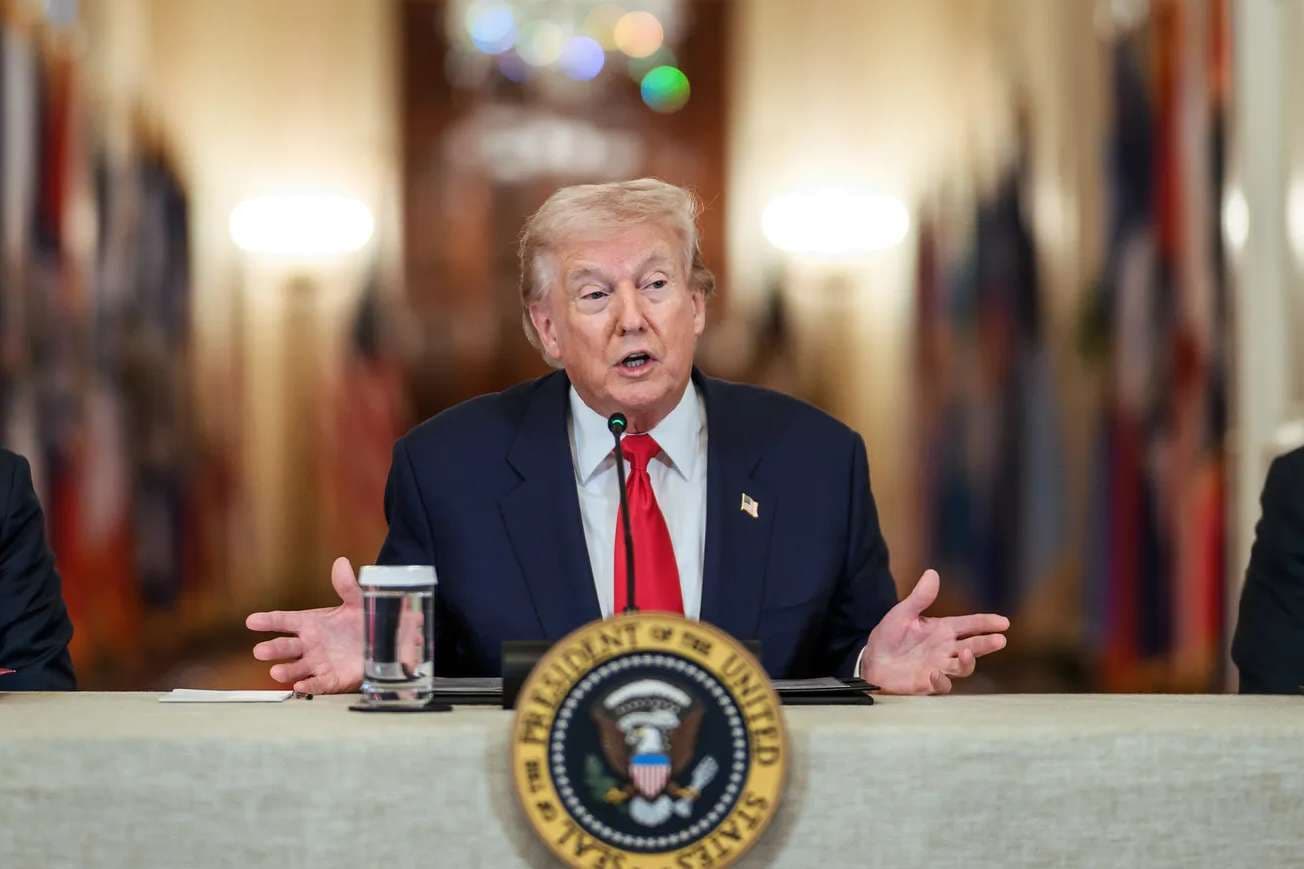
A recent Federalist op-ed argued that President Donald Trump could follow through on several campaign pledges by restoring federal safeguards on the chemical abortion drug mifepristone.
Ryan Anderson, president of the Ethics and Public Policy Center, and Jamie Bryan Hall, the center’s director of data analysis, argued in a March 10 article that reinstating the Food and Drug Administration’s (FDA) in-person dispensing requirement for the drug would reverse Biden-era changes they say increased health risks for women.
As Zeale News previously reported, the FDA loosened safety protocols for the drug under the Biden administration, allowing mifepristone to be prescribed via telemedicine and mailed to patients.
According to the op-ed, after the policy shift, serious adverse events rose from 10.15% to 11.50%, and the rate of women who took the abortion drug during ectopic pregnancy rose by more than 50%. When taken during an ectopic pregnancy — where the unborn child implants in the woman’s fallopian tube rather than the uterus — the abortion pill can be deadly.
“The in-person visit was essential to determine the age of the unborn child, rule out an ectopic pregnancy, and ensure the woman was not being coerced into the abortion,” Anderson and Hall wrote.
Without in-person screening, there is “no way to ensure the unborn baby hasn’t grown so large that chemical abortion is unsafe for the mother, no way to ensure the unborn baby isn’t implanted outside the uterus where using chemical abortion drugs could prove deadly to the mother, and no way to ensure it’s the mother who is voluntarily requesting the chemical abortion drugs and not a boyfriend seeking the pills to secretly and coercively poison her,” the authors argued.
The piece outlined three campaign promises Trump could fulfill by restoring the requirement for in-person doctor visits before prescribing abortion pills.
First, the policy would support the administration’s “Make America Healthy Again” agenda by ensuring pregnant women are properly protected from the potentially harmful effects of the drug.
“You can’t make America healthy with a pill that causes 1 in 9 women who take it to experience a serious adverse event,” Anderson and Hall wrote.
Second, they noted that Trump promised to undo misguided Biden-era policies and argued that the loosened FDA regulations are one such example. The removal of in-person visits was a “terribly misguided” policy that the Biden administration implemented using COVID-19 as an “excuse,” they argued. The policy “needs to be rectified.”
Third, they contended that restoring the safeguard would reinforce Trump’s pledge to leave abortion policy to the states.
“[Y]ou can’t leave abortion to the states when a citizen in Texas or Florida can get around their pro-life laws by going on the internet and getting abortion pills in the mail from California or New York,” Anderson and Hall wrote. “And anyone can get these deadly drugs online and in the mail, which allows for the coercive abortions we’ve already seen.”
The op-ed echoed calls from other pro-life advocates who have repeatedly urged the Trump administration to reinstate stricter safeguards on the abortion drug. As proof of the drug’s danger, many activists have pointed to cases in which women were allegedly given abortion pills without their knowledge to kill their unborn child.
At the same time, the Trump administration has faced criticism and questions from many pro-lifers over its recent legal actions. On March 6, the Department of Justice (DOJ) asked a court to dismiss or pause a pro-life lawsuit filed by Missouri, Idaho, and Kansas that sought to reinstate safety restrictions on mifepristone, as Zeale News previously reported.
The DOJ made a similar request Jan. 27 in a pro-life lawsuit brought by Louisiana. If those states ultimately prevail in either case, earlier FDA safeguards — including multiple in-person doctor visits and a ban on mail-order distribution of mifepristone — would likely be reinstated nationwide.
The administration has also said the FDA is conducting a safety review of mifepristone but indicated in January that the review could take a year or more. In September 2025, the FDA quietly approved another generic version of mifepristone.





Comments