HHS announces $100M investment aimed at homelessness, addiction recovery
The Department of Health and Human Services (HHS) announced Feb. 2 a $100 million investment in a new federal effort aimed at addressing “long-standing homelessness issues, fight opioid addiction, and improve public safety” as the Trump administration continues to reorient federal substance-use policy around treatment that “emphasizes recovery and self-sufficiency.”

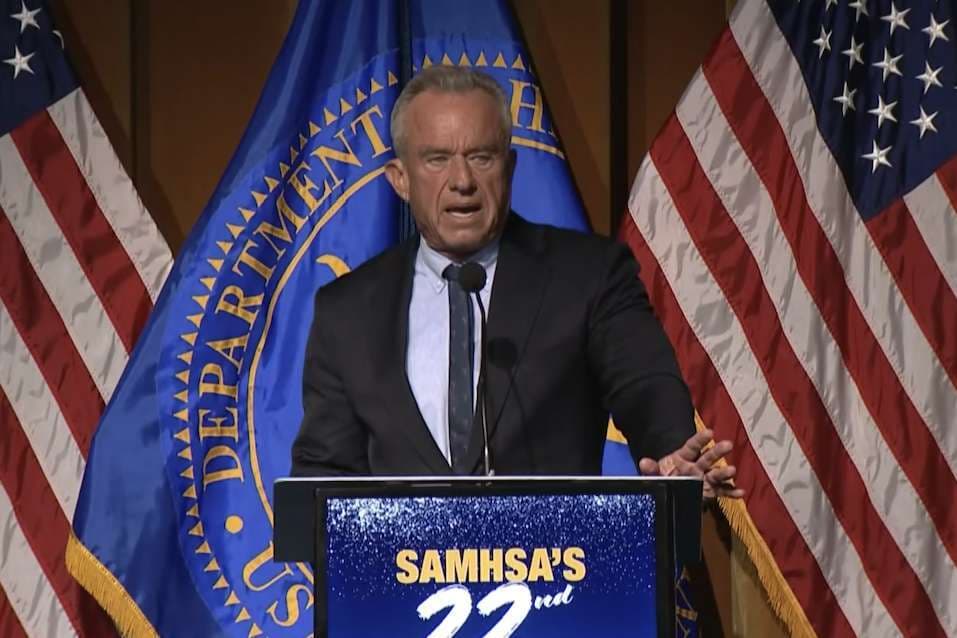
The Department of Health and Human Services (HHS) announced Feb. 2 a $100 million investment in a new federal effort aimed at addressing “long-standing homelessness issues, fight opioid addiction, and improve public safety” as the Trump administration continues to reorient federal substance-use policy around treatment that “emphasizes recovery and self-sufficiency.”
HHS Secretary Robert F. Kennedy Jr. said in the release the funding will strengthen prevention, expand treatment, and carry out the Trump administration’s Great American Recovery initiative, a program launched following the executive order President Donald Trump signed Jan. 29.
“The centerpiece of this plan is a $100 million investment to solve long-standing homelessness issues, fight opioid addiction, and improve public safety by expanding treatment that emphasizes recovery and self-sufficiency,” HHS said in the release.
The funding will support the Safety Through Recovery, Engagement, and Evidence-based Treatment and Supports Initiative (STREETS), which the department said will fund “targeted outreach, psychiatric care, medical stabilization and crisis intervention” and help people experiencing homelessness and addiction find stable housing “with a clear focus on long-term recovery and independence.”
“Addiction begins in isolation and ends in reconnection,” Kennedy said. “Thanks to the leadership of President Trump, we are bringing Americans suffering from addiction out of the shadows and back into community.”
Kennedy announced the initiative at Prevention Day, held Feb. 2, which HHS described as “the largest government-sponsored gathering dedicated to advancing the prevention of substance-use,” hosted by the Substance Abuse and Mental Health Services Administration, a division of HHS.
In the release, the department framed the initiative as a break from prior federal policy, calling Biden-era approaches “misguided” and saying they failed to stem “the tide of death, addiction, homelessness, and crime in American communities.” HHS criticized policies focused on “harm reduction, supporting housing first, and other strategies that enabled future drug use,” saying they were “never intended to support people in their recovery to lead productive lives in their communities.”
According to SAMHSA survey data cited by the department, substance-use disorder among people ages 12 and older rose from 7.4% in 2019 to 16.8% in 2024. Nearly 8 in 10 people with a substance-use disorder in 2024 did not receive treatment, HHS said.
Kennedy also announced a $10 million Assisted Outpatient Treatment grant program to support adults with serious mental illness. The program is a civil court-ordered, community-based outpatient treatment option for individuals who are unable to engage with conventional care and are “unlikely to be able to live safely in their community,” according to HHS.
The announcement follows Trump’s executive order, “Ending Crime and Disorder on America’s Streets,” signed in July 2025, which directed SAMHSA grants toward “evidence-based substance-use disorder programs with proven results” and supported outpatient treatment aimed at moving people “off the streets and into stable housing and support networks.”
HHS said SAMHSA awarded more than $45 million in supplemental funding in September 2025 to State Opioid Response program recipients, focusing on sober and recovery housing for young adults.
The STREETS initiative and assisted outpatient treatment grants were announced alongside $319 million for community mental health services and $475 million for substance-use prevention, treatment and recovery programs, the department said.
SAMHSA and the Administration for Children and Families plan to issue guidance emphasizing that faith-based organizations can participate in federal programs, HHS announced, citing Trump’s February 2025 statement establishing the White House Faith Office. The statement said faith-based entities should be allowed “to compete on a level playing field for grants, contracts, programs, and other Federal funding opportunities.”


Comments