Republican senators push bill to block visas for religious persecutors abroad
A group of Republican senators is backing legislation that would bar foreign individuals involved in religious persecution from obtaining U.S. visas.

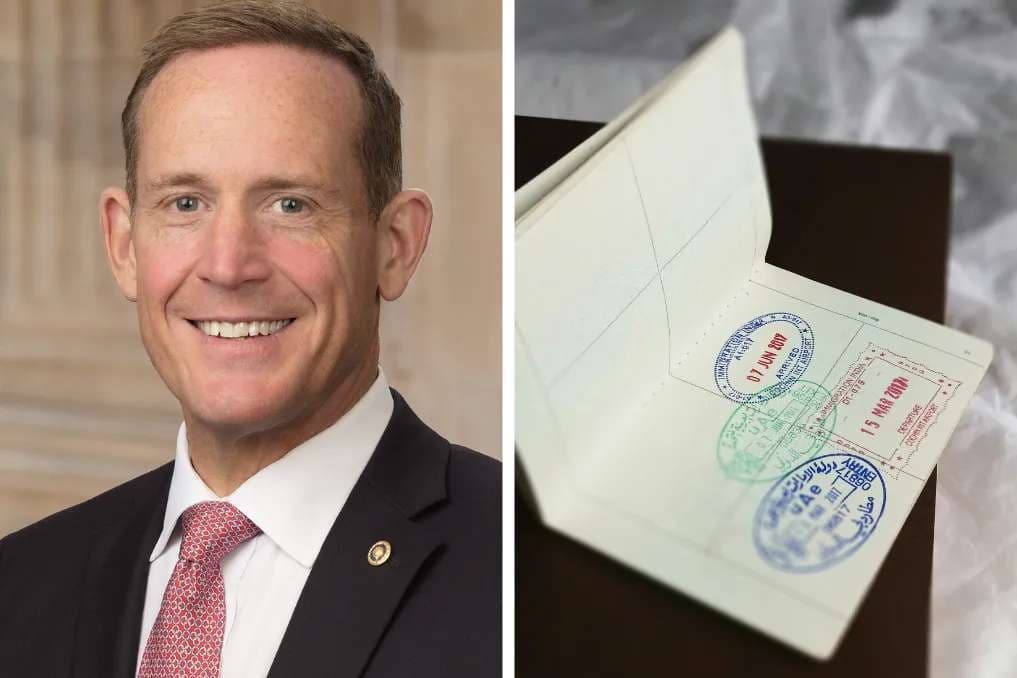
A group of Republican senators is backing legislation that would bar foreign individuals involved in religious persecution from obtaining U.S. visas.
The Banning Perpetrators of Religious Persecution Act of 2026 (S.3679), introduced Jan. 15 by Republican Sen. Ted Budd of North Carolina, would amend the Immigration and Nationality Act to deny visas to individuals who have “directed, authorized, significantly supported, participated in, or carried out violations of religious freedom.”
Under the bill, an individual would be deemed inadmissible to the U.S. if he or she meets one of two criteria: while serving as a foreign government official, the person was responsible for particularly severe violations of religious freedom; or, at any time while outside the U.S., the person directed, authorized, significantly supported, or participated in violations of religious freedom.
The secretary of state and consular officers would make determinations during the visa process, based on credible evidence such as State Department reports. The bill also requires that the names of individuals found inadmissible be publicly posted online in most cases.
Several Republican senators have signed on as cosponsors of the bill, including Sens. Marsha Blackburn of Tennessee, Ashley Moody of Florida, Tom Cotton of Arkansas, Jim Banks of Indiana, John Kennedy of Louisiana, James Lankford of Oklahoma, and Ted Cruz of Texas. The measure has been referred to the Senate Judiciary Committee.
The legislation would build on a December 2025 directive from Secretary of State Marco Rubio to deny entry to those who have orchestrated or enabled religious violence abroad, including non-state actors such as militia leaders.
In a March 23 statement, the American Center for Law and Justice (ACLJ) highlighted the legislation, praising it as a measure responding to the “millions of believers” across the world who “face violence, imprisonment, and intimidation simply because they worship according to their conscience.”
“The principle behind this legislation is straightforward,” the group said. “People who violate religious liberty should not benefit from the freedoms they deny to others.”
The ACLJ also sent a March 18 letter to Budd expressing its support for the measure and thanking him for his leadership.
“When the United States takes concrete steps to defend religious freedom, it sends a powerful message to the world: persecution will not be ignored, and those who participate in it will face real consequences,” ACLJ wrote to Budd. “That moral clarity is essential at a time when religious believers across the globe are increasingly targeted for violence, discrimination, and imprisonment.”






Comments