Supreme Court strikes down majority of Trump tariffs
The Supreme Court on Feb. 20 blocked President Donald Trump’s use of an emergency law to impose sweeping tariffs on imports from nearly every U.S. trading partner, ruling that he exceeded his authority. Hours later, Trump announced that he would sign an executive order imposing a 10% “global tariff” that will be “over and above our normal tariffs.”

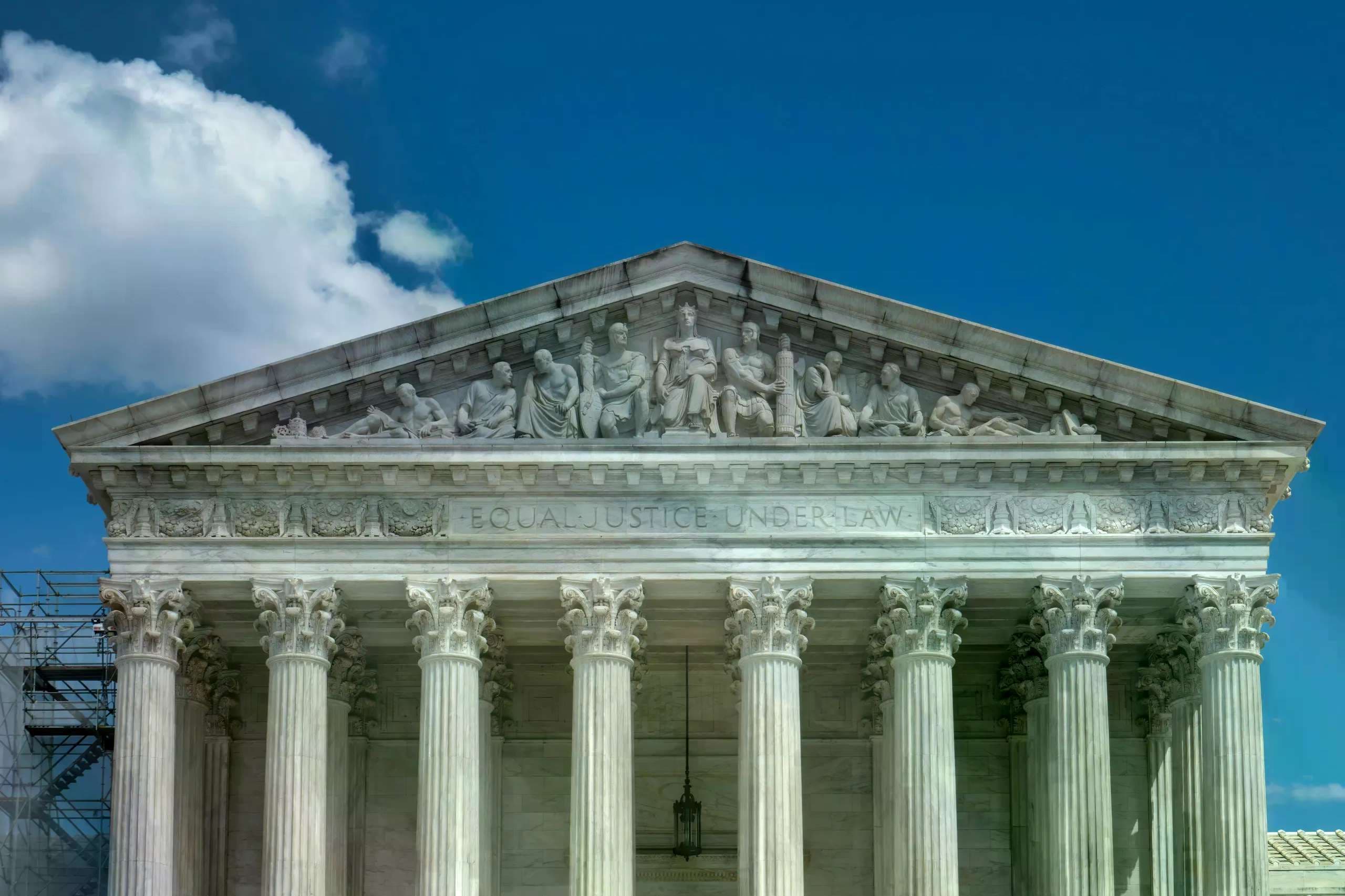
The Supreme Court on Feb. 20 blocked President Donald Trump’s use of an emergency law to impose sweeping tariffs on imports from nearly every U.S. trading partner, ruling that he exceeded his authority. Hours later, Trump announced that he would sign an executive order imposing a 10% “global tariff” that will be “over and above our normal tariffs.”
In the 6-3 decision, the justices held that the International Emergency Economic Powers Act (IEEPA) does not authorize the president to impose tariffs, which they said are the province of Congress alone.
“The Framers gave that power to ‘Congress alone’ — notwithstanding the obvious foreign affairs implications of tariffs,” Chief Justice John Roberts wrote for the majority. “And whatever may be said of other powers that implicate foreign affairs, we would not expect Congress to relinquish its tariff power through vague language, or without careful limits.”
The 1977 law allows the president to “regulate” imports in response to national emergencies that pose an “unusual and extraordinary” threat. But Roberts rejected Trump’s reliance on two words in the statute — “regulate” and “importation” — to justify what Roberts described as “independent power to impose tariffs on imports from any country, of any product, at any rate, for any amount of time.” Those two words, Roberts wrote, “cannot bear such weight.”
Justices Sonia Sotomayor, Elena Kagan, Neil Gorsuch, Amy Coney Barrett, and Ketanji Brown Jackson joined the majority opinion.
Dissenting opinion
Justice Kavanaugh, joined by Justices Clarence Thomas and Samuel Alito, dissented. In a 63-page opinion, Kavanaugh argued that the majority's view ignores historical precedent and could hinder presidential responses in foreign affairs.
“[T]he judiciary’s more limited role is to neutrally interpret and apply the law. The sole legal question here is whether, under IEEPA, tariffs are a means to ‘regulate … importation,’” Kavanaugh wrote. “Statutory text, history, and precedent demonstrate that the answer is clearly yes: Like quotas and embargoes, tariffs are a traditional and common tool to regulate importation.”
Kavanaugh also warned that the ruling could carry significant economic consequences.
“The United States may be required to refund billions of dollars to importers who paid the IEEPA tariffs,” he wrote, “even though some importers may have already passed on costs to consumers or others.”
Beginning in February 2025, Trump declared a national emergency over fentanyl trafficking and imposed tariffs on Canada, China, and Mexico. He later cited a trade deficit emergency to impose reciprocal tariffs on dozens of other countries.
According to The Hill, some small businesses and a group of Democrat-led states that said they were affected by the tariffs quickly challenged the measures, arguing that IEEPA does not authorize the president to impose broad-based tariffs. Lower-court rulings had been stayed while the case moved to the Supreme Court, allowing the government to continue collecting the tariffs during the appeals process.
The high court did not address whether or how the federal government should issue refunds. According to CNBC, the tariffs were estimated to exceed $200 billion in 2025. The Hill reported that companies nationwide are expected to seek refunds.
The court’s decision does not affect Trump’s sector-specific tariffs on products such as steel, aluminum, and copper that were enacted under separate statutory authorities.
Trump’s response
Trump had described the case as one of the most important in American history and warned that a ruling against his administration would harm the economy. He has argued that the deep and “sustained” trade deficits constitute a national emergency to trigger executive authority under IEEPA. During a Feb. 19 visit to Georgia, he defended the tariffs, saying that “the language is clear that I have the right to do it as President.”
“I have the right to put tariffs on for national security purposes, countries that have been ripping us off for years,” he added. “You know what they were doing? They were using tariffs.”
After the court issued its decision, Trump sharply criticized the ruling at a press conference, calling it “deeply disappointing” and saying he is “ashamed of certain members of the court” for “not having the courage to do what’s right for our country.” He said he will now pursue “alternatives” to tariffs under emergency law to “replace the ones that the court incorrectly rejected.”
“Foreign countries that have been ripping us off for years are ecstatic,” Trump said, later adding, “It’s my opinion that the court has been swayed by foreign interests and a political movement that is far smaller than people would ever think.”
He also referred to the “Democrats on the court” as “against anything that makes America strong, healthy, and great again. They also are, frankly, a disgrace to our nation.”
Trump then announced that he would sign an executive order within hours to impose a temporary 10% tariff on all nations under Section 122 of the Trade Act of 1974. The provision allows the president to institute a “temporary import surcharge” of up to 15% for 150 days to address “large and serious” U.S. balance-of-payment deficits.
“And we're also initiating several Section 301 and other investigations to protect our country from unfair trading practices of other countries and companies,” he said, referring to a clause of the Trade Act that allows the U.S. to investigate and respond to foreign trade practices that violate trade agreements or unreasonably burden U.S. commerce.




Comments