Trump admin orders green card applicants living in U.S. to leave and complete applications from abroad
The Trump administration on May 22 directed U.S. immigration officials to sharply limit the ability of temporary visa holders to obtain green cards while remaining in the United States, requiring most applicants to leave and complete the process through U.S. consulates in their countries of origin.

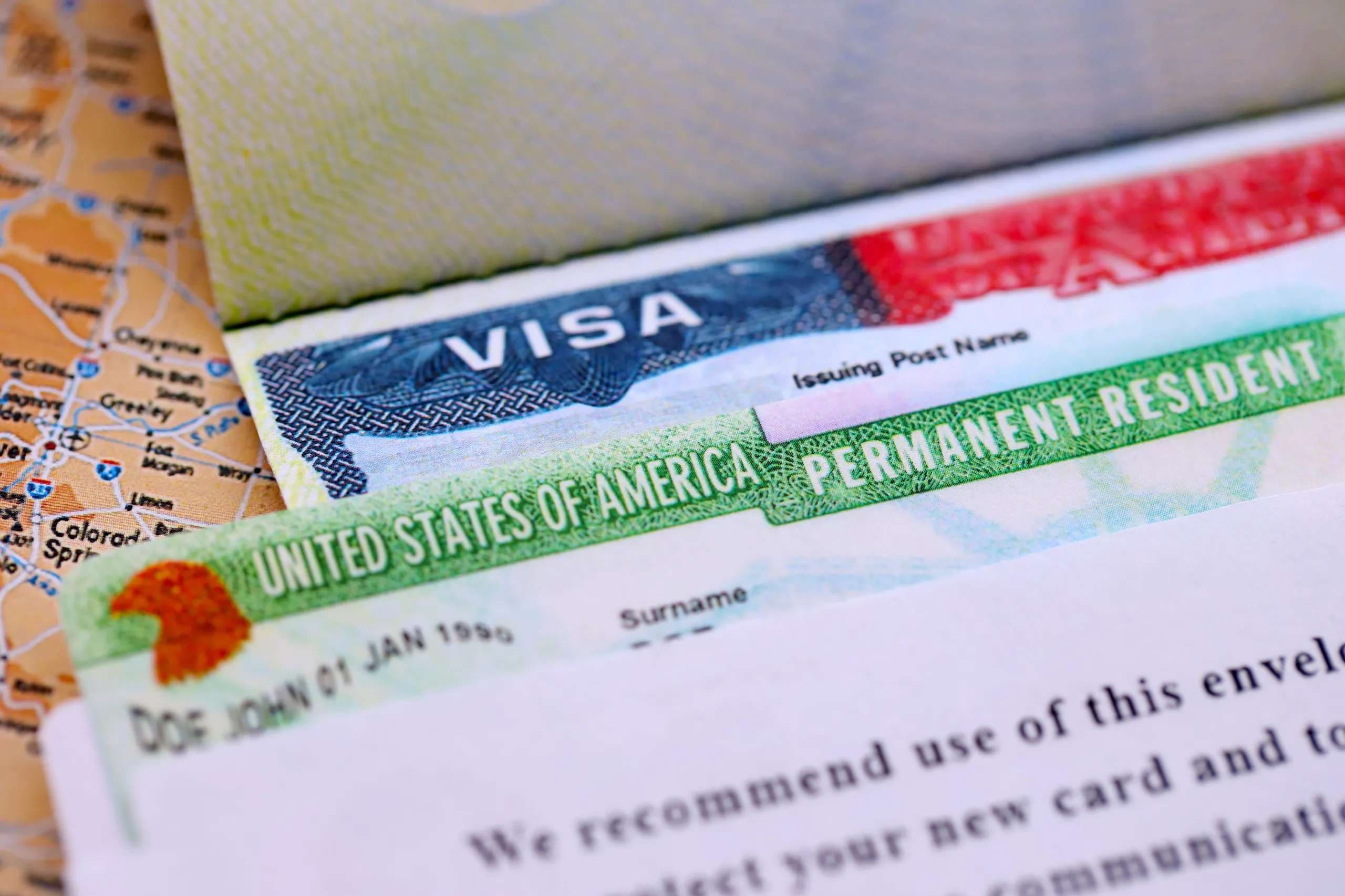
The Trump administration on May 22 directed U.S. immigration officials to sharply limit the ability of temporary visa holders to obtain green cards while remaining in the United States, requiring most applicants to leave and complete the process through U.S. consulates in their countries of origin.
U.S. Citizenship and Immigration Services (USCIS) announced the change in a policy memorandum that describes adjustment of status — the process allowing eligible immigrants already in the U.S. to obtain permanent residency without departing — as "a matter of discretion and administrative grace" and an "extraordinary relief" from the normal visa process.
"We're returning to the original intent of the law to ensure aliens navigate our nation's immigration system properly," USCIS Spokesman Zach Kahler said. "From now on, an alien who is in the U.S. temporarily and wants a Green Card must return to their home country to apply, except in extraordinary circumstances. This policy allows our immigration system to function as the law intended instead of incentivizing loopholes."
The policy directs USCIS officers to favor consular processing — in which immigrants apply for permanent residency at U.S. embassies or consulates abroad — over in-country applications filed by people currently on temporary visas. The move will affect students, temporary workers, tourists, and others.
The six-page memorandum argues that Congress always intended temporary visitors to depart after their authorized stay and that routine use of adjustment of status has allowed applicants to bypass the traditional consular visa system.
"Nonimmigrants, like students, temporary workers, or people on tourist visas, come to the U.S. for a short time and for a specific purpose," Kahler said. "Their visit should not function as the first step in the Green Card process."
One of the most significant practical implications of the policy is that meeting the basic legal requirements for a green card no longer means it will be granted. Under the new directive, an applicant must not only prove eligibility — for example, having an approved immigrant petition or a qualifying family relationship — but must also actively persuade USCIS that they deserve a favorable exercise of discretion. Merely having a clean record is not considered sufficient.
The memo does not spell out a definitive list of what would qualify as an "extraordinary circumstance" allowing foreigners living in the U.S. on non-immigrant visas to apply without first leaving the country. The document directs officers to weigh factors including an applicant's immigration history, compliance with visa conditions, moral character, and whether granting permanent residency is "in the best interest of the United States."
Applicants with strong equities, such as long-standing U.S. ties, clean records, and no history of status violations, would be in a better position to seek an exception. Those who overstayed visas or worked without authorization would face a more difficult burden.
The change does not apply universally. USCIS acknowledged that certain "dual intent" visa categories, including H-1B specialty worker visas, may still allow applicants to seek green cards without leaving the country. Some other immigrant categories also retain adjustment-of-status protections under existing law. The memo says USCIS will soon issue additional guidance specific to certain visa categories and populations.
The policy took effect immediately, but some immigration attorneys expect it to face legal challenges in federal court.
In the past, the U.S. bishops have consistently affirmed the government’s authority to regulate immigration and maintain an orderly system for the common good, while also expressing concern over policies they say could separate families, create hardships for legal immigrants, and disrupt the lives of students, workers, and families navigating the system in good faith.



Comments