US Embassy to Holy See convenes AI event in Rome, bringing together theologians, policymakers, ethicists
As the ever-developing field of artificial intelligence (AI) continues to raise practical and ethical questions for those in the workforce and beyond, the U.S. Embassy to the Holy See convened an event on “AI and the Future of Work” at the Pontifical Gregorian University in Rome May 5.

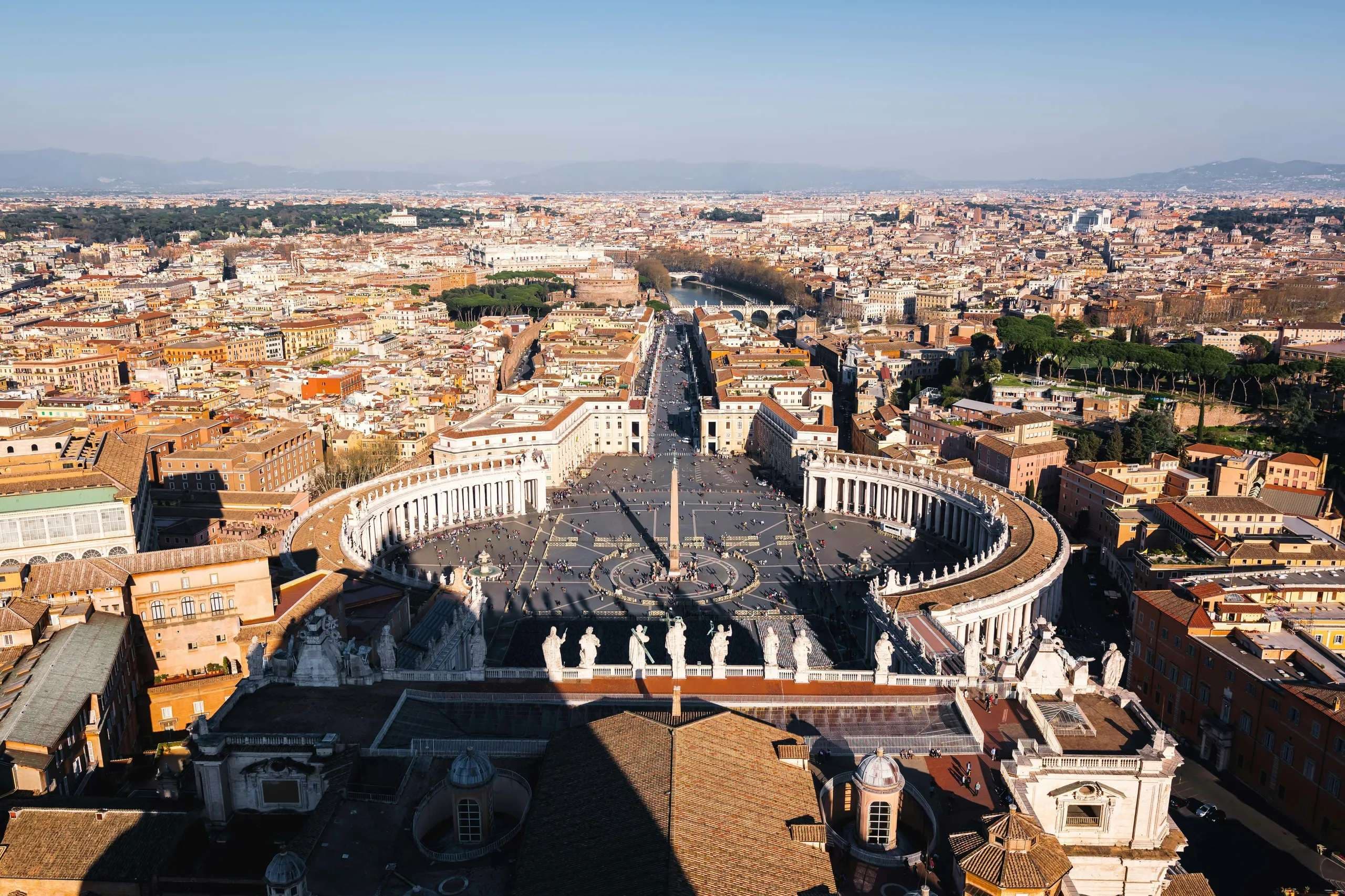
As the ever-developing field of artificial intelligence (AI) continues to raise practical and ethical questions for those in the workforce and beyond, the U.S. Embassy to the Holy See convened an event on “AI and the Future of Work” at the Pontifical Gregorian University in Rome May 5.
Sister Raffaella Petrini, president of the Governorate of Vatican City State, gave the keynote address at the event, stressing that AI has both strong potential and strong implications.
“Choices must be made in order to ensure that this technology serves the interests of all humanity, always prioritizing human and social values above all else,” she said, according to Vatican News.
The event was co-sponsored by the U.S., Taiwan, British, Australian, Canadian, and Japanese Ambassadors to the Holy See, as well as by Georgetown University, the Catholic Institute of Technology, and the Catholic University’s Leonum Institute for AI and Emerging Technology.
Among the other presenters were Anthony CY Ho, Taiwan Ambassador to the Holy See, and Brian Burch, U.S. Ambassador to the Holy See. Noam Yuchtman of the London School of Economics presented on AI economy and the workforce, and George Osborne of OpenAI gave a closing keynote. According to Vatican News, Ho’s presentation was titled “The Global Cooperation and Training Framework Presentation – A Multistakeholder Discussion,” and called attention to AI questions related to ethics and human dignity. Burch’s presentation was a reflection on “Why Are We Here – A Call for Humility.”
Burch said in his address that AI’s impact on the workforce is not “abstract” — the situation is “practical and urgent,” according to Vatican News.
Technological developers, theologians, policymakers, and ethicists were among those in attendance. Beyond the keynote address, the outlet described the event as “a high-level conversation” among the attendants, who focused on the communal responsibility to influence the future of work and AI.
Spotlighting the role everyone has in this changing landscape, Sister Petrini said in her address that AI “will continue to have a profound effect on human actions, including work of course, from a professional and social point of view, but its trajectory is not predetermined as it reflects the choices, values and interests of those who design and implement it."
In her address, Sister Petrini explained that AI will have significant effects on the workforce, saying that it “is actually more than a tool. It is a transforming force.”
“Automation and the increasing use of intelligent systems are reshaping the labor market, creating new opportunities but also new forms of exclusion,” she said.
Sister Petrini also spotlighted both positive and concerning findings from the International Labor Organization’s research on AI on health and safety in the workforce. The ILO’s research report found that “this digitalization and automation can significantly reduce exposure to hazards, prevent workplace injuries, and improve overall work conditions,” thereby improving workplace safety and health and how it is monitored.
However, “potential risks such as excessive surveillance, work intensification, as well as physical and psychosocial challenges may arise,” she added.
In her speech, the president of the Governorate of Vatican City State also spoke on governments’ responsibilities in the era of AI, calling them to regulate and “innovate conscientiously.”
On the individual level, everyone is called to use technology responsibly and with a critical eye, she explained.
She urged everyone to not regard AI with fear, but also to not “accept it blindly.”
“Ultimately, the future lies not in machines, but in the moral choices of humanity,” she said. “We have the capacity and responsibility to decide whether this new technological era, in every field, will usher in an era of greater justice and solidarity or new inequality.”


.jpg&w=3840&q=75)
.jpg&w=3840&q=75)




Comments