‘We’re watching you’: Catholic apostolate confronts settlers on behalf of West Bank Christians
Vatican News recently reported that Israeli settler attacks on Christian Palestinian communities in the West Bank have continued with limited legal accountability and minimal public response from Western governments.

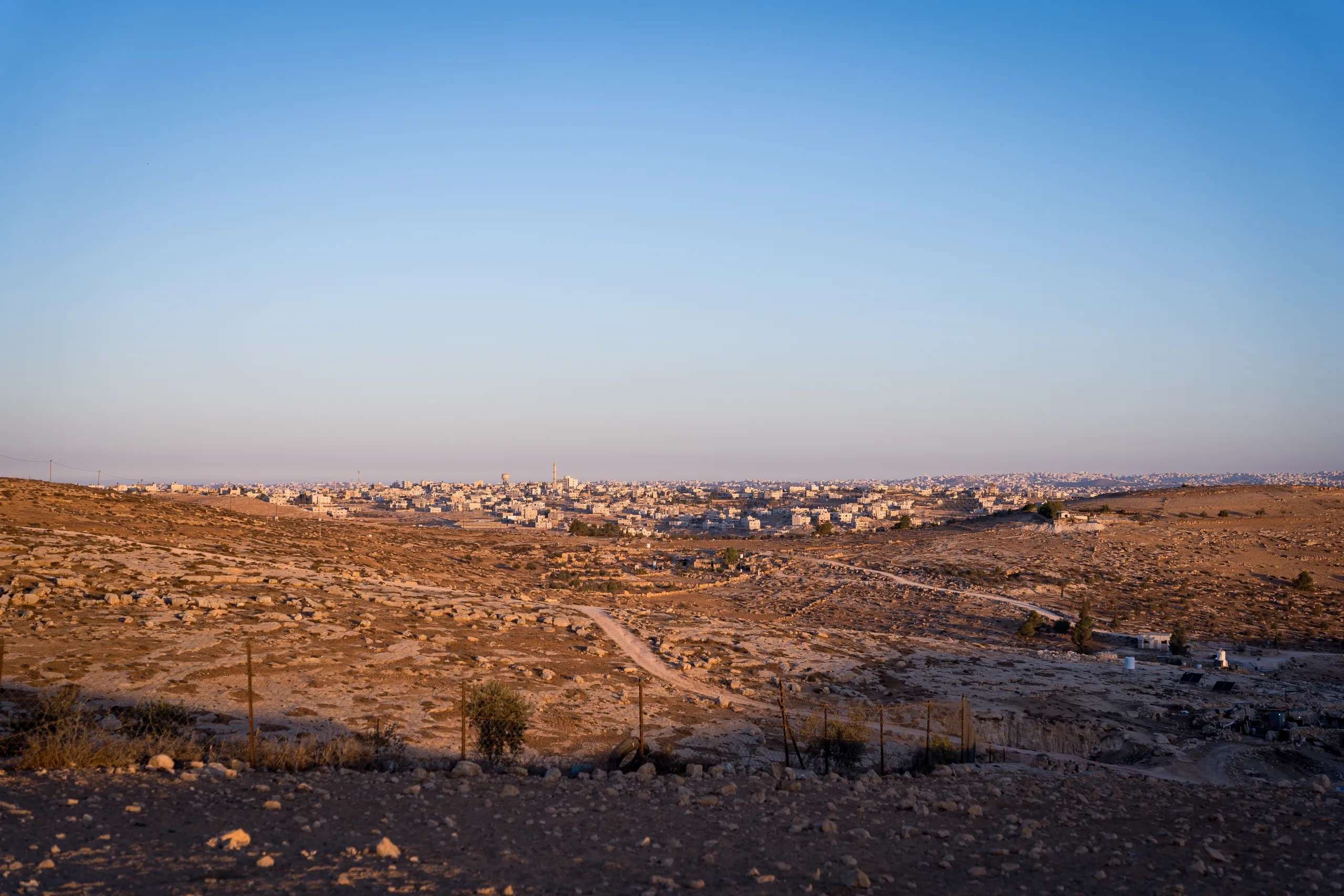
Vatican News recently reported that Israeli settler attacks on Christian Palestinian communities in the West Bank have continued with limited legal accountability and minimal public response from Western governments.
Jason Jones, founder of the Vulnerable People Project (VPP), a U.S.-based Catholic apostolate, told Zeale News in a May 13 phone interview that he is launching a new initiative aimed at drawing the world’s attention to the issue.
The campaign
The Save West Bank Christians initiative is designed to generate pressure that could finally bring the accountability that the Vatican News article warned is lacking. The response has two main prongs: cameras and billboards.
Jones said the organization already has teams on the ground in the West Bank and is sending a dedicated camera crew from the U.S.
"We're sending a camera crew to do nothing but document settler expansion and settler violence," he said. Footage and incident reports will be published through a Substack connected to savewestbankchristians.com, he said, updated in real time whenever attacks occur.
The billboard campaign is tiered. The first to go up in Taybeh this month is timed to the May 24 feast of Mary Help of Christians. It will thank Pope Leo XIV for his many public statements in support of Palestinian Christian victims and against their attackers.
A second set of billboards will carry a more direct message to settlers operating near Christian communities.
"Those billboards are going to be very clear to the settlers," Jones said. Their message will be: "We're watching you as you commit your crimes. You will be held accountable. The world is watching."
The organization is also expanding job creation programs in the West Bank, which include producing prosthetic limbs for children through its Gaza Walks initiative, developing agricultural partnerships, and other efforts aimed at giving Christian families economic reasons to stay.
‘It just comes at a cost’
Jones rejects the premise that the issue is too complicated for ordinary people to understand or act on.
“When people say it’s complicated, what they mean is, ‘I have a tribal identity to one community, and I’m not willing to risk those tribal ties,’” he said.
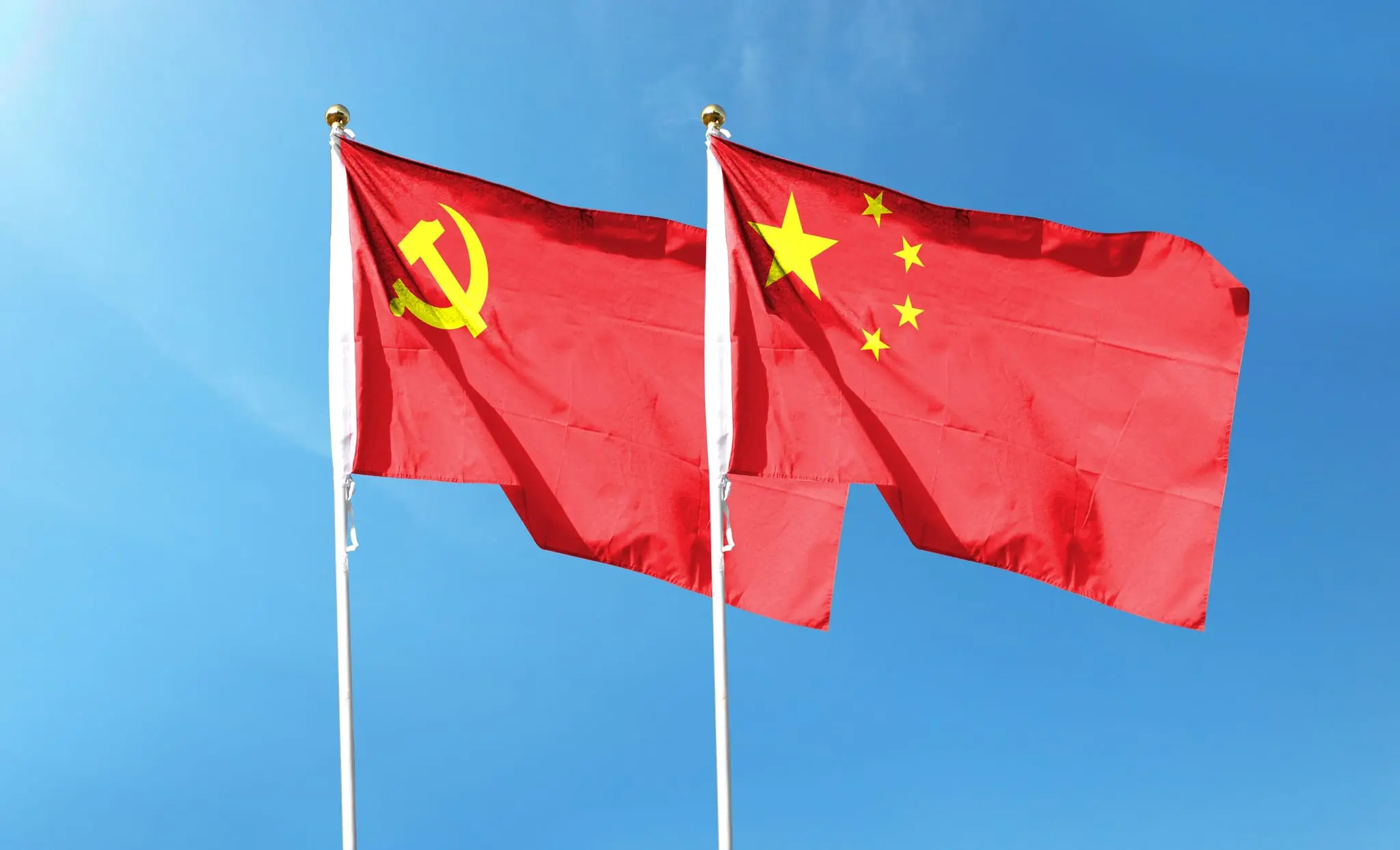
He drew a comparison to his organization’s advocacy work in China, where he said a major donor once told him privately that speaking out against Beijing would cost the organization his support.
“What is complex about disappearing bishops?” Jones said, referring to detained Catholic clergy in China. “Railroading Jimmy Lai? Forced organ harvesting in the Uyghur genocide? It’s not complex. Dealing with Boko Haram is complex. The United States demanding and imposing severe consequences on the State of Israel unless it stops its ruthless campaign of ethnic cleansing in the West Bank, Gaza, and Lebanon — it’s not complex. It just comes at a cost.”
“The only time it comes at a cost is when we have power,” he explained. “And guess what — there’s not much we can do to stop Boko Haram as American citizens. But there is a lot we can do to stop Israel brutalizing the Holy Land Christians.”
Jones believes the political landscape is shifting, particularly among younger Catholics and conservatives.
"I call Gen Z the Gaza generation,” he said. "I suspect that settler violence against the oldest Christian community in the world is going to be one of the most important issues in the next presidential cycle.”
He noted that large Middle Eastern Christian communities in battleground states like Pennsylvania and Michigan make Israeli aggression an electoral issue as well as a moral one. But he was careful to separate the two.
“My goal is not to instrumentalize the suffering of Christians in the Holy Land for electoral success in the U.S.,” he said. “What the Vulnerable People Project seeks to do is amplify the interests of the oldest Christian community in the world. If you want the Catholic vote, then you are going to have to be an advocate for the persecuted Church.”
Much of the Church, he said, has simply forgotten the origin of its faith.
He remarked, “We’ve forgotten those communities that first shared the faith with the world, the faith that eventually reached our ancestors.”
The oldest Christian community on Earth
The Palestinian Christians whom Jones advocates for trace their roots to the earliest days of Christianity in the Holy Land, long before the religion spread across Europe.
“When you walk around salvation history, when you travel across the Middle East, you see the peoples that Abraham left,” Jones said. “I am walking, I’m having dinner with, I’m going to Mass with the descendants of the very first Christians.”
He noted that outsiders often ask Palestinian Christians when their families converted to the faith.
“They’ll say, ‘When we met Jesus,’” Jones said. “Literally.”
Ancient Christian populations across the Middle East have been decimated in recent decades because of war, displacement, and Islamist persecution. In the West Bank, he says, a slower but no less deliberate process is underway.
What settler violence looks like
For a Palestinian Christian farmer in the West Bank, an encounter with Israeli settlers often leaves few immediate avenues for recourse, Jones said.
“You have no options,” he said. “You can’t defend yourself. You’ll be shot dead.”
He cited a report he received the day of the interview that said settlers had recently carried out at least 20 attacks across the West Bank, wounding multiple Palestinians, including a 35-year-old expectant mother and a 65-year-old woman. “Another child died in the West Bank today,” Jones said. “No one knows, and no one cares.”
The violence extends beyond physical attacks. Settlers slaughter farmers’ livestock and destroy homes, Jones said. According to Jones, the Israeli military has repeatedly shot holes in water towers serving Christian communities. He also cited the multiple Israeli bombings of churches in Gaza – including a tank shell strike that wounded the pastor and killed parishioners at Holy Family Catholic Parish last July – and said that Catholic children in Gaza requiring cancer treatment were denied permission by Israel to leave for medical care.
After a wave of settler attacks on the Christian village of Taybeh last year, Greek Orthodox Patriarch Theophilos III and Latin Patriarch Pierbattista Pizzaballa issued a joint statement accusing Israeli authorities of facilitating and enabling the radicals while failing to respond to emergency calls. They described “an intensifying trend of systemic and targeted attacks,” and called them “a direct and intentional threat” to the Christian community and its heritage.
The logic of settlement
To understand why settlements are the primary instrument of displacement requires comprehending both the religious ideology driving extremist settlers and the practical incentive behind it, according to Jones.
On the religious side, he said, some settlers are explicit about their motives.
“The settlers will tell you to your face that Christians, because of our belief that Jesus is God, are ‘adulterers’ and ‘defile the land’ and have to be removed before their Messiah can come,” he said.
Jones described this agenda as “ecclesiacide,” a term he uses to describe what he sees as the deliberate elimination of a Christian presence from its historic homeland.
He cited the recent incidents of Israeli soldiers placing a cigarette in the mouth of a Virgin Mary statue and smashing a crucifix with a sledgehammer in a Christian village in Lebanon as examples of that blatant anti-Christian ideology at work.
But there is also a material dimension. “After the State of Israel, Christians own the most land in the West Bank,” Jones said. To eliminate the Christian presence, in other words, is also to seize enormous amounts of property.
The mechanics of displacement are deliberate, he said. Once a settlement expands into an area, Palestinian homes nearby are demolished. Roads are blocked, turning a 20-minute school commute into a four-hour ordeal. Checkpoints multiply. A newly announced settlement called Shdema, Jones warned, would, if completed, “effectively erase Christians in Bethlehem and Beit Sahour” — two of the most historically significant Christian communities in the world.
'State-sponsored' and consequence-free
Israeli authorities describe most settler violence as the work of a small fringe of extremists or rogue youths, repeatedly condemned by Prime Minister Benjamin Netanyahu, the IDF chief of staff, and other leaders as "nationalist terrorism" or "rioters" who do not represent the settler community or Israeli values.
“If a terrorist organization exists in your country for more than a week, it has state sponsorship,” Jones said, reciting a saying he has encountered in his organization’s work in Nigeria.
He argues the same logic applies in the West Bank, where the young settlers attacking these Christians are being directed and funded by powerful Israelis.
“The youth are just instrumentalized by ideologues,” he said. “I see them as victims as well.”
America’s role
Jones argues that accountability for the situation should not end with the Israeli government. It extends to Washington, as American money and institutions are directly enabling the expansion of settlements, he said.
“If the U.S. wanted this to stop, it would stop,” he said.
“Our taxpayer dollars are going to do the killing,” he said. “American-based NGOs are funding the settlers and recruiting the settlers that then go there and displace the ancient Christian community.”
“The U.S. State Department and President Trump repeatedly say that these settlements are illegal and have to stop,” he said. “But we don’t treat them that way. There seem to be no consequences. The settlements expand and our co-religionists are displaced.”
For American Catholics, Jones says, this creates a degree of moral responsibility.
“If we, as Catholics, put enough pressure on the Trump administration [and] the State Department, this would stop,” he said.
The reason that pressure hasn’t materialized, he says, is a failure of formation.
"It's very hard for Catholics to hear this, especially if they've consumed evangelical media, which so many of us do," Jones said. "We'll listen to evangelical talk radio, or evangelical Christian contemporary music. But all the while, it's indoctrinating us into Zionism."
The effect, he argues, is that a distinctly Protestant theological framework has quietly come to shape the way that many American Catholics see the conflict entirely — leaving them culturally primed to side with Israeli bad actors, and ill-equipped to recognize or respond to what is happening to their fellow Christians in the Holy Land.
Jones reserves particular criticism for Christian Zionism, which he says supports the Zionist extremism that seeks to remove all Christians from the region.
“We’ve never been reminded that there are Catholics in the Holy Land,” he said.
.jpg&w=3840&q=75)


Comments