White House’s ‘annihilationist’ rhetoric ‘numbs our souls,’ theologian warns
Even if President Donald Trump’s threat to annihilate “a whole civilization” is hyperbole to obtain a political goal, the use of such threats is wrong — and harmful for the society watching the threats being made, a theologian and editor of First Things argued April 7.

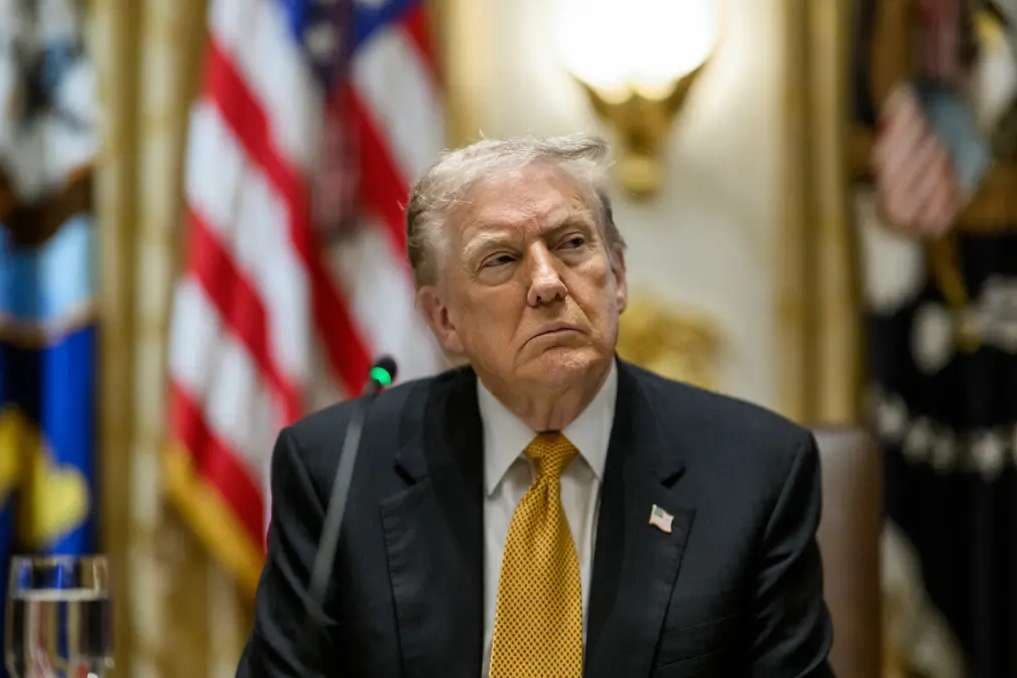
Even if President Donald Trump’s threat to annihilate “a whole civilization” is hyperbole to obtain a political goal, the use of such threats is wrong — and harmful for the society watching the threats being made, a theologian and editor of First Things argued April 7.
“What we say matters. And the way we say it matters,” Russell Ronald Reno wrote in the op-ed. “This is especially true in times of war, when the moral stakes are high. Which is why I’m troubled by the annihilationist rhetoric coming from the White House. It numbs our souls and corrodes our moral sensibilities.”
The article, titled “Ethics of Rhetoric in Times of War,” is written against a backdrop of Reno’s years of moral teaching experience, as he was a theology and ethics professor at Creighton University for 20 years before becoming the editor of First Things.
Over the course of several days — including Easter Sunday — Trump made several statements that continuously escalated his warnings of what the U.S. would inflict on Iran if a deal deadline was not met. Reno said he doubts it is true that this language “means the White House is seriously entertaining the use of nuclear weapons.”
"But talk of annihilation is wrong, even if meant as hyperbole designed to intimidate opponents,” he continued.
He recalled that the Ninth Commandment prohibits lying, bearing false witness, perjury, “and misrepresentation that aims to harm others.” He added that Christian and Jewish traditions have read this commandment in the positive sense to mean that people “have a duty to be truthful, to speak honestly and without guile.”
However, in the political arena, this standard of honesty is at particular risk of being stifled, sidestepped, or disregarded, the editor pointed out. Politicians often exaggerate campaign promises, remain silent about their beliefs on certain matters, or make distorted or crude claims against campaign opponents.
But “heated political rhetoric,” which Reno argued is now pervasive on the left and right, has an effect on politicians and ordinary citizens alike. He warned that it “encourages unsteady souls to consider recourse to political violence” and leads people’s already dulled moral sense to become “further degraded.”
“Our civic imaginations are polluted; our standards are lowered,” he argued.
In wartime, undisciplined and exaggerated rhetoric’s dangers “are far more grave,” he wrote.
Americans should hope for the U.S. to conclude the Iranian war from a good position that secures peace, he wrote, "But it damages our collective moral sense if we are tempted to entertain immoral means toward that end.”
Reno acknowledged that engaging in politics “often requires a serpent-like wisdom” and that some circumstances necessitate guile, noting that it is morally licit for governments to engage in deception during times of war. But political leadership also requires “encouraging virtue and restraining vice,” he wrote.
While this obligation is “severely tempered” or even "overridden at times” in a democratic society where political leaders make concessions to win votes, “times of war are different,” Reno argued.
“Lives are at stake,” he continued. “As the temperature of conflict rises, we are prone to bloodlust. Our moral vision can too easily narrow.”
He concluded by calling on Trump and the President’s colleagues to end their use of “exaggerated and irresponsible rhetoric.”
“From the outset of the war against Iran, the Trump administration has indulged in extreme and sanguinary rhetoric,” Reno wrote. “Its officials imagine that they are intimidating America’s enemies and inspiring the American people. They’re wrong. Their war rhetoric, especially egregious statements about wiping entire civilizations off the face of the earth, degrades the American people and dulls our consciences.”






Comments