Why do Catholics get their throats blessed on Feb. 3?
Each year during the height of cold and flu season, Catholic priests offer a throat blessing after Mass on the feast of St. Blaise.

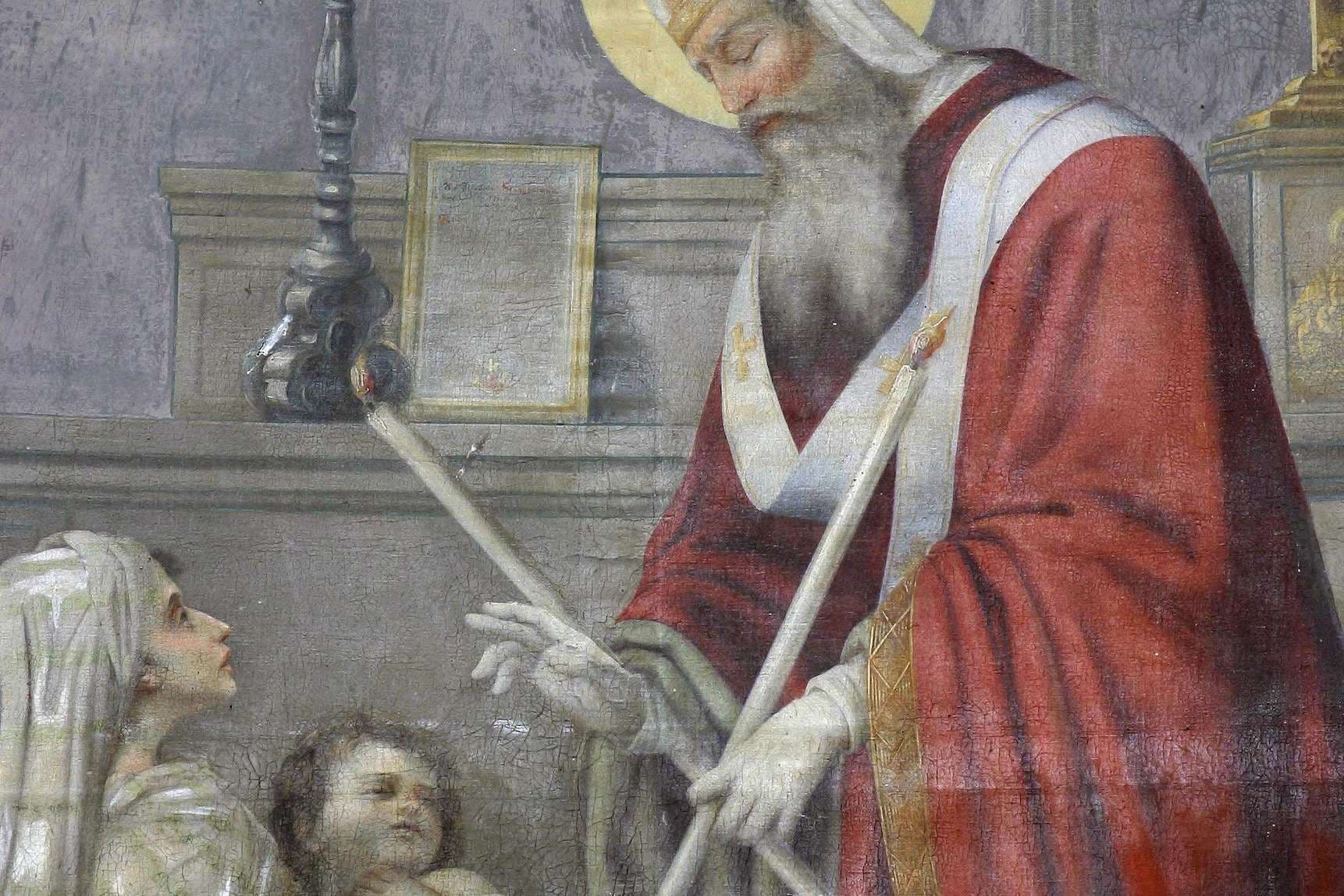
Each year during the height of cold and flu season, Catholic priests offer a throat blessing after Mass on the feast of St. Blaise, touching two candles to the necks of those who come for the blessing. But how did a 4th-century Armenian martyr come to be the patron saint of throat illnesses?
Franciscan Media reports that St. Blaise was martyred in his episcopal city of Sebastea, Armenia, in 316. There are no records about his life from that era, and most of the traditions and legends about his life come from the Acts of St. Blaise, a work written 400 years after his life.
Armenia was part of the Roman Empire. Although the Edict of Toleration legalized Christianity in 311, religious persecution was still rampant in the region.
According to the Acts of St. Blaise, the saint was a faithful bishop who was forced to flee from his episcopal city of Sebastea to the countryside. He lived a secluded life of prayer and befriended the forest creatures. When some hunters were seeking animals to fight in the amphitheater, they came across the cave he was living in. They were astonished to see the bishop surrounded by wolves, lions, and bears sitting peacefully near him while he prayed.
The same hunters kidnapped St. Blaise and brought him to prison because they knew he was a Christian. According to legend, as the hunters were bringing him to prison, St. Blaise miraculously healed a little boy who was choking on a fishbone — at his command, the boy coughed up the bone. This legend is why he became the patron saint of throat illnesses.
St. Blaise was martyred for refusing to sacrifice to the pagan gods. Agricolaus, governor of Cappadocia, first had St. Blaise beaten when he refused. The second time St. Blaise refused, the governor had him hung from a tree and torturers tore his body with iron rakes. After that, he was beheaded.
According to Simply Catholic, on the feast of St. Blaise, the priest may use candles blessed on Feb. 2, the feast of the Presentation of the Lord, also known as Candlemas. The priest says the following blessing: “Through the intercession of St. Blaise, bishop and martyr, may God deliver you free from every disease of the throat, and from every other disease. In the name of the Father and of the Son and of the Holy Spirit.”
The candles are crossed over the faithful’s neck as a symbol of St. Andrew, who was crucified on an X-shaped cross, Simply Catholic adds. The candles are tied with a red ribbon to symbolize St. Blaise’s martyrdom.



Comments