Anniversary commemoration of Auschwitz’ liberation stresses importance of memory
At a ceremony marking the 81st anniversary of Auschwitz’ liberation, speakers emphasized the need for the world to maintain an enduring memory of the Holocaust.
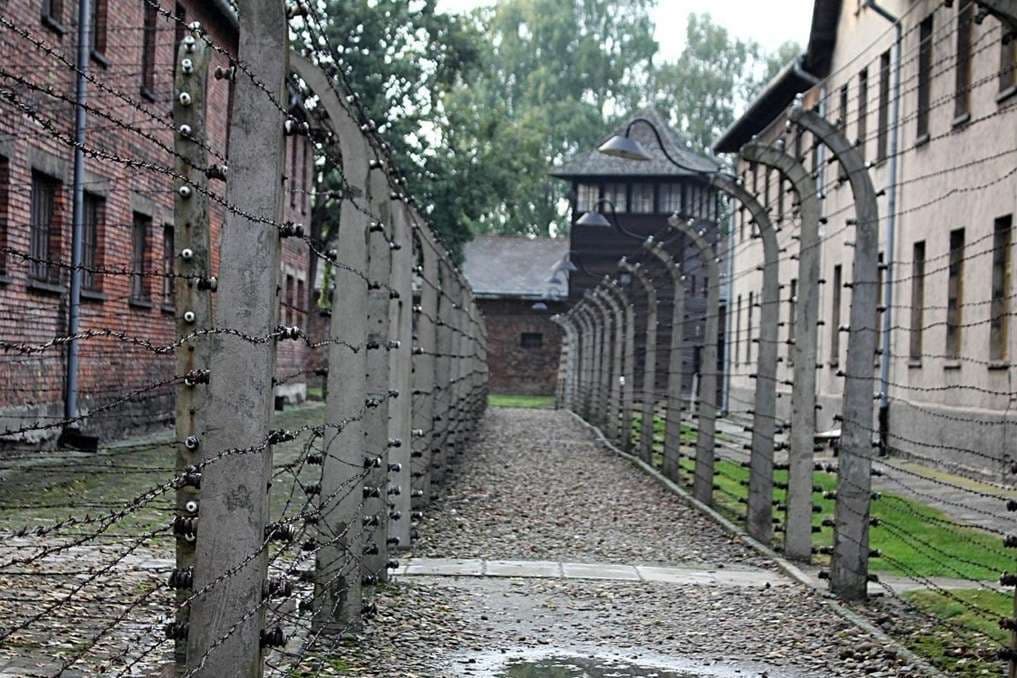
About 7,000 people – the last prisoners at Auschwitz-Birkenau, where the Nazis killed approximately 1.1 million people – were freed on Jan. 27, 1945.
At a ceremony marking that event’s 81st anniversary, speakers emphasized the need for the world to maintain an enduring memory of the Holocaust, and to use that memory to make the world a better place.
“Let memory not be a burden,” Bernard Offen, a concentration camp survivor who gave the main address at the Jan. 27 ceremony, said, according to Vatican News. “Let it become a light that will guide us in the darkness.”
According to Vatican News, Piotr Cywiński, the Auschwitz museum director, also reflected on memory in his address.
“Memory should not be seen as a lesson to be done, but far more as a source of real support and a growth in awareness,” Cywiński said. He explained that survivors speaking out about their experience allows memory to continue to be built and provide strength to both individuals and society.
Offen described his experience in Auschwitz concentration camp, which included seeing his father be sent to his death.
“My father was sent to the left, toward death,” he said. “I was sent to the right. I remember that moment. Our eyes met, and there was the feeling that we were seeing each other for the last time.”
Offen explained that he could not have made it through his imprisonment alone.
“I survived because other people helped me,” he said. “I call them my angels.”
After the war, Offen moved to the U.S. for several decades but eventually returned to his native Poland. He said that he found home and rediscovered a sense of safety in Kraków as an adult.
Offen ultimately struck a hopeful note, encouraging attendees to allow memory to be a guiding light, according to Vatican News.
“We, the witnesses, will soon be gone, but I believe that this light will remain with you,” he said.
.jpg&w=3840&q=75)

Comments