As colleges face mounting enrollment challenges, Catholic University of America bets on faith and flexibility
Amid a national demographic cliff and affordability concerns, CUA’s enrollment chief says Catholic identity remains higher education’s strongest brand.
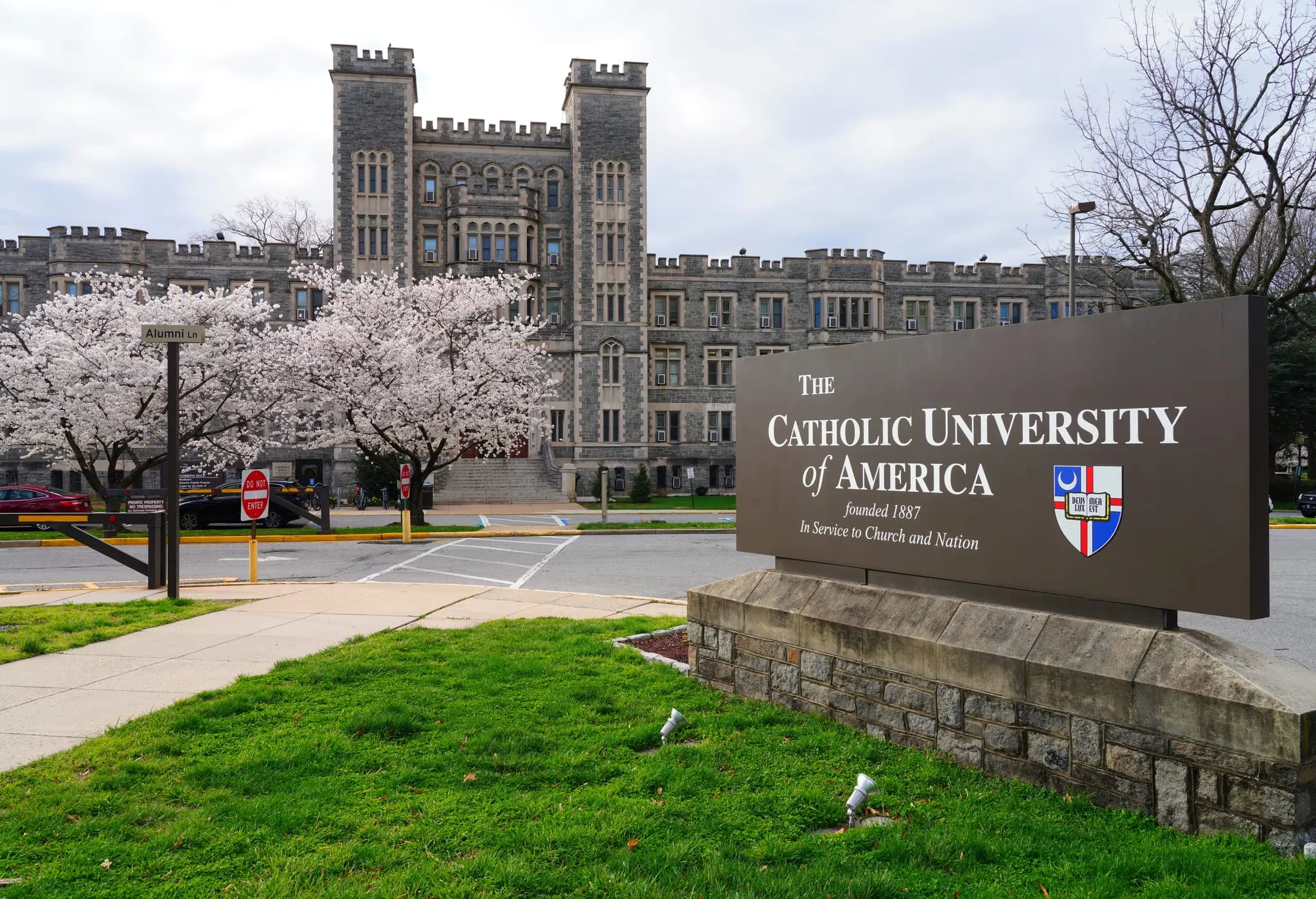
Recent headlines have featured enrollment challenges that are hitting smaller and well-known universities alike. To find out how Catholic schools are faring, Zeale News spoke with the chief enrollment officer for Catholic University of America, who said that private schools with few exceptions are experiencing similar struggles.
Multiple Challenges
The root cause is demographic. Birth rates fell sharply after the 2008 financial crisis, and that smaller generation is now reaching college age. Mark Ciolli, Vice President of Enrollment Management at the Catholic University of America (CUA), said in a Sept. 4 interview with Zeale News that he has seen the effects of the smaller number of potential students affect CUA recruiting.
“I've seen it affect most Catholic institutions that I interact with,” Ciolli said. “I can't speak for all 230-plus [schools], but we talk about it often among ourselves. I think there are certain places in the country that are somewhat insulated from the demographic shift, so in the South and the Southwest, primarily in maybe a few states here and there due to some intrastate movement.”
The Western Interstate Commission for Higher Education projects the pool of traditional-age college students will shrink 13% by 2041. Fewer high school graduates are even choosing college in the first place: 70% went straight to a two- or four-year school in 2016, a rate that had fallen to 62% by 2022, according to federal data.
Politics have also played a role in shaping the enrollment picture for schools that are more reliant on international students. The Trump administration’s tightening of visa rules for students led to a 7% drop in international students studying for the first time at a U.S. college or university in 2025. The sharp pullback in international enrollment has layered on top of the other challenges to place real strain on the financial model many private colleges have relied on for decades.
Affordability and a nationwide reassessment of whether a college degree is worth the debt that many students have to shoulder is factoring into the headwinds as well. Ciolli pointed to the University of Notre Dame’s public pledge to cover full tuition for any family earning under $150,000 a year as evidence that price sensitivity has reached even the most sought-after Catholic institutions.
The seemingly perfect storm of challenges for university enrollment departments is joined by what Ciolli called the “unbundling” of higher education, as certificate programs, employer-sponsored credentialing, and online learning platforms compete directly with the traditional four-year degree.
Mission as the differentiator
To weather the stiff headwinds, CUA is leaning on its Catholic identity, which Ciolli argues “remains higher education’s strongest brand” even as schools have to compete harder on price. But identity alone isn’t enough, he said, and Catholic institutions are increasingly differentiating around specific outcomes as well as mission.
He pointed to CUA’s nursing program as an example of how it is responding. Rather than only offering its well-regarded four-year track, the university introduced an accelerated one-year bachelor’s option for students who already hold a degree in another field, aimed at the real-world nursing shortage. “It’s basically getting an accelerated nursing degree in a year,” he said, and it’s “been a boon for us in enrollment,” while the university still focuses on training nurses to bring Christ’s healing love to their patients and workplaces.
Much of the pressure Ciolli described comes down to “yield pressure” – the gap between the students a college admits and the ones who actually enroll. Students are applying to far more schools than in the past, Common Application data shows, prompting colleges to admit larger shares of their applicant pools to protect against under-enrollment, which in turn gives students more offers, and more financial aid, to weigh against each other. Ciolli said CUA’s answer is to get admitted students on campus and make the case directly for what a Catholic education offers beyond a diploma. “We want to help you live a good life and be a good citizen, and certainly a good Catholic,” he said, contrasting that with what he described as a purely secular, credential-focused approach to college elsewhere.
Looking forward, Ciolli expects yield pressure to keep intensifying industrywide as the applicant pool shrinks and student options multiply, predicting further closures among smaller schools without the financial cushion to absorb the strain.
Whether Catholic colleges settle into a smaller but more differentiated niche or consolidate the way parts of the broader private college sector already are, he said, will likely depend on how well individual schools can make the case that Catholic education is worth its price beyond the credential it confers.



.jpg&w=3840&q=75)

Comments