Bishop Barron: Leave behind 'unhelpful narrative' of president vs pope
Minnesota-based Bishop Robert Barron, a member of the White House Commission on Religious Freedom, said April 20 that distinguishing between the roles of the Church and civil authority during wartime is key to evaluating the discordance between Pope Leo XIV and President Donald Trump.

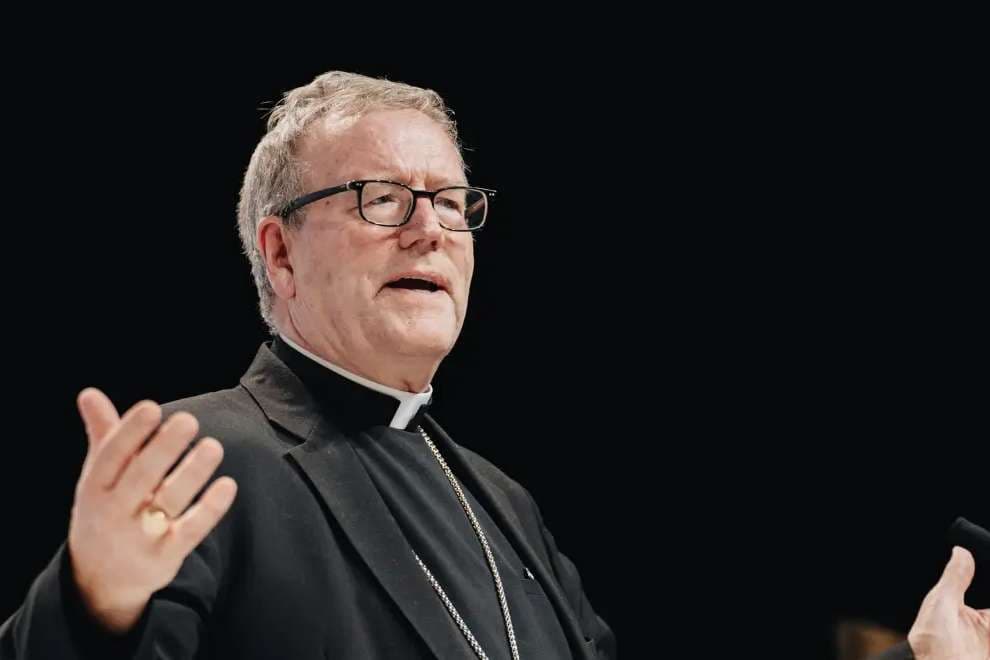
Minnesota-based Bishop Robert Barron, a member of the White House Commission on Religious Freedom, said April 20 that distinguishing between the roles of the Church and civil authority during wartime is key to evaluating the discordance between Pope Leo XIV and President Donald Trump.
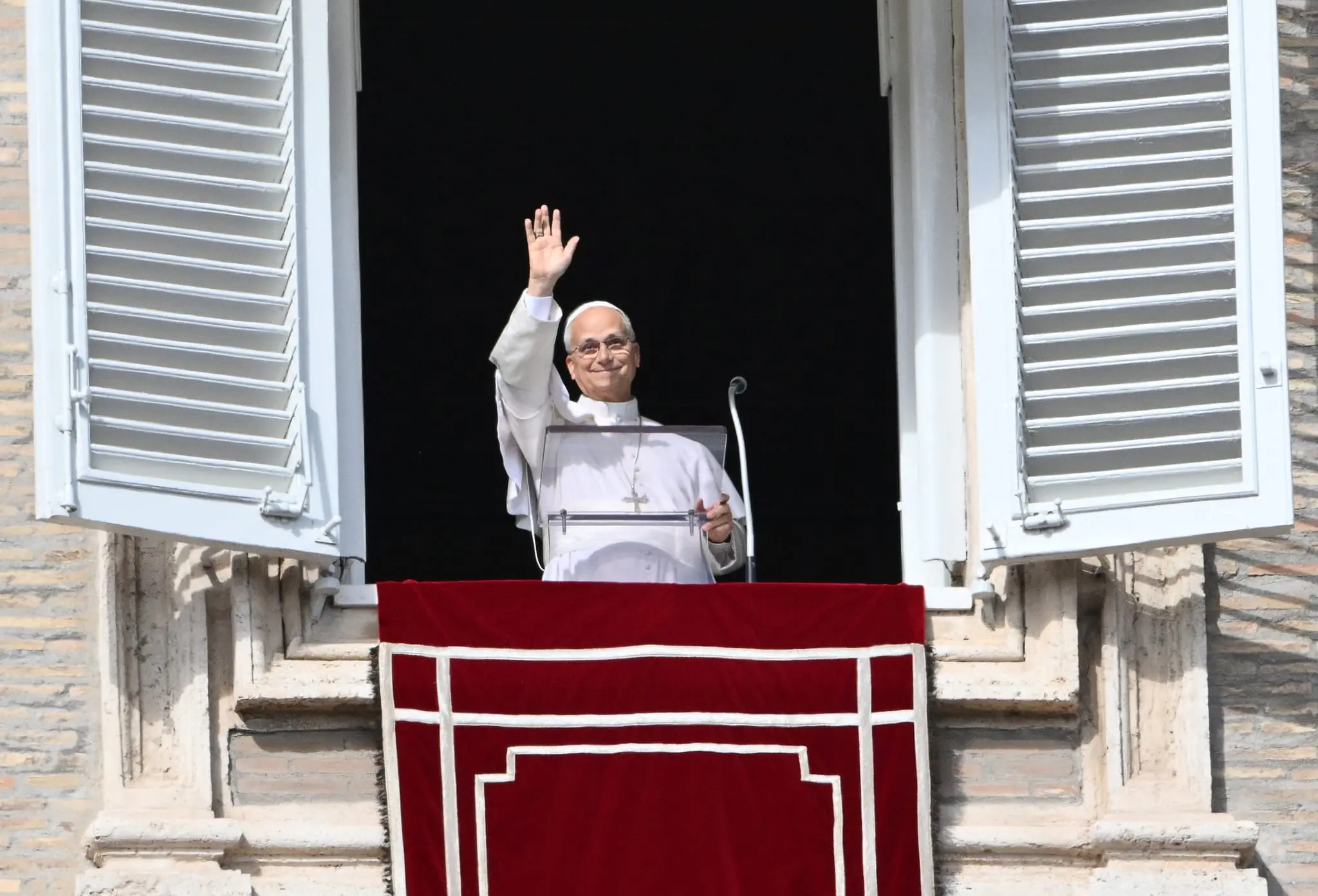
The bishop’s statement comes about a week after Trump criticized Pope Leo in a Truth Social post as being “weak on crime” and said “I don't want a Pope who thinks it's OK for Iran to have a Nuclear Weapon.” The President’s comments sparked a wave of statements from Catholics around the world in solidarity with the Pope and widespread media coverage.
When journalists asked Pope Leo about the President’s comments, he said he does not want to enter into a debate with Trump and highlighted the Church’s role as one of advocating for peace. A day later, Trump addressed Pope Leo directly a second time in a Truth Social post. Over the weekend, Pope Leo pushed back on media narratives framing him and Trump as adversaries, as Zeale News reported.
In an April 20 X post, Bishop Barron cited the Catechism of the Catholic Church, paragraph 2309, when he advised people not to pit the responsibilities of a president of a nation and the Pope against each other.
“There is a way past the absurd and deeply divisive ‘war’ between the President and the Pope, which has been enthusiastically ginned up by the press,” Bishop Barron wrote.
In paragraph 2309, the Catechism lays out the requirements for determining if a war is just and states that determining if a war is morally legitimate belongs to those responsible for the common good, he continued.
According to the bishop, the latter point is key to cutting through the divisiveness between the Pope and Trump.
“The assumption is that the just war principles function, to use the technical term, as heuristic devices, designed to guide the practical decision-making of those civil authorities who have to adjudicate matters of war and peace,” Bishop Barron wrote.
The Church’s role is to urge for peace and for all conflicts to “be strictly circumscribed by the moral constraints of the just war criteria,” he continued. “But it is not the role of the Church to evaluate whether a particular war is just or unjust. That appraisal belongs to the civil authorities, who, one presumes, have requisite knowledge of conditions on the ground.”
The Church has the right and responsibility to ask questions about whether a conflict meets the just war criteria, and the civil authorities’ role is to answer them, according to the bishop.
“So, is the war in question truly the last resort? Is there really a balance between the good to be attained and the destruction caused by the war? Are combatants and non-combatants being properly distinguished in the waging of the conflict? Do the belligerents have right intention? Is there a reasonable hope of success?” he wrote. “The posing of those questions — indeed the insistence upon their moral relevance — belongs rightly to the Church, but the answering of them belongs to the civil authorities.”
Bishop Barron argued that Pope Leo’s approach of public statements on international conflict fits within this Catechism paragraph 2309.
“The Pope has said, on numerous occasions, that he is not a politician and that his role is not the determination of any nation's foreign policy,” he concluded. “But he has just as clearly said that he will continue to speak for peace and for moral constraint. In making both of these claims, he is operating perfectly within the framework of paragraph 2309 of the Catechism.
“If we understand that the Pope and the President have qualitatively different roles to play in the determination of moral action in regard to war, we can, I hope, extricate ourselves from the completely unhelpful narrative of ‘Pope vs. President.’”







Comments