Caritas Jerusalem vows to continue Gaza aid despite Israel permit revocations
Caritas Jerusalem, the humanitarian arm of the Catholic Church in the Holy Land, said it will continue humanitarian operations in Gaza, the West Bank, and Jerusalem despite Israel’s recent decision to suspend permits for dozens of international aid organizations.

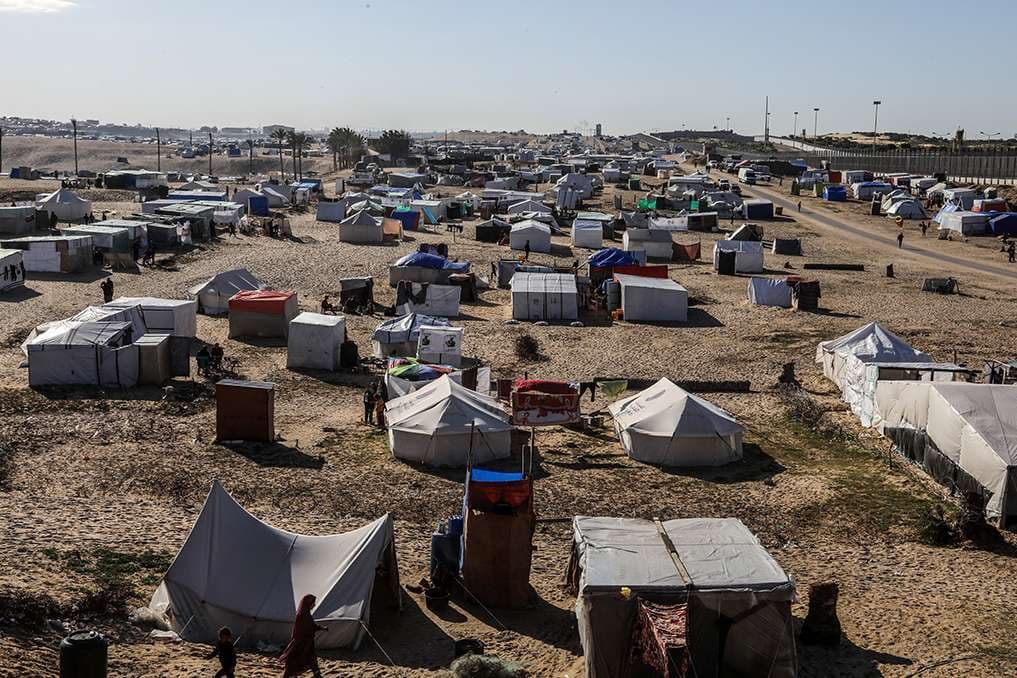
Caritas Jerusalem, the humanitarian arm of the Catholic Church in the Holy Land, said it will continue humanitarian operations in Gaza, the West Bank, and Jerusalem despite Israel’s recent decision to suspend permits for dozens of international aid organizations.
The organization operates medical centers in Gaza City and Taybeh in the West Bank, where it provides primary health care, including maternal and pediatric services to hundreds of patients each month, according to its website. Its president is Cardinal Pierbattista Pizzaballa, the Latin patriarch of Jerusalem.
In a statement released Dec. 31, a spokesperson for the Latin Patriarchate of Jerusalem said Caritas Jerusalem will maintain its work “in accordance with its mandate,” citing the organization’s unique legal status as an ecclesiastical legal person recognized by Israel under agreements with the Holy See in 1993 and 1997.
Under new rules introduced by Israel last year, international aid organizations are required to re-register with the government and submit detailed information on staffing, funding, and operations in order to continue providing humanitarian assistance.
The statement said Caritas Jerusalem is not subject to Israel’s re-registration process and has not undertaken any such filing with Israeli authorities. It added that Caritas Internationalis, Caritas Jerusalem’s parent organization, does not conduct direct operations in Israel.
George Anton, administrative director of Caritas Medical Center in Gaza, told OSV News that the organization’s role is “very important and essential in Gaza,” adding that he hopes its work can continue.
Israel’s Foreign Ministry spokesperson Oren Marmorstein said Dec. 30 that international aid groups that failed to renew their registration by Jan. 1 will have their licenses revoked and must cease operations by March 1. He said the organizations were first notified in March 2025 of the requirement to re-register under updated rules, which Israeli officials say is intended to prevent terrorist groups from exploiting aid.
On Dec. 31, Israel’s Ministry for Diaspora Affairs and Combating Antisemitism announced that more than 30 groups — about 15% of organizations operating in Gaza — had failed to comply with the new requirements and would have their operations suspended. AP News later published a list of the 37 organizations slated for license revocation that included Caritas Jerusalem and Caritas Internationalis.
The rules require detailed disclosures of funding, staffing, and operational structures, such as “a list of Palestinian employees to verify the absence of terrorist ties, according to the ministry.
The ministry said licenses may be revoked for activities including: “participation in efforts to delegitimize the State of Israel; legal warfare against IDF [Israeli Defense Forces] soldiers; Holocaust denial, and denial of the October 7 massacre.”
According to Israel’s Foreign Ministry, 23 international aid groups have been approved and are operating.
The suspensions have drawn sharp international criticism. United Nations Human Rights Chief Volker Turk called the decision “outrageous” and warned that it violates international law obligations to facilitate humanitarian relief.
In a joint Dec. 30 statement, foreign ministers from Canada, Denmark, Finland, France, Iceland, Japan, Norway, Sweden, Switzerland, and the United Kingdom also expressed alarm over a potentially “catastrophic” deterioration in Gaza’s humanitarian conditions as winter’s harsh conditions deepen.
The ministers said 1.3 million people still require urgent shelter support as “civilians in Gaza are facing appalling conditions with heavy rainfall and temperatures dropping.” They added that more than half of Gaza’s health facilities are “only partially functioning” and sanitation failures have left about 740,000 people vulnerable to flooding. They said one in three health facilities will close if the aid groups are forced to halt operations.
“INGOs [International Nongovernment Organizations] are integral to the humanitarian response and — working with the UN and Palestinian organisations — collectively deliver approximately $1 billion in aid across Palestine each year,” the statement added. “Any attempt to stem their ability to operate is unacceptable. Without them, it will be impossible to meet all urgent needs at the scale required.”
Israel’s Foreign Ministry responded by saying that the countries’ statement was “false but unsurprising” and argued that it “blatantly ignores the significant improvement in the humanitarian situation in the Gaza Strip.”









Comments