‘We are part of its people’: Caritas Jerusalem explains decision to remain in Gaza despite human toll
In a recent interview with AsiaNews, Caritas Jerusalem, the humanitarian arm of the Catholic Church in the Holy Land, said its mission in Gaza is inseparable from the people it serves and detailed its decision to remain on the ground despite displacement, infrastructure collapse, and threats to operations.

In a recent interview with AsiaNews, Caritas Jerusalem, the humanitarian arm of the Catholic Church in the Holy Land, said its mission in Gaza is inseparable from the people it serves and detailed its decision to remain on the ground despite displacement, infrastructure collapse, and threats to operations.
The aid group, which has operated in Gaza since 1967, faced uncertainty in December 2025 when Israel placed it on a list of 37 nongovernmental organizations (NGOs) the Israeli government wanted to cease working in the Gaza Strip. Israel’s decision came as supervision of NGOs shifted from Israel’s Ministry of Welfare and Social Affairs to the Ministry for Diaspora Affairs and Combating Antisemitism, and all aid groups were required to re-register with the government to continue their work. As Zeale News reported in January, Caritas vowed it would not leave the region, citing its unique status as an “Ecclesiastical Legal Person” recognized by Israel under agreements signed in 1993 and 1997.
Anton Asfar, secretary general of Caritas Jerusalem, told AsiaNews in February that Israel’s initial notice came as a “shock” and prompted fears that humanitarian groups might be forced to halt their operations. The re-registration requirement for Caritas has since been scrapped, Asfar said, explaining that an Israeli inter-ministerial committee reviewed the matter and said the group can continue operating without interruption.
Asfar, a Jerusalem native, said that despite repeated evacuations and displacements since the war began on Oct. 7, 2023, Caritas Jerusalem has never suspended its services.
“We are part of its people,” he said, referring to Gaza, “so our staff has also been internally displaced from one place to another.” He added: “My love for Jerusalem and the Holy Land made me stay.”
Caritas Jerusalem operates medical centers in Gaza City and the West Bank and provides primary health care and psychosocial support, according to its website. Asfar told AsiaNews that the group has 127 staff in the Strip and 28 in the West Bank. The organization’s president is Cardinal Pierbattista Pizzaballa, the Latin patriarch of Jerusalem.
Asfar said staff members used to provide aid out of makeshift tents in Rafah, Gaza’s southernmost city bordering Egypt, until a May 2024 Israeli military operation forced them to relocate. Amid a separate military operation in July 2025, staff members were forced to evacuate one of their medical centers in Deir al-Balah. They later returned to Deir al-Balah when conditions allowed.
“In September, the invasion and evacuation of Gaza City began,” Asfar continued, noting that 102 of the 125 staff members on duty were again displaced south.
“Imagine the strain on the mental health of our teams, their families, and their children,” he told AsiaNews. “They had to care for their families while providing life-saving services to the community.”
The organization lost two employees during the conflict. A laboratory technician named Viola, her husband, their two-month-old baby, and nine other members of her family were bombed while seeking refuge, according to Asfar. In a separate incident, Asfar said, a Caritas Jerusalem pharmacist was killed after the building where he and about 30 other people had relocated was bombed. Only his 3-year-old daughter survived.
“All of this was heartbreaking and deeply traumatic,” Asfar recounted to AsiaNews.
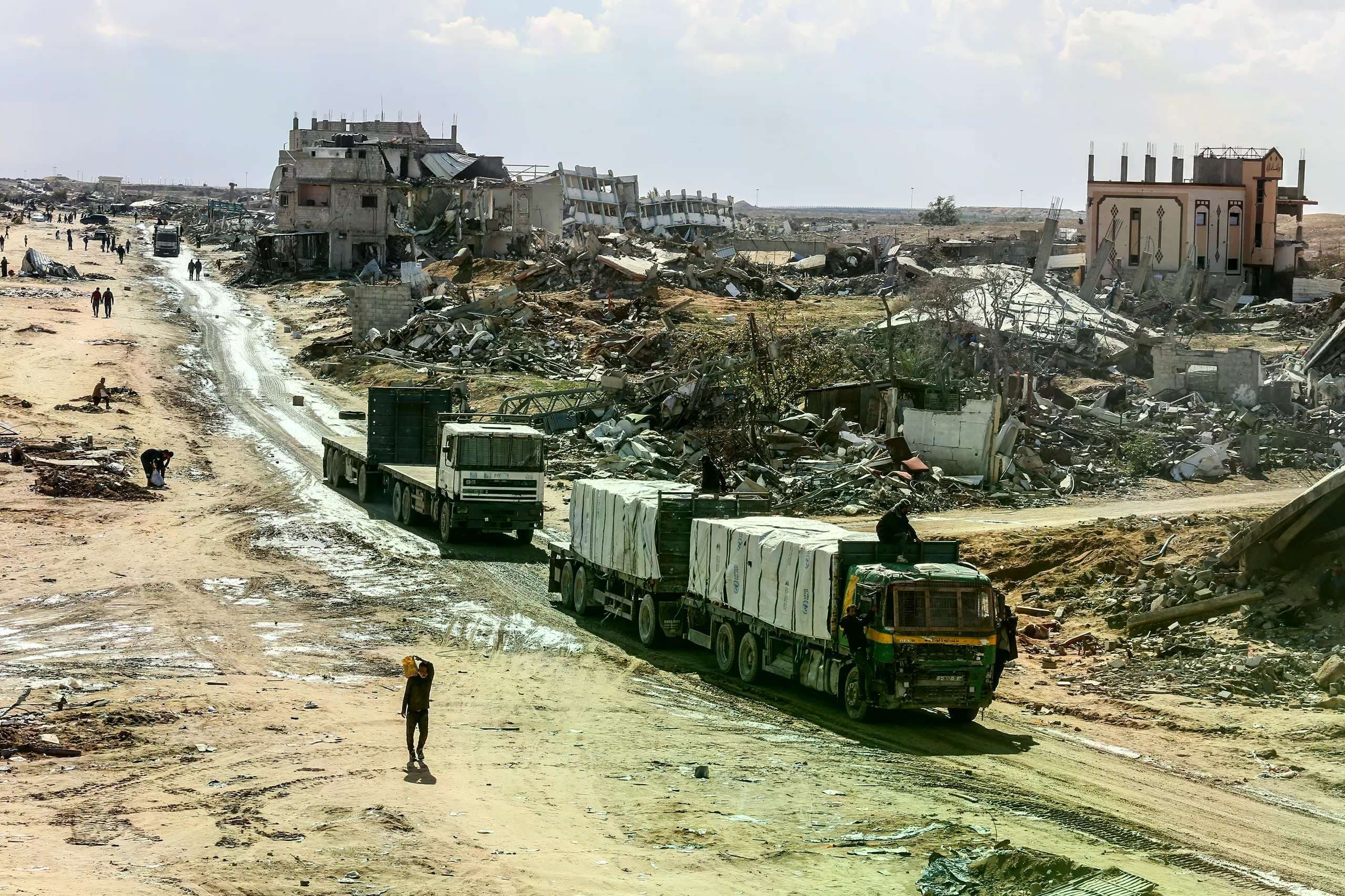
Although the October 2025 ceasefire has allowed some residents to return home, Asfar said there is still widespread destruction and suffering. People returning found “neighborhoods swept away, homes damaged, and infrastructure completely destroyed.” Violence in the Holy Land has also continued despite the truce. As Zeale News previously reported, Israel and Hamas have repeatedly accused one another of ceasefire violations, and Israeli airstrikes have killed hundreds in Gaza since October.
Access to clean water is one of the population’s most pressing needs. Asfar said the region is producing less than half as much clean water as it once did. Despite the ceasefire, he added, aid shipments are arriving intermittently, and new mobile clinics “are not yet authorized to enter Gaza.”
Still, there have been “glimmers of hope” for Gazans, and Caritas Jerusalem has managed to deliver assistance, Asfar told the outlet. On Oct. 12, 2025, the organization brought in 10,000 cans of infant formula amid persistent fears of famine.
>> Patriarch on possible peace in Gaza: 'Something new and positive is on the horizon' <<
Fatena Mohanna, a Caritas Jerusalem staff member originally from Gaza City who is currently studying in Siena, Italy, described the psychological burden of leaving her family behind in Gaza.
“Every time I drink or eat, or even just sleep in my bed, I feel guilty. At first, I couldn't sleep because it seems too quiet here after two years of bombing,” Mohanna told AsiaNews. “I still have problems eating canned food, and here I drank clean water for the first time in two years.”
Mohanna, who has documented conditions in Gaza through audiovisual work used by international media outlets, said images often fail to convey the depth of the loss experienced by the families who have lost their homes and jobs, and the children who just two years ago were going to school and have now “lost everything.”
“The suffering is still there despite the ceasefire. But I keep my faith,” she told the outlet. “Our people are strong. They are simple people who love art, life, music, and want a normal life."
Asfar said Caritas Jerusalem’s mission extends beyond emergency health care to emotional support, dialogue, and peace-building and reconciliation efforts.
“It's not easy to live here, start a family, and raise children. People often don't understand all the graces they have in their lives and tend to take them for granted,” he concluded. “We, Christians of Jerusalem, are honoured to live in the sites of Christianity, but this also entails a heavy burden. It's our little cross to bear.”
>> Israel cabinet defies Trump, approves ‘de-facto annexation’ of West Bank <<








Comments