US launches second phase of Gaza ceasefire plan amid unresolved disputes
The U.S. formally launched Phase Two of its Gaza ceasefire framework Jan. 14, shifting focus from an initial truce toward demilitarization, transitional governance, and reconstruction in the war-ravaged territory.

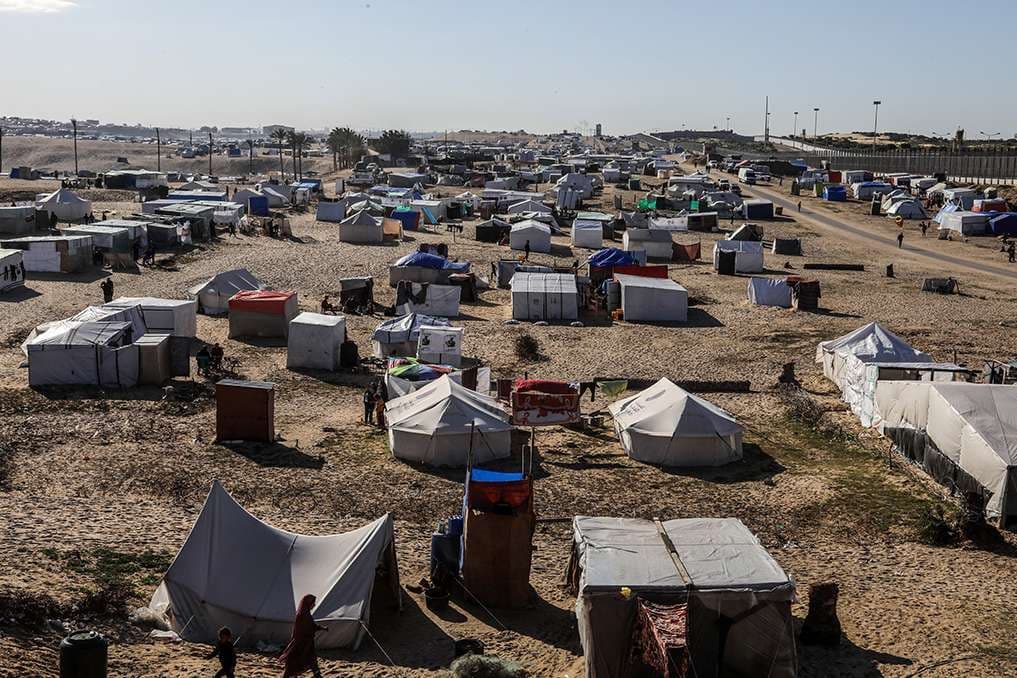
The U.S. formally launched Phase Two of its Gaza ceasefire framework Jan. 14, shifting focus from an initial truce toward demilitarization, transitional governance, and reconstruction in the war-ravaged territory.
U.S. Special Envoy Steve Witkoff announced the move on X, saying the new phase establishes a technocratic Palestinian governing body in Gaza and focuses on dismantling armed groups.
“Phase Two establishes a transitional technocratic Palestinian administration in Gaza, the National Committee for the Administration of Gaza (NCAG), and begins the full demilitarization and reconstruction of Gaza, primarily the disarmament of all unauthorized personnel,” Witkoff explained.
He added that the U.S. expects full compliance from Hamas, including the return of the remains of the final deceased Israeli hostage. Failure to comply, he warned, would carry “serious consequences.”
Witkoff said the first phase of the agreement had “delivered historic humanitarian aid, maintained the ceasefire, returned all living hostages and the remains of twenty-seven of the twenty-eight deceased hostages.”
Disputes carry over from Phase One
The rollout of Phase Two comes amid major unresolved disputes from the first phase. Israel and Hamas have repeatedly accused one another of ceasefire violations since the truce began in October 2025.
According to Reuters, continuous Israeli airstrikes during the ceasefire have killed hundreds in Gaza. Hamas has not yet returned the final hostage’s remains, and Israel has delayed reopening a key Gaza-Egypt border crossing.
Israel has also maintained strict limits on travel out of Gaza, including for residents seeking specialized medical care unavailable in the territory. Christian leaders in Jerusalem have warned the restrictions are preventing seriously ill children, including cancer patients, from receiving life-saving treatment. In a December 2025 statement, the Patriarchs and Heads of the Churches in Jerusalem urged Israeli authorities to allow Gaza children with leukemia to travel to Augusta Victoria Hospital in Jerusalem for care, warning that delays could be fatal.
Israel also announced Dec. 31 that it would suspend the activities of more than 30 humanitarian groups delivering aid to Gaza after they failed to meet re-registration requirements, as CatholicVote previously reported. Israel said the requirement was intended to tighten oversight of organizations operating in Gaza, citing security concerns and allegations that some aid groups had ties to Hamas. Among them was Caritas Jerusalem, the humanitarian arm of the Catholic Church in the Holy Land, which vowed it would continue operating under a unique legal agreement between Israel and the Holy See.
Under the U.S. plan, Gaza will be governed by a “technocratic, apolitical, Palestinian committee” overseen by an international “board of peace.” The White House has said President Donald Trump will lead the board alongside other officials.
The Hill reported that Hamas said Jan. 11 it would dissolve its existing control over Gaza once the technocratic Palestinian leadership committee takes over.
Ali Shaath, a former deputy minister in the Palestinian Authority, is slated to help lead the proposed committee, which will include 15 members, Reuters reported. Egyptian and Palestinian sources told the outlet that both Hamas and its rival faction, Fatah (led by Palestinian President Mahmoud Abbas), have endorsed the list.
Palestinian Authority welcomes Phase Two, Israel downplays impact
In the West Bank, the Palestinian Authority welcomed the U.S. decision to proceed with Phase Two. Palestinian Vice President Hussein Al-Sheikh said in a statement on X that institutions in Gaza should be linked to those in the West Bank under “one system, one law and one legitimate weapon."
A complicating factor in the process is the aggressive continued expansion of Israeli settlements in East Jerusalem and the broader West Bank. As CatholicVote has reported, human rights organizations, local Palestinians including clergy in the West Bank, and Church leaders in Jerusalem report that radical Jewish settler groups continue to use intimidation and violence to push Palestinians out of the region. It is also widely reported that Israeli authorities have been unwilling to sufficiently police such activities. According to The Times of Israel, Israel in December approved the construction of more than 700 additional houses in three settlements in the West Bank. All the Jewish settlements are illegal under international law.
Al-Sheikh said the authority supports working with the U.S. and other partners to take further steps, including “ensuring a halt to unilateral actions that violate international law; preventing settlement expansion plans and settler terrorism; releasing withheld Palestinian funds; preventing displacement and annexation; and preclude any undermining of the Palestinian National Authority and the two-State solution.”
Meanwhile, Israeli Prime Minister Benjamin Netanyahu downplayed the U.S. announcement, describing Phase Two as largely symbolic rather than substantive, according to AP News. The outlet reported that in a meeting with the parents of the deceased Israeli police officer Ran Gvili — whose remains are still held by Hamas — Netanyahu described the formation of a Palestinian committee as a “declarative move.”
The Hostage and Missing Families Forum said Gvili’s parents urged Netanyahu not to move into the next phase of the ceasefire until their son’s remains are returned. In a statement shared by the group on X, the parents said Netanyahu told them Israeli forces would not withdraw from Gaza “until Hamas is fully disarmed.” The statement added that “there will be no reconstruction, no rehabilitation.”




Comments