Catholic senator urges Supreme Court to uphold Trump’s birthright citizenship order
U.S. Sen. Eric Schmitt, a Missouri Republican and a Catholic, is urging the Supreme Court to uphold President Donald Trump’s executive order restricting birthright citizenship, arguing in a newly filed amicus brief that the prevailing interpretation of the Fourteenth Amendment extends far beyond what its drafters intended.

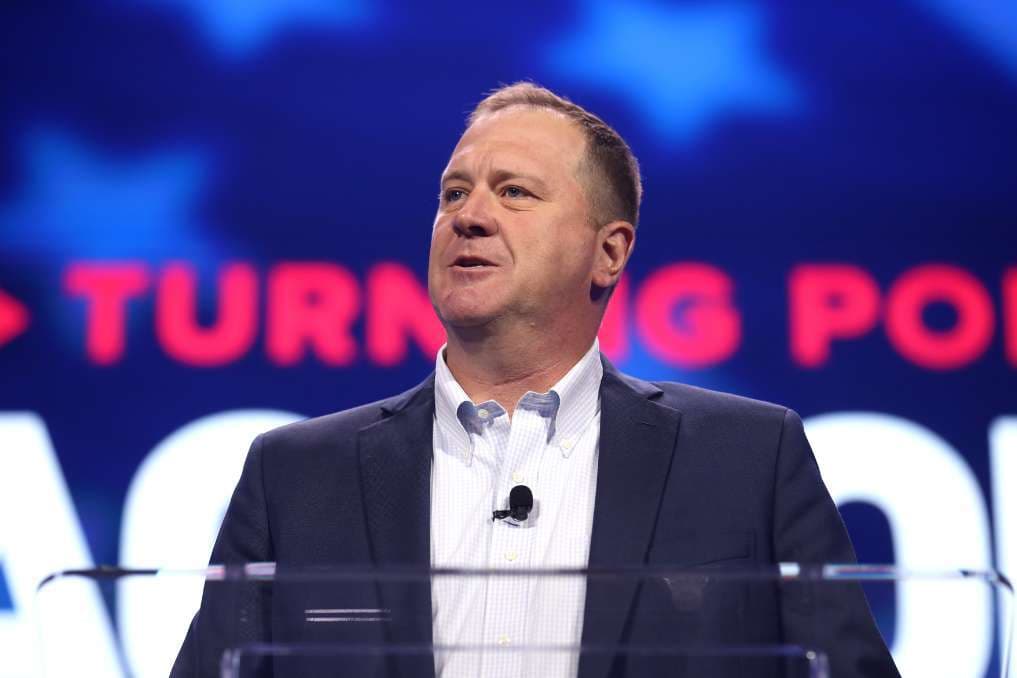
U.S. Sen. Eric Schmitt, a Missouri Republican and a Catholic, is urging the Supreme Court to uphold President Donald Trump’s executive order restricting birthright citizenship, arguing in a newly filed amicus brief that the prevailing interpretation of the Fourteenth Amendment extends far beyond what its drafters intended.
In a brief filed Jan. 23 alongside Texas Republican Rep. Chip Roy, Schmitt contended that U.S. citizenship should be reserved as a “privilege” for those with a “permanent and lawful bond to the United States,” rather than being granted automatically based solely on place of birth.
Schmitt and Roy, who chair the Senate and House Judiciary Subcommittees on the Constitution, argued that extending automatic citizenship to children born to tourists or individuals in the country illegally “has betrayed both the text of the Fourteenth Amendment and the intent of its drafters” and undermined national sovereignty and security.
The filing comes as the Supreme Court prepares to review the constitutionality of Trump’s January 2025 order, which would halt automatic citizenship for children born in the U.S. to non-citizens unless at least one parent is a citizen or lawful permanent resident.
The policy has been on hold for months amid lawsuits, with lower courts ruling that it violates the Fourteenth Amendment’s citizenship clause, which courts have long interpreted to grant automatic citizenship to anyone born on U.S. soil. The clause states: “All persons born or naturalized in the United States, and subject to the jurisdiction thereof, are citizens of the United States and of the State wherein they reside.”
Schmitt’s constitutional argument
According to Schmitt, courts have for years misread the phrase “subject to the jurisdiction thereof” by wrongly equating “jurisdiction” with mere physical presence. He argued that the phrase was meant to exclude children whose parents lack legal status because those parents do not owe full political allegiance to the U.S. and therefore are not subject to its jurisdiction.
“In short, only aliens who have been permitted to make the United States their domicile can be ‘subject to the jurisdiction thereof,’” he wrote in the brief.
Schmitt argued that the Fourteenth Amendment itself supports this distinction. The Equal Protection Clause applies to “any person within its jurisdiction,” which he said refers to territorial presence. The Citizenship Clause, by contrast, uses the narrower phrase “subject to the jurisdiction thereof.”
“Different words. Different meanings,” he wrote on X.
To support that reading, Schmitt cited statements from U.S. Sen. Jacob Howard of Michigan, the lead author of the Citizenship Clause, who said on the Senate floor in 1866 that the phrase “will not, of course, include persons born in the United States who are foreigners, aliens.” Howard described jurisdiction as requiring a “permanent reciprocal political bond” between the U.S. and those who have made America their “lawful and permanent home.”
“Not ambiguous. Not a secret,” Schmitt said on X. “He said it on the Senate floor.”
Schmitt also pointed to remarks from Illinois Sen. Lyman Trumbull, who helped draft earlier citizenship legislation and said in 1866 that updated wording in the Fourteenth Amendment did not change the underlying requirement that citizens be “not subject to any foreign power.”
Schmitt then offered a modern analogy to illustrate his point.
“If a New York couple vacations in Florida and has a baby there, that child is a citizen of New York, not Florida,” he wrote. “Why? Because the baby doesn't ‘reside’ in Florida. But under the courts' reading, a foreign tourist's baby is a full U.S. citizen? Make it make sense.”
The opposing argument
Opponents of the Trump administration argued in court filings that the Supreme Court already settled the scope of the citizenship clause in its 1898 ruling United States v. Wong Kim Ark, which held that the Fourteenth Amendment guarantees citizenship to those born in the country, “including all children here born of resident aliens.”
However, Schmitt countered that the holding in Wong Kim Ark is frequently misread. He said the case addressed a narrow question involving a man born in the U.S. to parents who had established permanent residence in the U.S. but were barred from naturalization — not children of individuals in the country illegally or temporarily.
“Bottom line: Text, structure, history, precedent, and common sense all say the same thing,” Schmitt wrote on X. “The Citizenship Clause applies only to those who have lawfully made America their permanent home. SCOTUS should reverse.”
The Trump administration has offered similar arguments. In court filings, Solicitor General John D. Sauer argued that the Fourteenth Amendment was adopted to secure citizenship for formerly enslaved black Americans and their children, not those of illegal immigrants or temporary visitors.
The Supreme Court is expected to give a ruling on the matter this summer.




Comments