EXCLUSIVE | Chaldean archbishop weighs in on economic challenges faced by young Christians in Iraq
The archbishop outlined how Catholic institutions are helping support the faithful not only in the short term but in an effort to address challenges to building a stable future in the country.
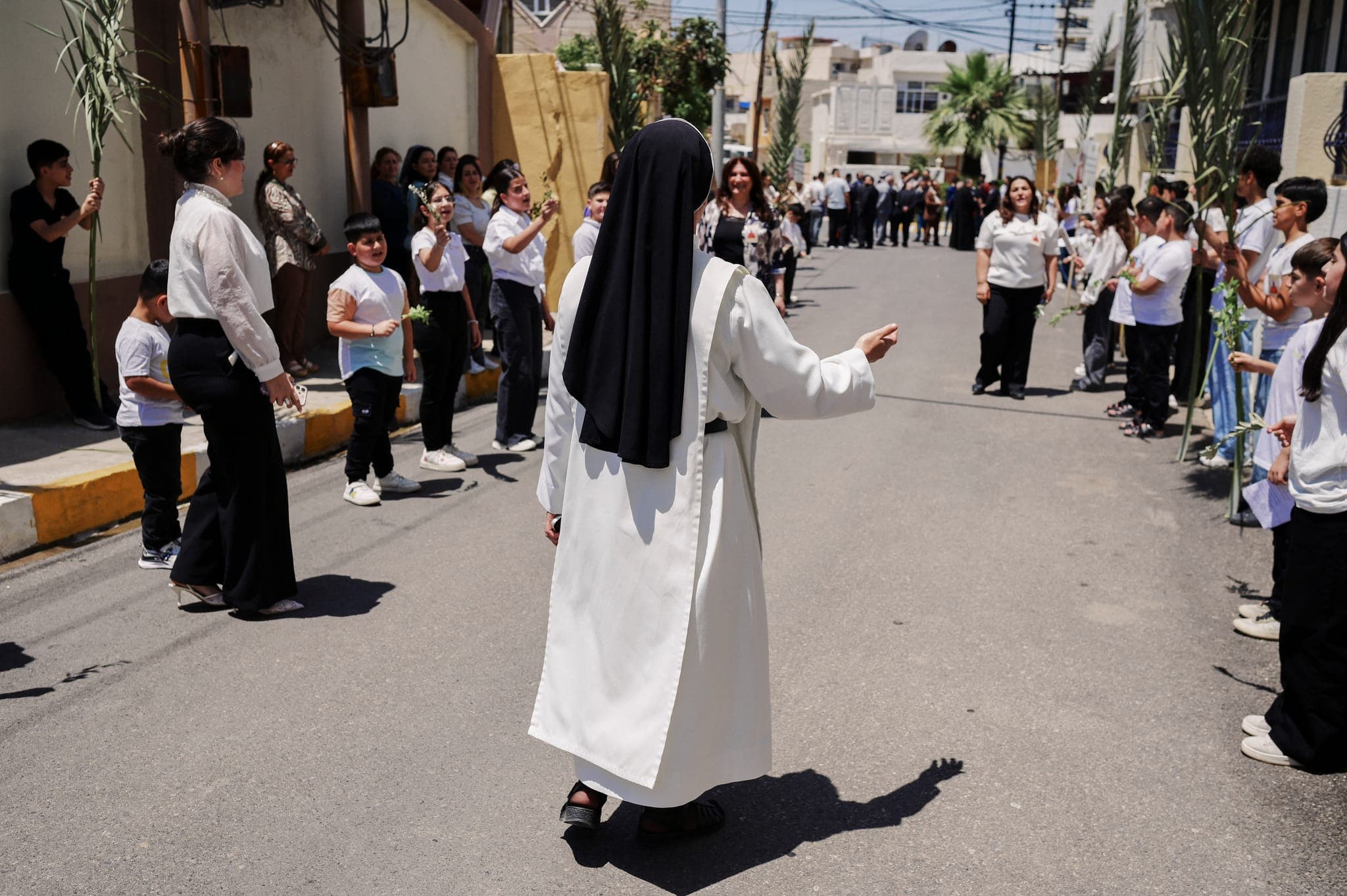
Chaldean Catholic Archbishop Bashar Warda of Erbil said this month that economic pressures and a lack of employment opportunities are among the most significant challenges facing Christians seeking to build a future in Iraq, particularly young people.
In an exclusive interview with Zeale News, Archbishop Warda stressed that investment in education, professional skills, and job creation can strengthen Christians’ ability to remain in their homeland and build stable lives there.
“The decline in Iraq’s Christian population has made economic difficulties even more acute for the community,” the archbishop said, “as limited employment opportunities make it increasingly difficult for young Christians to envision a secure future in the country.”
He attributed part of the problem to the structure of Iraq’s economy, which remains heavily dependent on government spending and public-sector employment, while the private sector remains limited in its ability to generate sufficient and sustainable jobs.
Economic indicators underscore the challenge. Iraq’s unemployment rate stands at about 13.5%, while labor force participation is approximately 38%.
Pressure on the job market is compounded by Iraq’s young population. People between the ages of 15 and 29 account for roughly 29% of the population, meaning a large number of young Iraqis are entering the workforce at a time when the economy continues to depend heavily on oil.
In 2025, oil accounted for approximately 88% of government revenue and 91% of Iraq’s merchandise exports, leaving the country’s ability to finance public spending and employment particularly vulnerable to fluctuations in oil prices and revenues.
As the state’s ability to absorb additional public-sector employees declines, Archbishop Warda said providing young people with a high-quality education and practical skills has become increasingly important.
“A university degree alone is no longer enough to guarantee employment,” he said. “Professional experience, technical abilities, communication skills, and other competencies sought by employers have become essential.”
>> Iraqi prime minister calls return of Christians a national priority <<
In this context, Archbishop Warda praised the scholarship assistance provided by the Catholic charity Aid to the Church in Need but called for greater attention to what happens after students graduate, including ways to help young people make the transition from education into employment.
For Archbishop Warda, one of the central questions facing the Church and Christian organizations today is how they can help Christians build lives in Iraq.
He called for moving beyond traditional models that focus primarily on direct assistance and toward investing in people, supporting businesses, creating employment opportunities, and preparing young Christians to participate in the private sector.
Building institutions for the future
The Chaldean Catholic Archdiocese of Erbil has sought to put that approach into practice through educational, health care, humanitarian, and media institutions designed not only to provide services but also to create jobs and develop local expertise.
The archdiocese operates four schools, Maryamana Hospital, and the Catholic University in Erbil, among other institutions.
In its schools, the archdiocese’s work extends beyond educating students. The schools employ teachers and provide opportunities for professional and pedagogical development intended to improve the quality of education while giving local professionals opportunities to work and advance their skills.
Some of the schools were originally established in response to the needs of Christian families displaced by ISIS. In addition to providing education to displaced children, they created employment for teachers who had themselves lost jobs and livelihoods during the crisis.
Maryamana Hospital represents another part of that effort. Along with providing health care, the hospital employs medical professionals, nurses, technicians, and administrative staff and seeks to strengthen their professional capabilities.
The hospital’s mission therefore extends beyond treating patients to developing health care professionals capable of responding to the needs of the Kurdistan Region and Iraq more broadly.
Preparing students for more than a degree
The Catholic University in Erbil, meanwhile, has become one of the central pillars of the archdiocese’s effort to equip young people to build their futures in Iraq.
The university currently offers 14 academic departments, including newer fields such as artificial intelligence (AI) and digital media, as it seeks to respond to technological change and the evolving needs of the labor market.
Its Digital Media Department, established during the 2023–2024 academic year, was launched in response to growing demand for expertise in digital communication, design, and technology. The university has also expanded its technology-related programs to include fields such as AI, cybersecurity, and information security.
But the university’s approach is not limited to awarding academic degrees.
It seeks to provide students with practical experience through internships, cooperation with companies and institutions, academic exchanges, professional training, and projects designed to replicate real workplace environments, the archbishop noted.
The goal is to give students opportunities to apply what they learn before graduation and to make the transition from university to employment more effectively.
“By combining academic education with professional training,” Archbishop Warda said, “the university is seeking to narrow the gap between what students study and what employers require.
From aid to empowerment
Archbishop Warda said the archdiocese now employs approximately 950 people across its various institutions. However, he questioned whether that number is sufficient in light of the needs confronting the Christian community.
For the archbishop, the question points to the need for broader partnerships and investments capable of generating more sustainable employment opportunities.
“The Church must approach economic challenges through the lens of human dignity, justice, and empowerment rather than seeing itself simply as a provider of charitable assistance,” Archbishop Warda said.
Temporary assistance, he cautioned, should not become permanent dependence. Instead, support should ultimately give people the tools they need to become economically independent and build stable lives.
The archbishop also pointed to the growing number of university students who work night jobs in order to cover the cost of their studies and continue their education.
While the phenomenon reflects the financial pressures young people face, Archbishop Warda said it also demonstrates their willingness to work and assume responsibility when opportunities are available.
The archdiocese’s initiatives reflect a broader shift from responding only to immediate crises toward developing long-term institutions in education, health care, and professional formation, according to the archbishop.
“The underlying approach is not to assist a Christian community presumed to be disappearing,” he said, “but to invest in a community that has chosen resilience and seeks the tools necessary to build its future and continue contributing to Iraqi society.”


.jpg&w=3840&q=75)
Comments