EXCLUSIVE | Challenging ‘throwaway culture’: Catholic pro-life environmental organization launches
Amid alarmist calls from some environmentalists, a new Catholic organization has stepped into the discussion of environmental stewardship with a tone of hope, aiming to promote a well-ordered relationship between human persons and the earth.

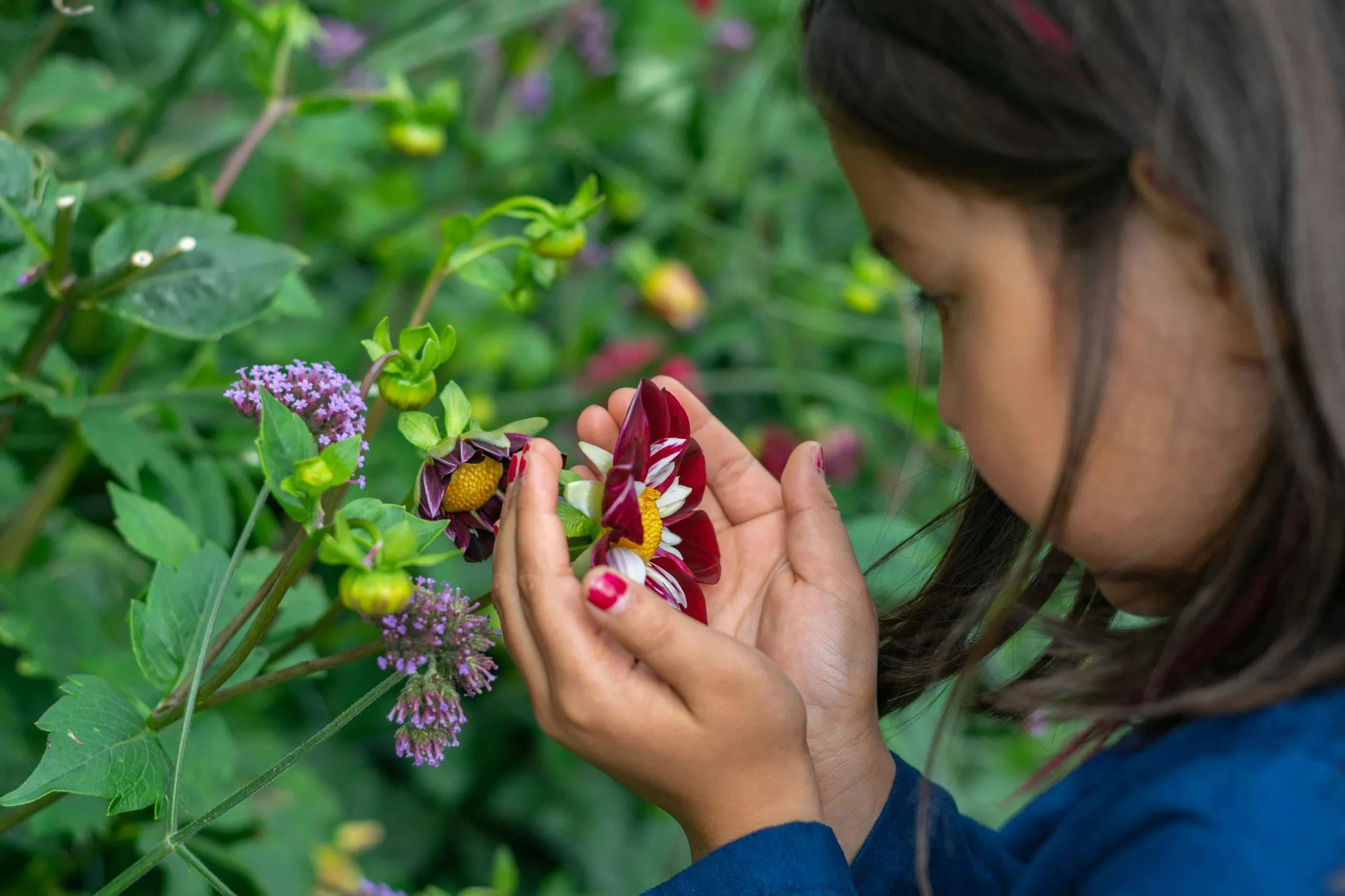
Amid alarmist calls from some environmentalists, a new Catholic organization has stepped into the discussion of environmental stewardship with a tone of hope, aiming to promote a well-ordered relationship between human persons and the earth.
Clare Ath, co-founder and executive director of Vita et Terra, spoke with Zeale News in an April 7 email interview about the organization, which launched April 14 to promote pro-life environmental stewardship.
Ath said she has spent the past decade striving to defend the unborn “on the front lines of the pro-life movement.” What has become clear to her, she remarked, is that “abortion doesn’t exist in a vacuum; it’s the logical outcome of a deeper cultural disorder.”
The world today is steeped in a “throwaway culture,” as Pope Francis called it, “where anything or anyone can be discarded when it becomes inconvenient,” Ath continued. “That mentality doesn’t stop with the unborn; it extends to how we treat the land, our communities, and our responsibilities.”
Ath said her conviction is not theoretical but rooted deeply in truths she has encountered firsthand throughout her life. Hailing from generations of Irish farmers, her younger summers were spent on her grandparents’ farm, where she “first learned what it means to care for the land as something entrusted, not exploited,” she said. She later spent time as a backpacking guide in the Rocky Mountains, where she more deeply grew to love the beauty of God’s world and understand the responsibility to preserve it.
“And today, raising three boys on a mini homestead in Virginia, that calling has become deeply personal, because the world we shape now is the one they will inherit,” she continued. “Vita et Terra was founded to challenge the throwaway culture at its root, and to help rebuild a culture that values life, family, and creation as gifts to be stewarded, not burdens to be eliminated.”
Zeale News spoke with Ath about Vita et Terra’s views on environmental stewardship, farming, the pro-life movement, and how people can live out these ideals in small, daily ways.
1. What inspired the founding of Vita et Terra, and what are its goals?
For too long, the secular left has hijacked environmentalism, turning "care for the planet" into a Trojan horse for abortion, population control, and anti-family ideology. It's a profound contradiction, and faithful Catholics are uniquely equipped to advance a better approach to environmentalism rooted in the truth. The Church has always held that human dignity and care for creation are inseparable; you can't authentically love the earth while destroying the lives of the unborn.
Vita et Terra exists to make that case. Through strategic media, college outreach, and parish engagement, we equip and energize faithful Catholics to reclaim the environmental conversation — grounded not in fear or ideology, but in the Gospel of Life, the richness of Catholic social teaching, and the conviction that strong families and a well-stewarded creation rise and fall together.
2. Oftentimes consumerist culture and industrial farming practices can frame man’s relationship with creation as one of “extractor and extracted,” taking advantage of the land, rather than stewarding it. Can you comment on the importance of man having a rightly ordered relationship with creation?
When we treat the land as nothing more than a resource to be used up and discarded, something important breaks down, not just in our environment but also in our culture and our souls.
Consumerist culture and industrial agriculture have sold us a vision of creation as a commodity, something to be extracted from rather than cared for. But that's not the vision handed down to us in Scripture or in the Catholic tradition. Genesis gives man dominion over creation, but dominion was never a license to exploit. It's a calling to govern wisely, the way a good father cares for his family rather than using them for his own ends. When we poison our watersheds, exhaust our topsoil, and reduce animals to production units on a spreadsheet, we aren't exercising dominion, we're abandoning it.
This disordered relationship with the land doesn't just hurt the environment; it hurts us. Degraded soil means less nutritious food on the family table. Polluted water means sick kids in our rural communities. The collapse of the family farm means the erosion of the very communities and ways of life that have always kept faith, hard work, and rootedness alive in this country.
Catholics should be leading this conversation because we actually have an answer to the extractive mindset, one rooted not in fear or ideology but in gratitude, responsibility, and the understanding that creation is a gift from God held in trust for our children and grandchildren.
3. How does Vita et Terra engage with environmental concerns from a pro-life perspective?
Vita et Terra engages with environmental concerns by insisting that you cannot separate care for creation from care for human life; the two are inseparable. Where secular environmentalism often treats human beings, especially the unborn, as part of the problem, Vita et Terra flips that script entirely. For us, authentic environmental concern begins with protecting human dignity from conception to natural death. You can't claim to love the planet while supporting policies that destroy the most vulnerable human lives. That's not environmentalism, that's ideology wearing a green coat.
Practically speaking, this means Vita et Terra connects environmental issues directly to pro-life concerns in concrete, compelling ways. Lead in drinking water harms children's development. PFAS, "forever chemicals," are linked to pregnancy complications. Pesticide exposure causes birth defects. Microplastics are showing up in breastmilk. These are environmental and pro-life issues, and Vita et Terra argues that Catholics are uniquely positioned to make that case because the Church has always held that human health and dignity are non-negotiable starting points for any honest discussion of the common good. Rather than ceding the environmental conversation to the left, Vita et Terra calls Catholics to reclaim it, grounded not in population control or anti-natalism but in the conviction that strong families, healthy communities, and a well-stewarded creation all rise and fall together.
4. How does Vita et Terra encourage conservation and good stewardship of creation differently from a secular, alarmist approach?
Vita et Terra's approach to conservation stands apart from secular environmentalism in both its foundation and its tone. Where the secular, alarmist approach tends to lead with fear, catastrophic timelines, population panic, and a view of human beings as the earth's primary threat, Vita et Terra leads with hope and responsibility. Conservation, in our framework, isn't about managing a crisis caused by too many people and too much human activity. It's about fulfilling a calling. We care for creation because it belongs to God, because we received it from those who came before us, and because we owe it to our children to hand it on well. That's a fundamentally different motivation, and it produces a fundamentally different kind of environmentalism.
It also produces different solutions. Secular environmentalism tends toward top-down government mandates, global agreements, and technocratic control, often at the expense of local communities, family farms, and individual property rights. Vita et Terra, by contrast, trusts the people closest to the land. Hunters and anglers have conserved more habitat than most government programs ever have. Farmers who know their soil and their watershed make better stewards than distant bureaucracies. Regenerative agriculture, sustainable forestry, and watershed protection are embraced not as ideological commitments but as practical, common-sense care for real places and real communities. The goal isn't to save an abstraction called "the planet," it's to protect the clean water, healthy land, and natural beauty that families and communities actually depend on and love.
5. What are some ways people can be better stewards of the earth in their day-to-day lives?
Being a better steward of creation doesn't require signing onto a political agenda or overhauling your entire life overnight. It starts with small, practical habits rooted in gratitude and responsibility, the recognition that the things God has given us are worth caring for.
One of the most impactful things families can do is support local farmers and buy food that was grown with care. When you shop at a farmers’ market, join a CSA (community supported agriculture model), or buy from a rancher who raises his animals humanely and sustainably, you're voting with your dollars for a different kind of agriculture – one that builds healthy soil, supports rural communities, and treats creation with the dignity it deserves.
Reducing food waste, growing even a small garden, and cooking from scratch rather than relying on heavily processed food are all small acts of stewardship that reconnect us to the reality of where our food comes from.



.jpg&w=3840&q=75)



Comments