EXCLUSIVE | Fr. Mike Schmitz on surge of Catholic converts: ‘We’re made for God’
As numerous U.S. dioceses prepare to welcome record numbers of new Catholics this Easter, Father Mike Schmitz, host of Ascension’s “The Bible in a Year” and a priest in the Diocese of Duluth, Minnesota, reflected in a recent interview on how there is not just one factor driving the trend, but many — including a desire for truth, goodness, and beauty.

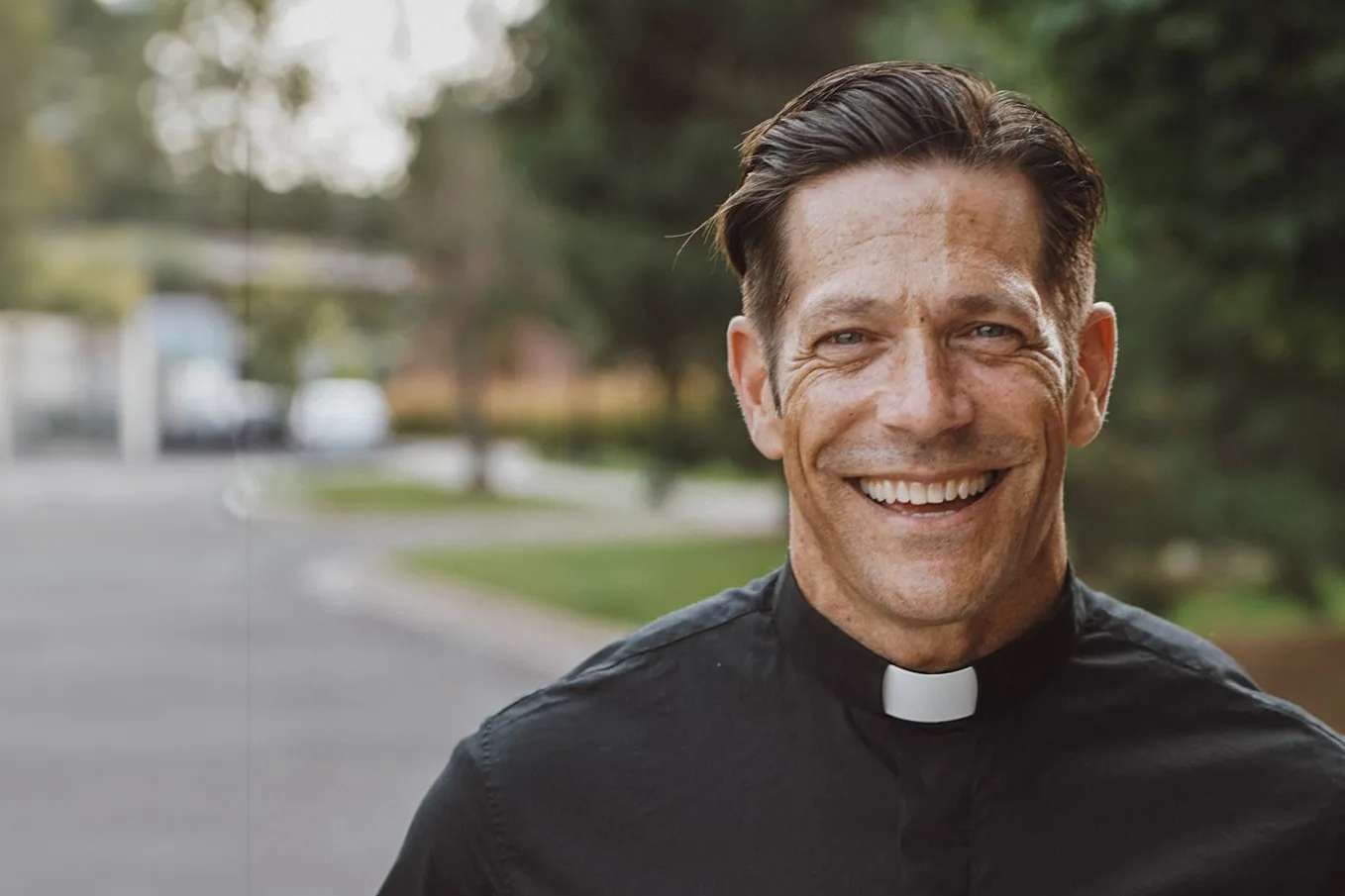
As numerous U.S. dioceses prepare to welcome record numbers of new Catholics this Easter, Father Mike Schmitz, host of Ascension’s “The Bible in a Year” and a priest in the Diocese of Duluth, Minnesota, reflected in a recent interview on how there is not just one factor driving the trend, but many — including a desire for truth, goodness, and beauty.
Especially in recent months, many news outlets have observed the increasing number of converts to the Catholic Church. Fr. Schmitz began by noting that one of the factors behind this trend isn’t something specific to a certain place or time but one relevant at any point in history.
“The human heart is always longing for the Lord, right? We're made for God,” Fr. Schmitz told Zeale News in an April 3 phone interview. “So that fact has always been the case.”
A shift away from the ‘new atheist’ trend
Fr. Schmitz continued by commenting on several factors related to cultural shifts: movements away from cynicism and atheism. He recalled that when he arrived as a chaplain at the University of Minnesota-Duluth in 2005, he encountered the trend of new atheism. The trend could impose a feeling that “all the smart people don’t believe in God” or “all the smart people are atheists,” he explained. This trend made it fashionable to pose objections such as, “Is it even rational to believe in God?”
He said that at the time, he frequently found himself trying to respond to that objection. However, he continued, “something has shifted over the last 20 years.” In recent years, he’s observed an increasing number of scientific and medical professionals — people the culture acknowledges as intelligent — who speak about God.
He noted that throughout history, there have always been smart people who believe in God, but added that in his experience, especially in the past five to 10 years, he’s seen an uptick in conversions in part from the growing number of public-facing individuals who acknowledge God.
“I've seen this happen again and again with the growing numbers of OCIA over the last number of years,” Fr. Schmitz continued. “Someone will say, ‘Well, I started watching this YouTube channel,’ or ‘I started listening to this podcast.’”
As an example, Fr. Schmitz said he has encountered many young men who said that psychologist Jordan Peterson’s approach to exploring the Bible showed that one could be intelligent and see the Bible as rational and full of wisdom.
Fr. Schmitz gave neuroscientist Andrew Huberman as another example, explaining that many people respect his scientific work and follow his podcast. He also noted that about a year ago, Huberman publicly said he believed in God. Furthermore, Huberman was recently asked about what practice he wished he had started sooner, and Huberman’s response was “prayer.”
Fr. Schmitz explained that people look to these individuals for insight, knowledge, and expertise in a scientific or philosophical area, and then they are struck by the fact that these people — whom they trust and look up to — also believe in God.
“There's something about that that just really has opened the door for a lot of people,” Fr. Schmitz added. “I think that's not all it is, but that's one factor.”
Another factor Fr. Schmitz observed is that people are growing tired of being cynical.
“I think that there's a lot of fatigue, culturally speaking, when it comes to cynicism,” he said, “or fatigue when it comes to just, kind of being angry at authority, or angry at the world, or angry at God.”
This creates an openness to considering faith, according to Fr. Schmitz.
Fr. Schmitz, who also serves as the director of Youth and Young Adult Ministry for the Diocese of Duluth, noted that he has seen many students with no religious background who have this openness.
Gen Z and the transcendentals
According to statistics published by Hallow, the Diocese of Duluth saw a 145% increase in people joining the Church in 2026 compared to 2025. Weighing in on the increase of Gen Z young adults becoming Catholic, Fr. Schmitz said that many young people are being drawn to the Church because of the transcendentals: goodness, truth, and beauty.
He noted that every person’s story is different, and people are drawn in through unique encounters or find different aspects particularly engaging. He explained that in his local OCIA classes, candidates and catechumens are asked whether it’s truth, goodness, or beauty that resonates most with them as they consider faith in God.
This introductory question is not simply a “nerdy question,” according to Fr. Schmitz, but one that is unpacked thoughtfully.
Some people share about how they were reading or listening to something, and they might say, “I have the hunger for truth [and] that just spoke to my mind,” he said.
Others say goodness, oftentimes because of friendship or a matter of the heart, he added, while others “just are really captivated by the beauty.” One thing many people have observed is “this, in many ways, a return to, you might say, tradition, in the sense that a lot of traditionally liturgical communities are getting attention and people drawing there, which is wonderful, but you could also just say, wherever there’s beauty.”
He added that one place people recognize beauty is in experiencing a traditional liturgy, whether in the Novus Ordo or Traditional Latin Mass.
He shared that a friend of his had attended a daily Mass with a colleague who herself was not Catholic (though she is entering the Church tomorrow, Fr. Schmitz added), and after the Mass, the colleague said that “it didn’t seem like [the priest] really believed what he was doing up there.”
People notice how the liturgy is celebrated, Fr. Schmitz continued.
“And I think that that also speaks to the truth, but also in goodness, like that integrity,” he said, “but also beauty in that sense of okay, how are we reverently, lovingly, faithfully engaging in the liturgy?”
Thus, goodness, truth, and beauty have played a key role in guiding hearts amid their longing for God, according to Fr. Schmitz.
“These three aspects, these three transcendentals, I think they are what have drawn people to the Lord,” he said, “and I think they will continue to do so.”
Part II of Zeale News’ interview with Fr. Mike Schmitz will feature his insight on Ascension Presents’ recently released video where he explains the parts of the Mass and the news that ‘The Bible in a Year’ has hit one billion downloads.





Comments