Vance calls Pope Leo’s new encyclical ‘very profound’
Vice President JD Vance this week called Pope Leo XIV’s first encyclical on artificial intelligence (AI) and human dignity “very profound,” praising the Pontiff’s effort to confront the moral questions raised by rapidly advancing technology.

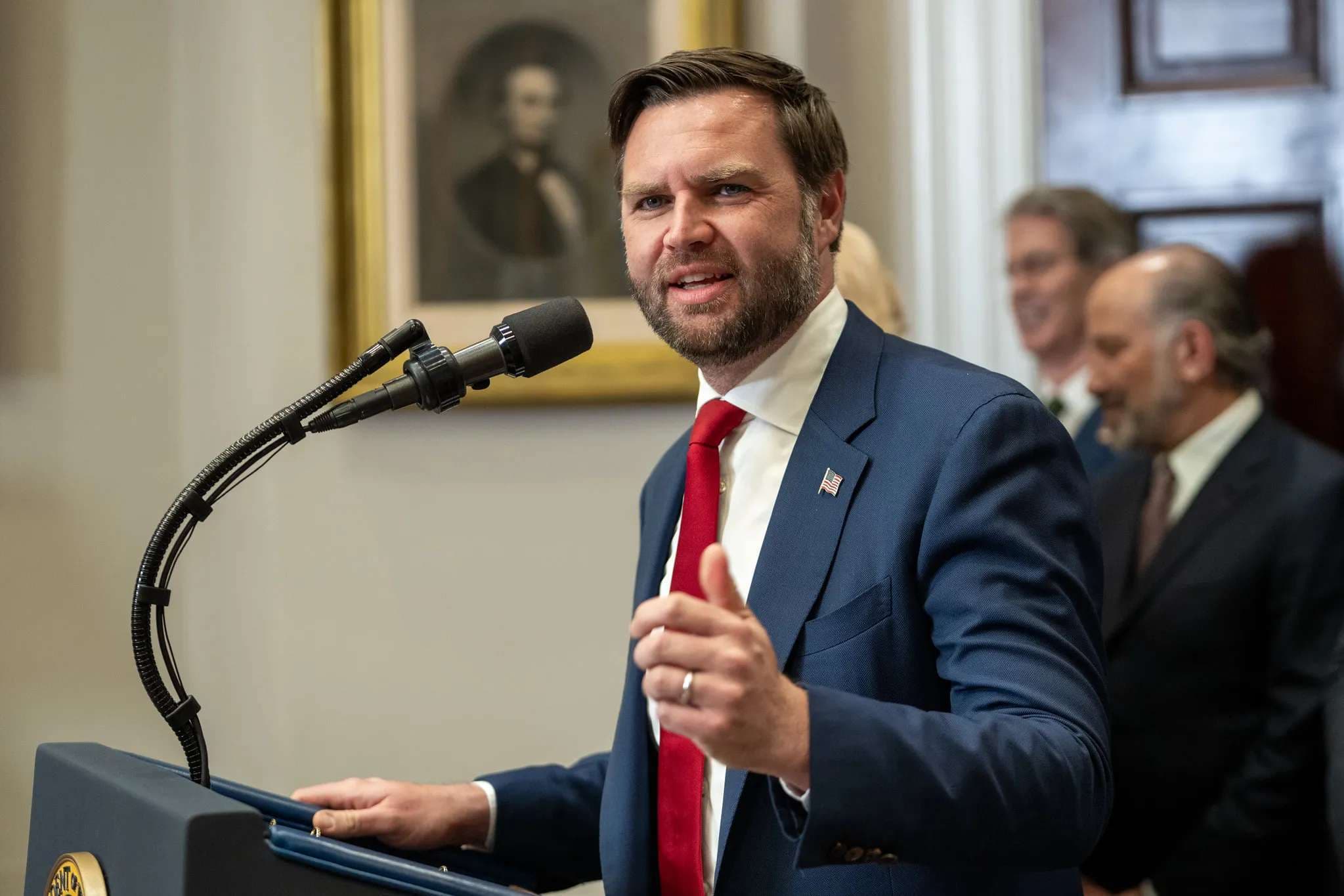
Vice President JD Vance this week called Pope Leo XIV’s first encyclical on artificial intelligence (AI) and human dignity “very profound,” praising the Pontiff’s effort to confront the moral questions raised by rapidly advancing technology.
In a May 26 phone interview with NBC News, Vance, a Catholic, said he had not yet read the full encyclical but had reviewed summaries and portions of it. The encyclical, titled Magnifica Humanitas and published May 25, warns that AI and other technological advances pose moral challenges that carry the potential to reshape how people understand truth, work, human relationships, and human dignity.
>> ‘Magnifica Humanitas': Pope Leo's first encyclical places AI at service of humanity, not power <<
“What I read of it sounds very profound, and the sort of thing that you would expect and hope from a leader of the Church,” Vance told NBC News. “The thing about morality is that the principles never change, but the way you apply those principles does, because the world changes, right?”
Vance said new technologies require Catholics to think carefully about how longstanding moral principles apply to modern questions related to warfare, human interaction, and work.
“You have new technologies and warfare, so you have to update ‘Just War’ doctrine,” he said. “New ways of human beings interacting with one another, so you have to kind of rethink the entire Catholic social teaching in light of the new world that we live in. And I think that’s exactly what the Pope is trying to do. So I’m glad that he did it.”
>> 5 things to know about 'Magnifica Humanitas’ <<
Vance drew a parallel between Pope Leo XIV and Pope Leo XIII, whose 1891 encyclical Rerum Novarum addressed the social and economic upheaval of the Industrial Revolution. Pope Leo XIV signed Magnifica Humanitas on May 15, the 135th anniversary of Rerum Novarum.
The vice president said he is “really glad” the Holy Father took the name of Pope Leo XIV, saying it “was very much a nod to Leo XIII, who, of course, became pope at the beginning of the Industrial Age.”
“I think that Leo XIV is becoming pope at the beginning of the AI age,” Vance added, “and I suspect that if we make it through this successfully, it will be in large part because the Pope and the Church are able to provide the kind of moral leadership that we need.”
Vance said AI raises “profound questions” about how people will interact, what skills will be needed in the workforce, and how future wars will be fought.
“We really need moral leadership to think through those questions,” he said, “and that’s exactly what the Church is the best leader to do.”
During the interview, Vance also previewed his forthcoming book, Communion, set for release June 16 by HarperCollins. According to NBC News, the book traces Vance’s spiritual journey from his Protestant upbringing through atheism and into the Catholic Church.
Vance also confirmed during the interview that Semafor accurately reported that he deleted X from his phone for Lent. He said he has become “much more productive” without the app. He told NBC News he has not yet reinstalled it but plans to eventually because he believes direct interaction with users exposes him to “unfiltered raw opinions” he needs to hear as a political leader.




Comments