Sen. Lindsey Graham dies at 71
Republican Sen. Lindsey Graham of South Carolina died July 11 after a cardiovascular emergency, ending a three-decade career shaped by his role in Supreme Court confirmations, the pro-life movement, and foreign policy positions.
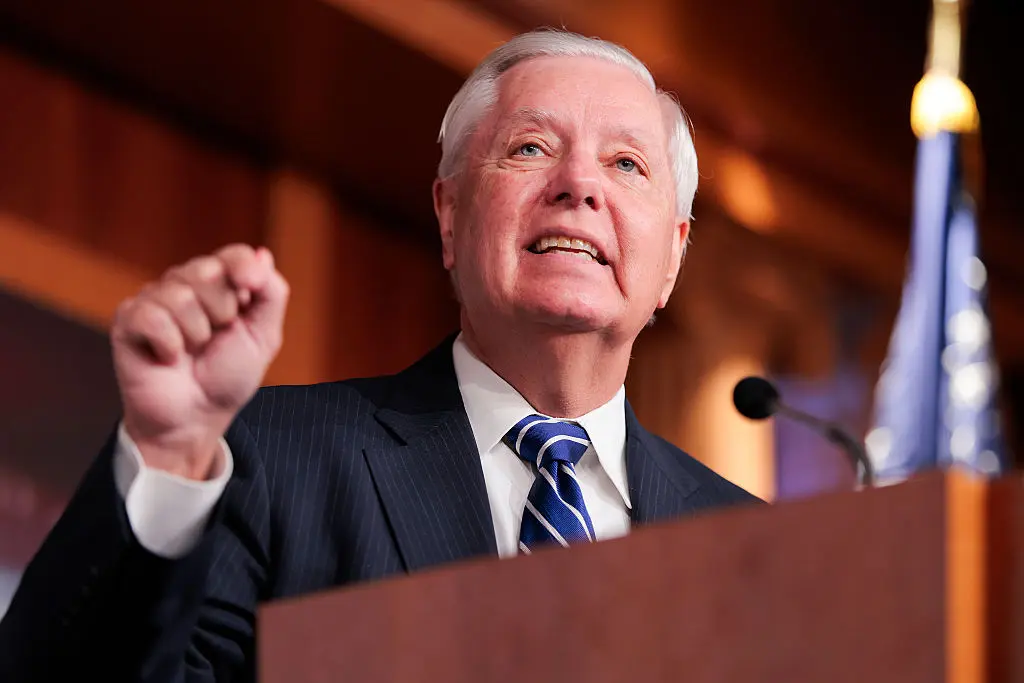
Republican Sen. Lindsey Graham of South Carolina died late Saturday at age 71 after a sudden cardiovascular emergency, ending a three-decade congressional career that shaped the federal judiciary, U.S. foreign policy, and the pro-life movement.
A preliminary finding from the District of Columbia medical examiner identified the cause of death as an aortic dissection stemming from arteriosclerotic cardiovascular disease. President Donald Trump ordered American flags lowered in Graham’s honor and described the senator as a close friend and “true American Patriot.”
Vice President JD Vance, who frequently disagreed with Graham over foreign policy, offered a warmly personal tribute, describing the late senator’s rise from humble beginnings to the center of national power as “a fundamentally American” story.
Vance recalled having a shouting match with Graham over Ukraine funding, only to discover the next day that Graham was working behind the scenes to advance rail legislation important to the then-Ohio senator.
“He fought like hell for the things he believed in,” Vance wrote, while remembering Graham as generous toward colleagues, fiercely interested in elections, and possessed of the best sense of humor in the Senate.
Despite their clashes, Vance said he could not help liking Graham.
“I’ll be praying for him and his family,” Vance concluded.
CatholicVote Vice President of Political Advocacy Joshua Mercer told Zeale News that Graham’s defining domestic achievement may have been his response to the 2018 campaign against then-Supreme Court nominee Brett Kavanaugh, who would go on to vote with the majority to repeal Roe v. Wade.
“Senator Graham had long hoped that the Senate would return to a more congenial past where political parties could come together after elections and find common ground,” Mercer said. “I think his hopes evaporated after the ridiculous and baseless allegations made against Brett Kavanaugh when he was nominated for the Supreme Court in 2018.”
“That was the point when it became undeniable that the Democratic Party had totally adopted a scorched earth policy and showed no sense of remorse or a desire to reverse course,” Mercer continued.
As sexual-assault allegations threatened Kavanaugh’s nomination, Graham delivered an impassioned Senate Judiciary Committee denunciation of the behavior of Democrats — who were up in arms over Trump’s promise to nominate justices who would repeal Roe — in the confirmation process.
“Boy, y’all want power. Boy, I hope you never get it,” Graham told Democratic senators, later adding: “I hope the American people can see through this sham.”
The intervention likely helped turn the political momentum toward Kavanaugh, who was ultimately confirmed by a 50-48 vote.
Trump said Sunday that defending Kavanaugh was the “finest moment” of Graham’s Senate career.
Mercer also highlighted Graham’s work on behalf of unborn children and infants who survive attempted abortions.
“In addition to rallying senators behind Kavanaugh,” Mercer told Zeale News Sunday. “Graham was a strong pro-life advocate. I disagreed strongly with his hawkish, interventionist foreign policy as well as his support for amnesty for illegal immigration. But when it came to Kavanaugh, he was a champion.”
Graham was an original cosponsor of the 2025 Born-Alive Abortion Survivors Protection Act, a measure that would have required medical professionals to provide ordinary care to children born alive following attempted abortions. He condemned Senate Democrats for blocking the legislation.
He also repeatedly introduced legislation restricting late-term abortion. Graham sponsored a 20-week pain-capable abortion ban in several Congresses and, following the overturning of Roe, proposed a federal minimum protection beginning at 15 weeks, with limited exceptions.
“The pro-life movement has lost one of its greatest champions,” said Carol Tobias, president of National Right to Life, in a July 12 statement from the organization. “Throughout his career, Lindsey Graham never wavered in his conviction that every innocent human life has inherent dignity and deserves the protection of the law.”
Graham’s legacy was more divisive on foreign policy. A former Air Force attorney who retired as a colonel, he remained one of the Senate’s most consistent advocates for an interventionist American role abroad, particularly in support of Israel and Ukraine and against Iran.
As Zeale News previously reported, Graham said he met repeatedly with Israeli intelligence officials before the outbreak of the U.S.-Israeli war against Iran and advised Israeli Prime Minister Benjamin Netanyahu on how to persuade Trump to authorize military action. Graham had urged aggressive measures against Iran for years and argued that Tehran’s weakened strategic position presented an opportunity for the United States to strike.
More recently, Graham had questioned the Trump administration’s diplomatic initiative with Iran. Zeale News reported in June that, after spending four-and-a-half hours with Trump, Graham predicted further military action and said a Hezbollah attack on Israel could prompt a new U.S. attack on Iran.
His final overseas trip was to Ukraine, where he met President Volodymyr Zelenskyy July 10 and worked to secure White House support for a new Russia sanctions package. Graham returned to Washington shortly before his death and had been scheduled to discuss the proposal on television Sunday.
Graham entered the House in 1995, became one of the managers of President Bill Clinton’s impeachment, and won election to the Senate in 2002. He later chaired the Judiciary Committee and helped oversee the confirmation of more than 200 federal judges during Trump’s first administration.
South Carolina Republican Gov. Henry McMaster may appoint a temporary senator to serve through the remainder of Graham’s term. A special Republican primary is scheduled for Aug. 11 ahead of the November election.




Comments