Police launch murder investigation after former British lawmaker Ann Widdecombe found dead at home
The suspected murder of former British lawmaker Ann Widdecombe has prompted tributes from across the political spectrum to the prominent Catholic remembered for her decades of public service and outspoken defense of Church teaching.
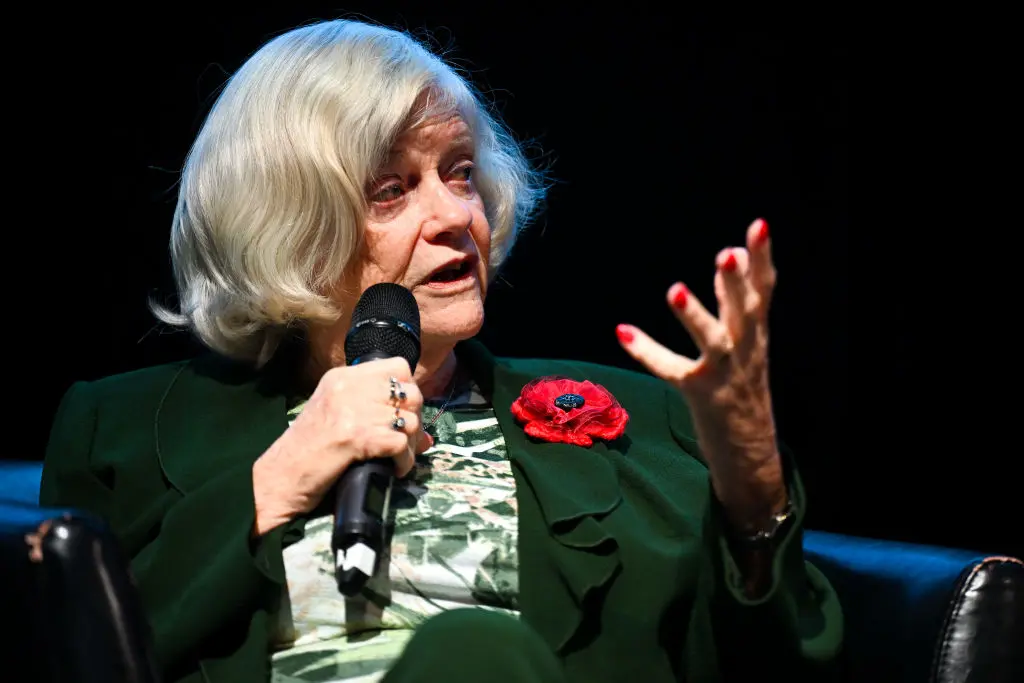
British police arrested a 26-year-old man on suspicion of murder July 10 after former lawmaker Ann Widdecombe, a prominent Catholic convert known for publicly defending her faith, was found dead with serious injuries at her rural home in southwestern England.
According to the BBC, officers were called to Widdecombe’s home in Haytor, Devon, shortly before midday July 9 and found the 78-year-old dead inside. Authorities subsequently launched a murder investigation. Police arrested the suspect the following day in Newton Abbot, a town near Widdecombe’s home, and he remains in custody.
Assistant Chief Constable Matt Longman said in a news conference reported by the BBC that the investigation remains in its early stages. He said they are staying “open-minded” throughout the investigation but currently have no evidence that Widdecombe’s death was politically motivated.
Widdecombe represented communities in Maidstone and The Weald in the House of Commons, the elected chamber of Britain’s Parliament, from 1987 until her retirement in 2010. She was a member of the Conservative Party and held several government positions, including a role overseeing the country’s prison system under Prime Minister John Major from 1995 to 1997.
She gained wider public recognition through television appearances, including “Strictly Come Dancing” in 2010 and “Celebrity Big Brother” in 2018, according to a Guardian obituary.
Known for her outspoken social conservatism, Widdecombe later joined the Brexit Party, which campaigned for Britain’s withdrawal from the European Union and later became Nigel Farage’s Reform UK. She represented southwestern England in the European Parliament from 2019 to 2020 before becoming an immigration and justice spokeswoman for Reform UK.
Widdecombe, who was raised in the Church of England, was received into the Roman Catholic Church in 1993 partly in response to the Church of England’s decision to ordain women as priests.
In a September 2025 interview with EWTN’s Colm Flynn, Widdecombe explained that the denomination’s ordination decision was the final straw in a “very large bundle” of concerns she had. She accused the Church of England of “sacrificing faith to fashion, creed to compromise,” as “numbers in the pews fell.”
“The duty of the Church is to lead. It’s not to follow, it’s to lead,” she told Flynn. “The great thing about Catholicism is it doesn’t compromise — something is either true or it’s false. It’s right or it’s wrong. It’s a sin or it’s not. There’s none of this endless fudging that you get with the Anglican church.”
“If I didn’t think it was the one, true Church, I wouldn’t be Catholic,” Widdecombe said.
After her conversion, Widdecombe became a prominent defender of Church teachings on abortion, marriage, and freedom of conscience. She frequently discussed her faith in public and defended traditional Christian positions in British political debates.
Political leaders across the ideological spectrum paid tribute to Widdecombe, praising her deep faith, firmly held convictions, and decades of public service.
Farage called her a “remarkable and principled woman” in a tribute video shared by Sky News.
“She stood up and fought for what she believed in — a devout Christian and somebody with strong socially conservative views,” he said. “Perhaps not popular in modern Britain, but that is what Ann believed in.”
British Prime Minister Keir Starmer said in an X post that his “thoughts and deepest condolences are with [Ann’s] family and friends.”
“Today we come together across the political divide,” Starmer said, “and I pay tribute to Ann’s dedication during her many years of public service.”
.jpg&w=3840&q=75)


Comments