EXCLUSIVE | Restoring the nation’s ‘moral imagination’: Inside ‘The American Book of Fables’
As conversations about America’s future continue across politics, education, and culture, author and educator Matthew Mehan says renewal begins with fables.

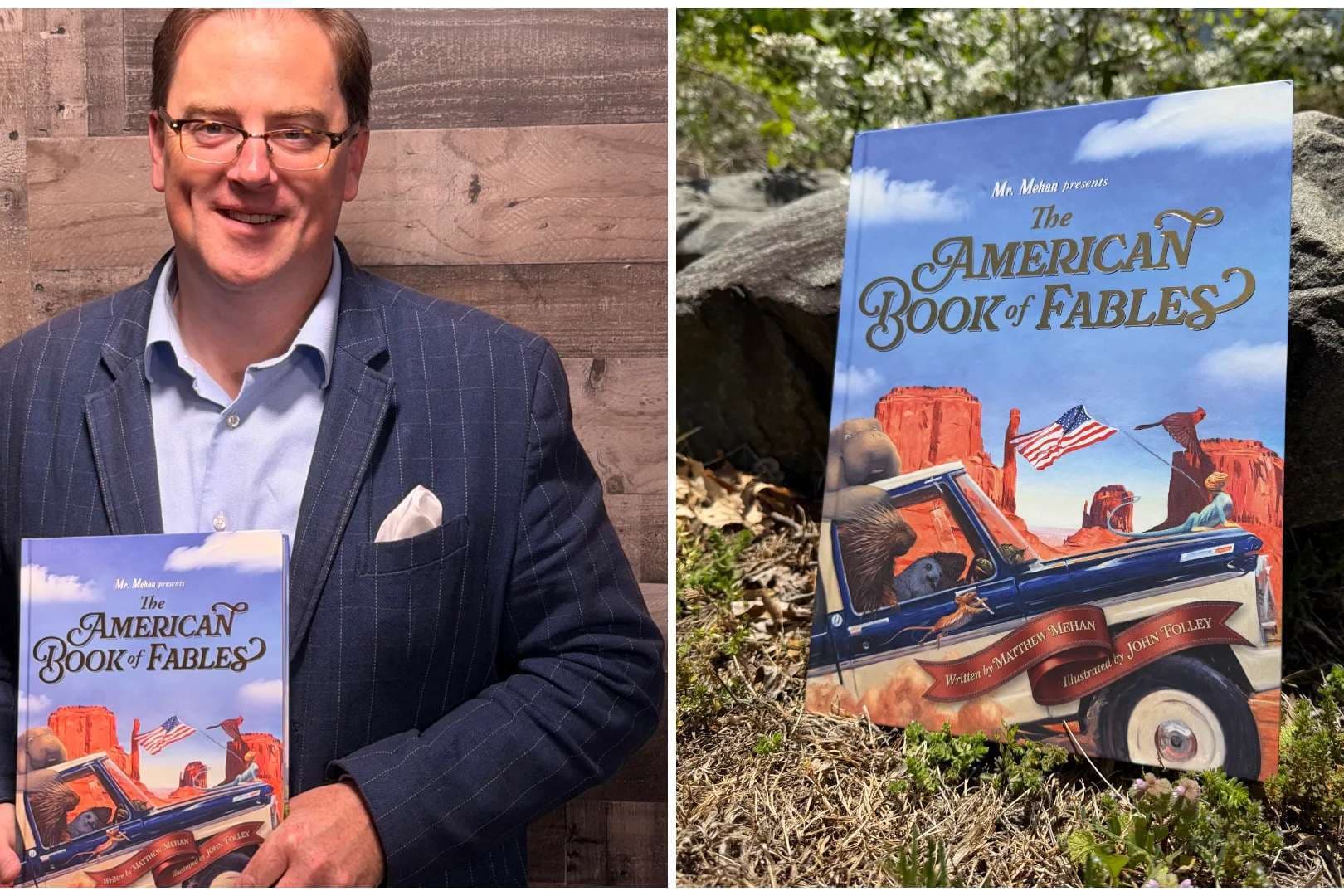
As conversations about America’s future continue across politics, education, and culture, author and educator Matthew Mehan believes cultural renewal begins with the stories and virtues handed down across generations.
That belief serves as the foundation of his May 19 release, The American Book of Fables. Featuring illustrations by realist-impressionist painter John Folley, the book combines original stories, adapted fables, poetry, and historical reflections into a collection intended for readers across age groups.
Mehan is a best-selling author and serves as associate dean and associate professor of Government at Hillsdale College’s Van Andel Graduate School of Government in Washington, D.C. In The American Book of Fables, he turns to one of literature’s oldest traditions as part of a broader effort to revisit ideas he believes remain foundational to American life.
“America is a republic, and the fable genre is a favorite literary form of free, self-governing people,” Mehan told Zeale in a May 21 interview. “Fables teach us morals in a very thoughtful and engaging way, and our constitutional republic is fit, as John Adams put it, ‘only for a moral and religious people. It is wholly inadequate to the government of any other.’”
One of the book’s defining features is its reimagining of the traditional world of fables through a distinctly American lens. Familiar animals from classic fables give way to buffalo, eagles, manatees, and other creatures native to the country’s landscapes, situating the stories within the varied geography of the American landscape.
For Mehan, the American landscapes throughout the book are intended to do more than establish a setting.
“To know is to love, and America is a people, a set of principles for liberty and justice, and it is a place,” he said. “What’s more, the beautiful land that we have been given, when you see it in all its grand and wild wonder, even if only in the descriptions and illustrations of our book, will fill our hearts with a gratitude for the divine Providence that shaped these mountains and set the buffalo to roam the plains.”
Mehan said one of the book’s broader aims is to recover what he sees as a stronger “moral imagination” — one shaped by gratitude and a sense of responsibility.
“A truly moral imagination, which my book sets out to restore in American readers, sees a life of duty and a clean conscience for having done that duty as the greatest joy a person can have in this life,” he said. “And a sense of duty requires a sense of gratitude. People who want to run from duty will invariably attempt to destroy a sense of gratitude in themselves and those around them.”
Mehan connected that understanding of gratitude to what he described as the need to recover “an intelligent piety and patriotism” as a necessary part of the “true pursuit of happiness.”
“If we hate what we’ve been given in this country and hate those who gave it to us, it kills our knowledge and spirit of joyful duty,” he said.
He also sees the project arriving at a meaningful moment in the nation's history as the U.S. approaches its 250th anniversary.
“The fable tradition hasn’t had an American update — for us — in 300 years,” he noted. “Our 250th birthday was the perfect time to gift a great, big book of fables — 395 pages! — to the country!”
The White House recently created a video featuring the book’s concluding poem, American Morning, for Rededicate 250, a prayer event connected to preparations for the anniversary. Mehan described the recognition as “an honor” and said it reflected the same spirit of gratitude explored throughout the book.
Mehan shared that the project grew out of years he spent reflecting on literature, virtue, and the responsibility of using one's talents in service of others. He said his thinking was shaped in large part by studying St. Thomas More and by reflecting on the idea of helping others grow in what he describes as “wit and wisdom.”
Those reflections also informed his understanding of literature and its ability to shape people.
“Literature doesn’t report on what was done, good and bad, and it doesn’t report on what ought to be done, as ethics does,” he said. “Rather, good literature gives examples, ones heightened with beauty and distinction, for how to live and how not to live a witty-wise life.”
Mehan said that process does not require stories to be solemn or overly didactic; it can be carried through humor, imagination, and charm.
“[M]oral medicine is always easier with a spoon full of sugar,” he said, “hence so many humorous animals and madcap adventures in the book as had by the lead character, Hugh Manatee from the Everglades, who has to haul his great bulk across America in all kinds of hilarious ways!”
The role of fables and storytelling feels “even more important now,” according to Mehan, in a culture increasingly shaped by digital content and constant streams of information.
“With so many voices offering so many novel and (let’s admit it) often very foolish ideas about how we ought to live, the cleverness in moral reasoning that the fable tradition helps to foster is just what we need for not just children but adults as well,” he said.
That broader audience also shaped the book’s structure. Rather than designing the collection for a narrow age range, Mehan said he envisioned something that entire families could experience together. Organized around what he calls “Littles, Middles, and Bigs,” the collection is designed with multiple age groups in mind, offering material intended to engage both younger readers and adults.
“I wanted to create an heirloom book for all ages,” he explained, “a kind of beautiful, coffee table classic hardback that could be taken up not by just one age group but by the whole family, young and old alike.”
The American Book of Fables is intended to leave readers with something they can carry beyond the stories themselves. When readers close the book, Mehan said he hopes they leave with “joy, gratitude, and a restored and strengthened ability to navigate the world in a witty-wise way that lets them pursue happiness in accord with Nature and Nature’s God.”





Comments