EXCLUSIVE | The transformative power of beauty: Film retraces ancient Way of St. Cuthbert
Five students and a professor from Benedictine College in Atchison, Kansas, headed to the United Kingdom (UK) in summer 2025 with two objectives in mind: to reach Lindisfarne, the “Holy Island” off the coast of northeast England, after prayerfully walking the Way of St. Cuthbert and to remind the world why beauty matters.

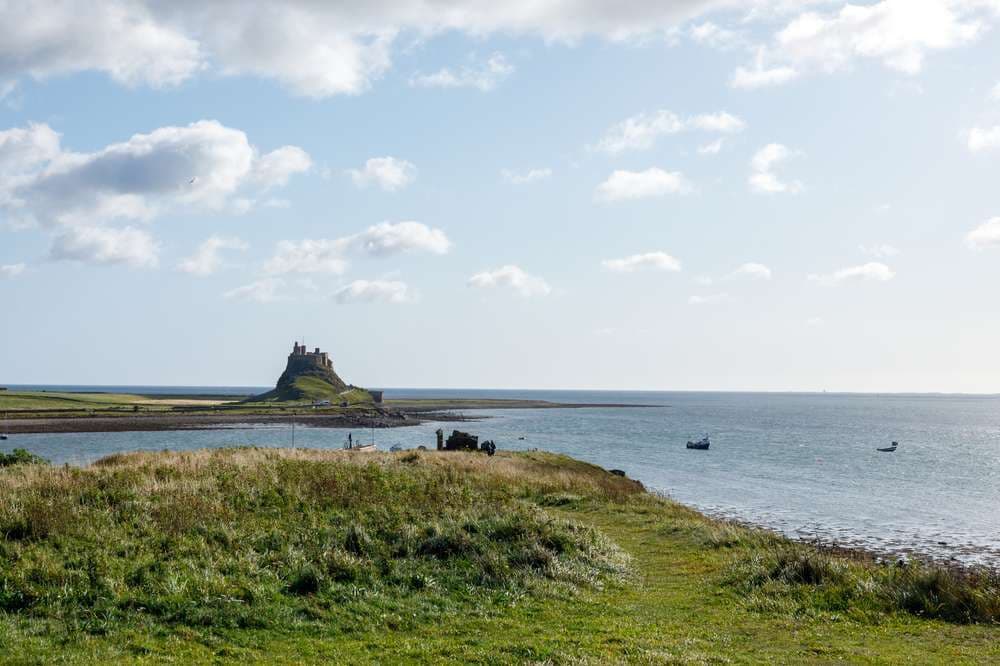
Five students and a professor from Benedictine College in Atchison, Kansas, headed to the United Kingdom (UK) in summer 2025 with two objectives in mind: to reach Lindisfarne, the “Holy Island” off the coast of northeast England, after prayerfully walking the Way of St. Cuthbert and to remind the world why beauty matters.
The result of that trip was a documentary that proposes beauty as the antidote to a culture that prioritizes efficiency, individualization, and power.
“We need beauty like the sick need medicine,” Jason Baxter, director of the Center for Beauty and Culture at Benedictine College, says in the film, titled “The Way of St. Cuthbert.”
In a Jan. 10 interview with Zeale, Baxter, who led the pilgrimage, explained his reasons for choosing the Way of St. Cuthbert — over other common Catholic pilgrimages, such as the Camino or a journey to Rome — for his group’s trip and why he desired to create a documentary of the experience and share it with the world.
Baxter said St. Cuthbert is not well-known outside of England, and the saint’s obscurity appealed to him because it offered a “temporarily disorienting” aspect of beauty — a new perspective into viewing the world.
“I wanted to see if by going to the world in which [St. Cuthbert] made sense, we could recover a vision of beauty and holiness that would make us feel like we were seeing it for the first time,” Baxter told Zeale.
According to the Holy Island of Lindisfarne’s website, St. Cuthbert was born around 635 in Northumbria, a region that is now part of northern England and southern Scotland. He entered a monastery in Melrose, Scotland, around 651and eventually went to the monastery at Lindisfarne.
However, people began seeking after him once his gifts of spiritual guidance and healing were made known. He fled to an island some distance from Lindisfarne and lived as a hermit for 10 years until he was asked to become a bishop.
He died in 687 and his incorrupt body was kept at Lindisfarne until the Vikings invaded England. Baxter told Zeale that at that point, the monks fled with the monastery’s treasures and the body of St. Cuthbert to a cave — now revered as a holy site — where his body remained until it was transferred to Durham.
The Way of St. Cuthbert begins in Melrose and ends at the Holy Island. Baxter told Zeale that his group, made up of students from the Center’s Angelico Fellows program, spent six days on the pilgrimage. They prayed and read from ancient hymns and poems as they traveled.
His inspiration for the pilgrimage and documentary came from two sources: the Lindisfarne Gospels, an ancient illuminated manuscript created at the Lindisfarne monastery, and Benedictine College’s hope of transforming the culture in America. He explained that his goals for the Angelico Fellowship echo that of the college, except that his goal is to make an even larger impact: He wants to “bring the world to Kansas and then take Kansas to the world and create this cycle, this loop.”
With the completion of the pilgrimage, the first loop has already been closed, Baxter noted. The loop opened in early 2025 when the Center awarded its Prize for Theology and the Arts to Sir James MacMillan, a Scottish Catholic composer whose work, “O Radiant Dawn,” was performed by Benedictine College students.
Baxter pointed out that Benedictine students then went to Scotland, where MacMillan came from, and began the pilgrimage, which ended at Lindisfarne as the sun came over the horizon. In the documentary, a time-lapse of the sunrise is set to a recording of Benedictine’s performance of MacMillan’s work that honors the dawn and Christ.
“So we did it, right? We completed the loop,” Baxter said.
His other motivation for creating the documentary stemmed from a desire to emulate the Lindisfarne Gospels using today’s media and methods.
“I think our goal in making the film was not only to complete the circle of taking Kansas to the world and bringing the world to Kansas, but I also wanted to make a digital illuminated manuscript,” he said. “I wanted to use the technology of our day to make something like the Lindisfarne Gospels. The Middle Ages made these wonderful swirling manuscripts. We make films, but in some sense we could do something as beautiful and intricate and woven together as what they did. So that’s how I think of the film: as a digital illuminated manuscript.”
Baxter partnered with Arimathea Investing and St. Anthony Communications to create and shoot the documentary, which will be available to watch next week on Baxter’s Substack and the Center’s website. The film will also be streamed live on EWTN at 10 a.m. Jan. 17 and re-aired March 20, the feast of St. Cuthbert.
As Zeale previously reported, filming for the documentary faced issues when the UK’s National Trust denied the film crew permission to shoot footage at St. Cuthbert’s cave because of the crew’s religious affiliation. The filmmakers ultimately decided to move forward with the documentary without the footage, but Baxter told Zeale what it was like to be inside the cave.
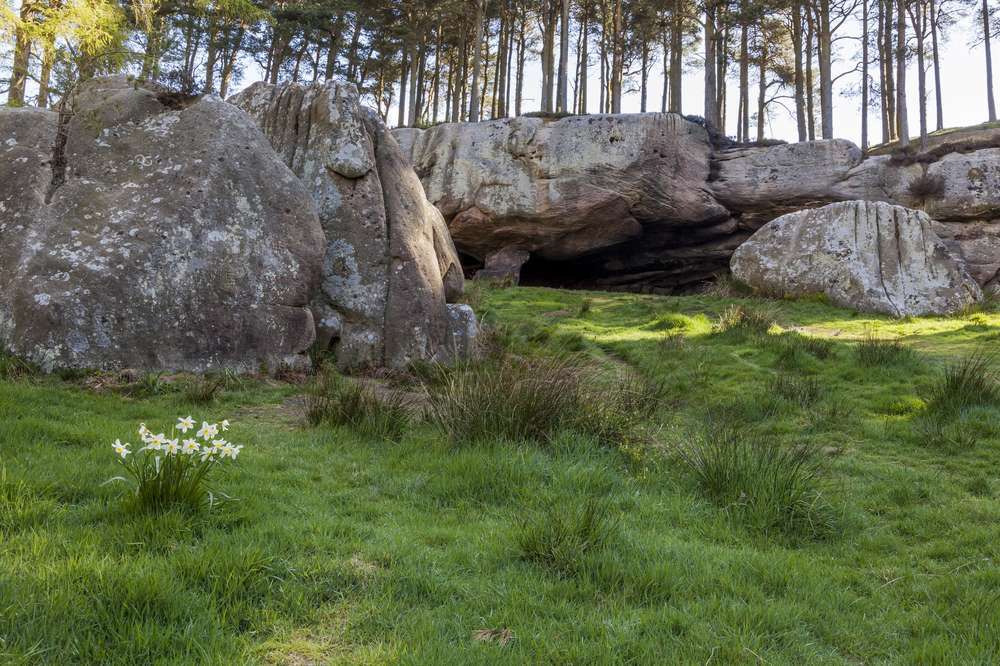
UK’s National Trust accused of discrimination after denying Catholic film permit at religious site
International26 days ago
“Being in the cave, you wanted to be quiet and sing at the same time,” he said. “You wanted to sort of take in the world … And you want to kind of hold it in, but then you want to joyfully proclaim it back out.”
Baxter said the cave was “one of those magnificent places” that has the ability to bring holiness and art and nature together. He added that being denied permission to shoot at the cave made the footage from their arrival to the Holy Island even more special than it already was, saying that the experience of traveling to Lindisfarne brought a “sense of gratitude that overflows in praise.”



Comments