UK’s National Trust accused of discrimination after denying Catholic film permit at religious site
A Catholic company is calling out the United Kingdom’s National Trust for religious discrimination after the organization refused to let a Catholic filmmaker shoot part of a documentary at a religious historical site in England because of his religion.

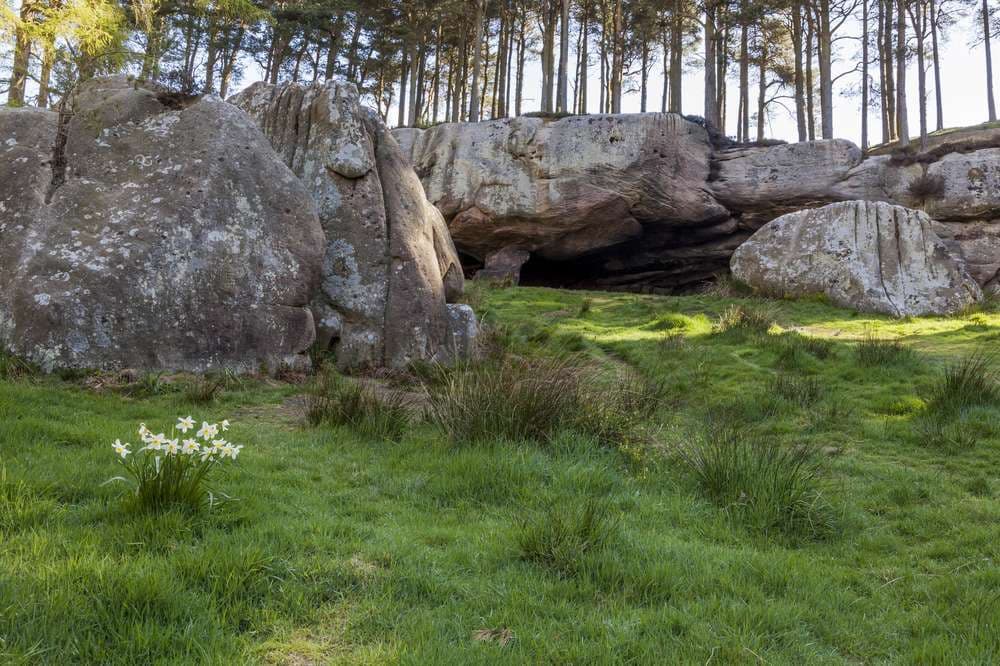
- Catholic filmmaker Christian Holden was denied permission by the UK’s National Trust to film scenes for a documentary at St. Cuthbert’s Cave because of his religious affiliation.
- The documentary focuses on the historic Way of St. Cuthbert pilgrimage and was commissioned by the Catholic company Arimathea Investing.
- Filmmakers and producers accused the National Trust of religious discrimination and erasing Christian heritage at a historically Christian site.
- After public backlash, the National Trust said it is reviewing how the request was handled and is open to resolving the issue.
A Catholic company is calling out the United Kingdom’s National Trust for religious discrimination after the organization refused to let a Catholic filmmaker shoot part of a documentary at a religious historical site in England because of his religion.
Arimathea Investing, a Catholic company that commissioned filmmaker Christian Holden of St. Anthony Media to create a documentary on the Way of St. Cuthbert pilgrimage, stated in an emailed news release that Holden asked the National Trust for permission to film a scene at the Cave of St. Cuthbert in Northumberland. The location is traditionally considered to have been the resting place of St. Cuthbert’s body in 875 before it was moved to Durham, according to GB News.
Even though the site has Catholic historical roots, the National Trust refused to give Holden a film permit, saying they do not allow film crews with “religious affiliation” to have access to the cave.
“I was bewildered to be refused to visit and film this site of such importance on the basis of essentially being a Christian filmmaker,” Holden told GB News, later adding that he’s rarely had issues obtaining film permits for religious and historical sites during his years as a filmmaker. “So I was really taken aback to be refused permission at this cave.”
He said that the National Trust did not give him any explanation as to why his religious beliefs would exclude him from access to the cave.
Daniel Catone, founder of Arimathea and the film’s executive producer, stated in the release, “It is deeply ironic and troubling that the National Trust would ban a Christian production from a site named after a Christian Saint.”
“This is not just about a filming permit; it is about the erasure of our history and the discrimination against religious expression in spaces that belong to our shared heritage,” he continued.
The documentary follows a professor and a group of students from the Center for Beauty and Culture at Benedictine College in Kansas as they walk the pilgrimage route. The Way of St. Cuthbert is a roughly 62-mile route between Melrose Abbey in Scotland, where St. Cuthbert started his religious life in 650 AD, and Lindisfarne, also called the Holy Island, according to the pilgrimage’s website.
GB News reported that the filmmakers ultimately decided to continue with film production, minus the scenes at the cave.
Arimathea is calling for Christians to stand up against religious discrimination and urge the National Trust to review its procedures. According to GB News, the documentary has sparked a religious freedom discussion that appears to have pressured the organization to walk back slightly its response to Holden’s request. A National Trust spokesman reportedly said that the organization “has said it has no mandate or policy about religious freedom.”
He also said, “Each request should be reviewed on a case-by-case basis, and we’re looking into how this was handled to ensure it doesn’t happen again.”
According to the spokesman, the National Trust is “keen to work with Mr. Holden to find a resolution to this issue.”



Comments