Federal appeals court rules against migrants being detained without bond hearings
A federal appeals court on May 6 became the second to reject the Trump administration’s interpretation of federal immigration law allowing mandatory detention without bond hearings for many illegal immigrants facing deportation proceedings. The decision deepens a circuit split some believe will lead to the Supreme Court taking up the matter.

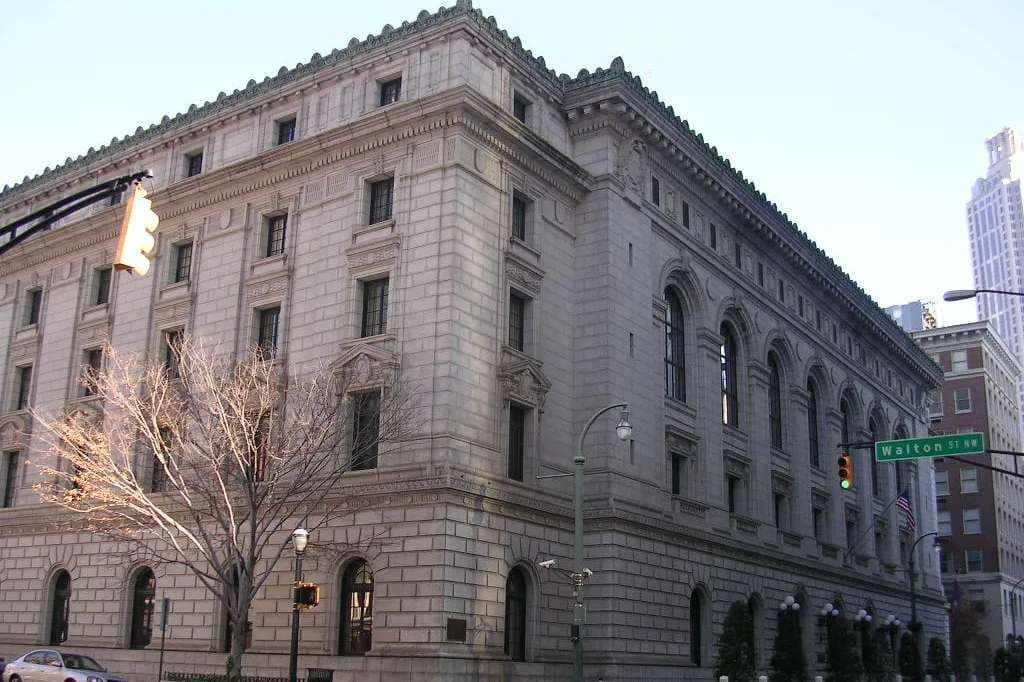
A federal appeals court on May 6 became the second to reject the Trump administration’s interpretation of federal immigration law allowing mandatory detention without bond hearings for many illegal immigrants facing deportation proceedings. The decision deepens a circuit split some believe will lead to the Supreme Court taking up the matter.
In a 2-1 ruling, the Atlanta-based 11th U.S. Circuit Court of Appeals stated Immigration and Customs Enforcement (ICE) cannot require detention for most immigrants arrested inside the U.S. without allowing them to seek release through bond hearings. The majority held that the agency’s interpretation of a 1996 immigration law exceeded the authority Congress gave the executive branch under federal immigration law and conflicted with decades-old immigration statutes.
“Simply put, the language that Congress has chosen to use does not grant to the Executive unfettered authority to detain, without the possibility of bond, every unadmitted alien present in the country,” Judge Stanley Marcus, joined by Judge Robin Rosenbaum, wrote for the majority.
Marcus was appointed by former President Bill Clinton, and Rosenbaum by former President Barack Obama.
The dispute centers on whether ICE can classify many immigrants already inside the U.S. as “applicants for admission,” which would allow the government to detain them without bond hearings under a 1996 law. ICE implemented the policy in July 2025, and the Board of Immigration Appeals later endorsed it in September 2025, according to Politico.
Judge Barbara Lagoa, a Trump appointee, dissented against the May 6 ruling, arguing that the majority distorted the law’s meaning. According to Lagoa, there is no meaningful difference between an “applicant for admission” and an “alien seeking admission.”
“To ‘apply’ simply means to request or seek something. When a person applies for something, they are necessarily seeking it,” Lagoa wrote in her dissent. “No one would say, ‘She is an applicant for admission to the University of Miami, but she is not seeking admission to the University of Miami.’”
The ruling follows a similar decision in April by the 2nd Circuit Court of Appeals in New York. Two other circuits — the 5th and 8th — have upheld the policy in divided rulings, according to AP News. A 7th Circuit panel on May 5 split three ways on the policy, with one judge rejecting it, another agreeing with it, and the third declining to weigh in.
Politico reported that the split among the circuits suggests the matter will ultimately fall to the Supreme Court.
A Department of Homeland Security spokesperson told the news outlet — citing opinions from the Board of Immigration Appeals, decisions of the 5th and 8th courts of appeals, and Lagoa’s dissent – that the agency remains confident its interpretation of the law will prevail.





.jpg&w=3840&q=75)
Comments