Hegseth gives heated testimony in first congressional hearing since start of Iran war
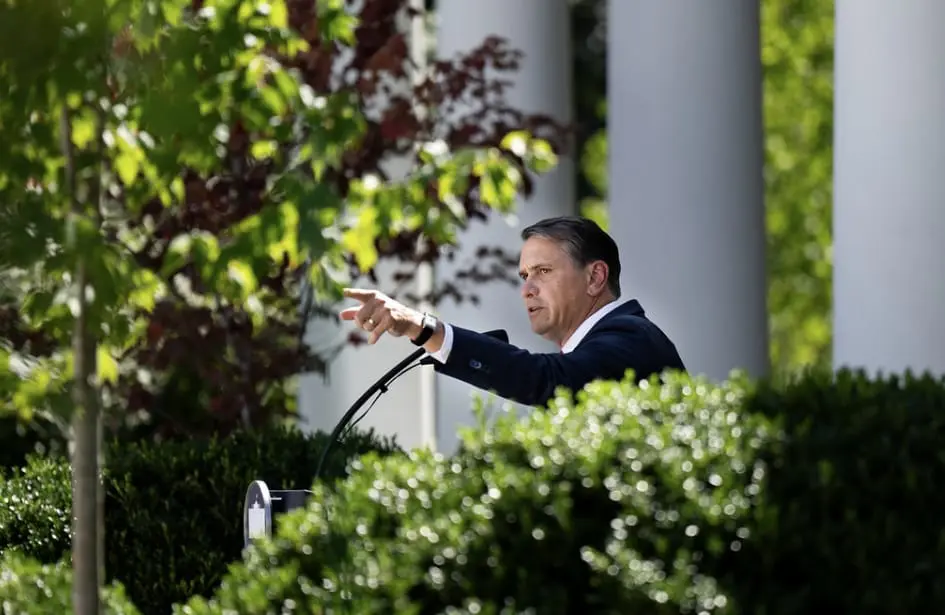
War Secretary Pete Hegseth defended the Trump administration’s handling of the Iran war during a heated House Armed Services Committee hearing April 29 and 30, his first public questioning before lawmakers since the conflict began Feb. 28.


War Secretary Pete Hegseth defended the Trump administration’s handling of the Iran war during a heated House Armed Services Committee hearing April 29 and 30, his first public questioning before lawmakers since the conflict began Feb. 28.
The hearing was formally centered on the Pentagon’s fiscal year 2027 budget request but quickly became a broader confrontation over the administration’s justifications for the war, its rising cost, and whether U.S. troops have been adequately protected.
Lawmakers challenge shift from ‘imminent threat’ to halting Iran’s ‘nuclear ambitions’
Rep. Adam Smith, D-Wash., the top Democrat on the committee, pressed Hegseth over what the lawmaker characterized as the administration’s shifting rationale for the war. Smith pointed to the fact that the administration claimed Iran’s nuclear program had been “obliterated” during a 2025 U.S strike while also citing an “imminent” nuclear threat as the reason for launching the war months later.
“We had to start this war, you just said 60 days ago, because the nuclear weapon was an imminent threat,” Smith said. “Now you’re saying that it was completely obliterated?”
Hegseth replied that while Iran’s nuclear facilities had been devastated in the 2025 operation known as “Operation Midnight Hammer,” Tehran “had not given up their nuclear ambitions, and they had a conventional shield.”
“So Operation Midnight Hammer meant nothing of substance?” Smith asked, arguing that Hegseth’s comments suggested the U.S. is “in the exact same place we were before.”
“Their facilities were bombed and obliterated,” Hegseth said. “Their ambitions continued.”
The administration has repeatedly framed the war as necessary to counter an imminent nuclear threat. In his Feb. 28 announcement that the operation had begun, President Donald Trump said the administration’s goal was “to defend the American people by eliminating imminent threats from the Iranian regime” and preventing Tehran from obtaining a nuclear weapon.
However, Director of National Intelligence Tulsi Gabbard testified before the Senate Select Committee on Intelligence March 18 that the intelligence community does not assess Iran as posing an imminent nuclear threat.
As Zeale News reported at the time, Gabbard’s testimony indicated that “Trump alone bears responsibility for the White House’s claim that Iran posed an ‘imminent’ nuclear threat ahead of joint U.S.-Israeli strikes on the Middle Eastern Nation” but she “also made it clear that the intelligence community believes the U.S. completely destroyed Iran’s nuclear enrichment program in 2025 and that Iran has made no effort to rebuild it since then.”
Committee members press Hegseth on taxpayer cost of war
Lawmakers also questioned Hegseth about the war’s cost, which Pentagon Acting Chief Financial Officer Jules Hurst III said has surpassed $25 billion, according to AP News. Several Democrats zeroed in on the economic fallout felt by Americans.
“Do you know how much it will cost Americans in terms of their increased cost in gas and food over the next year because of Iran?” Rep. Ro Khanna, D-Calif., asked.
Hegseth responded, “I would simply ask you what the cost is of an Iranian nuclear bomb.”
Khanna argued that the full cost of the war is roughly $631 billion, about $5,000 per household, and asked Hegseth whether he would “acknowledge that there is an economic cost to the American people for doing what you believe is necessary to make Iran denuclear.”
In response, Hegseth said the administration has “an incredible economic team that’s managing this better than” the previous administration would have.
Khanna later criticized Hegseth for not knowing “what we paid in terms of the missiles that hit the Iranian school,” “what we’re paying in terms of gas,” and “what we’re paying in terms of food.” He called the Pentagon’s $25 billion figure “totally off.”
Rep. Seth Moulton, D-Mass., said even the $25 billion figure would cost each American household roughly $600. Hegseth again responded by asking what the cost would be of Iran obtaining a nuclear weapon.
Hegseth grapples with questions about casualties and troop complaints
Hegseth also faced questions over whether the Pentagon had properly protected U.S. troops from Iranian drone attacks, with lawmakers pointing to the six service members killed and the many wounded at a base in Kuwait.
In one tense exchange, Democratic Rep. Chris Deluzio of Pennsylvania cited accounts from soldiers who survived an Iranian drone attack on a U.S. base in Kuwait. According to Deluzio, some service members alleged inadequate defenses and poor preparedness.
“We took every effort possible at the commencement of this campaign to ensure the defense of our troops,” Hegseth said.
Deluzio challenged that answer, asking whether Hegseth was saying there was “not a single additional thing” the Pentagon could have done to protect the troops. The lawmaker also noted that the Pentagon did not provide troops with overhead protection against drone strikes.
“I’m telling you,” Hegseth said, “that as a department, we did every conceivable thing at my level and every echelon down to ensure the maximum force protection for our troops.”
Rep. Pat Ryan, D-N.Y., similarly questioned Hegseth over the American deaths. He cited an April 9 CBS News report in which military survivors of the Kuwait strike said their unit was left dangerously exposed with virtually no drone defenses at an unfortified position. One survivor, when asked to describe the degree of fortification at the base, said he would “put it in the none category.”
Ryan pressed Hegseth on whether intelligence had identified the location as a likely Iranian target and whether it was vulnerable to an aerial attack.
“Yet you sent our soldiers from the 103rd Sustainment Command there anyway. Is that true or false?” Ryan asked.
Hegseth responded, “We took proactive measures from the beginning to ensure force protection.”



Comments