Franciscan University professor: The Vatican must speak up for Jimmy Lai
As Catholic convert and pro-democracy advocate Jimmy Lai looks ahead at 20 more years in prison after already serving five under Beijing’s dissent crackdown, the Vatican’s yearslong strategy of “quiet diplomacy” in situations such as his is not only ineffective, but an “abdication,” a professor at Franciscan University of Steubenville argued in a Feb. 17 op-ed.

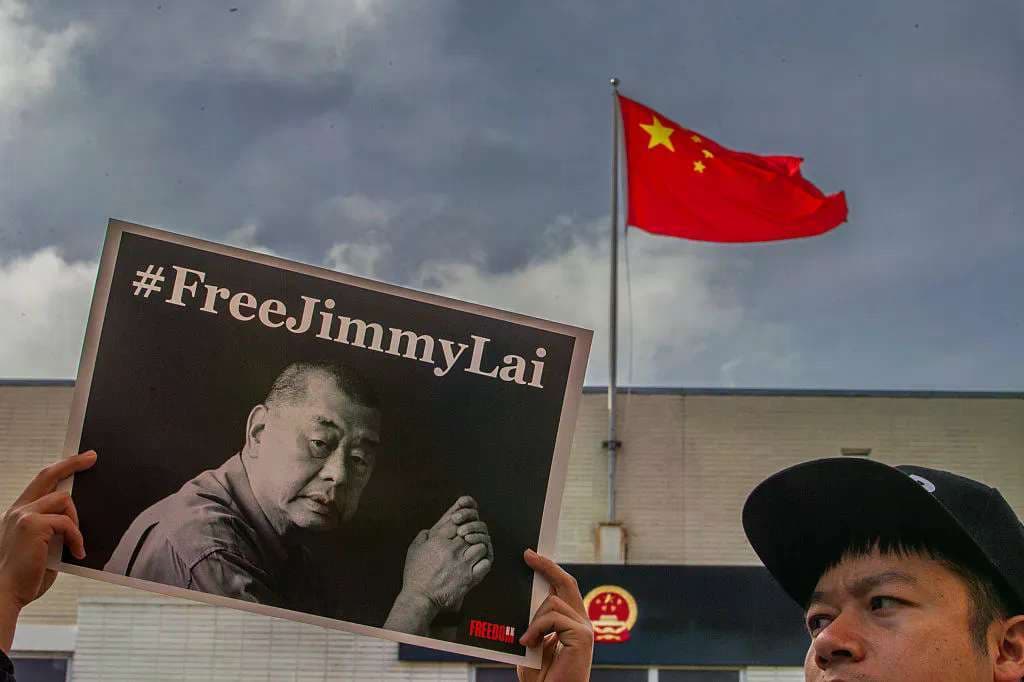
As Catholic convert and pro-democracy advocate Jimmy Lai looks ahead at 20 more years in prison after already serving five under Beijing’s dissent crackdown, the Vatican’s yearslong strategy of “quiet diplomacy” in situations such as his is not only ineffective, but an “abdication,” a professor at Franciscan University of Steubenville argued in a Feb. 17 op-ed.
Writing in the Washington Times, sociology professor Anne Hendershott contrasted this approach to that of President Donald Trump, who has spoken publicly about Lai’s situation and made obtaining his freedom an administrative priority. Hendershott is also director of the Veritas Center for Ethics in Public Life at Franciscan.
“History will remember who spoke for Jimmy Lai and who looked away. It will remember that the most forceful advocate for him has been a secular President Trump, while the Vatican chose caution over conscience,” Hendershott wrote. “Moral authority is not claimed; it is earned in moments like these. Jimmy Lai deserves a church that stands with him. For now, he finds his defenders in Washington, not Rome.”
A Hong Kong court sentenced 78-year-old Lai to 20 years in prison Feb. 9, essentially giving him a “death sentence,” Lai’s family has lamented. Similarly, Hendershott noted that this sentence will essentially keep Lai imprisoned for the rest of his life, “likely the goal of the ruthless regime determined to silence him forever.”
Hendershott wrote that Lai’s situation is a test for international leaders on whether they will speak out in defense of human dignity “when it comes at a political cost” and lamented that Pope Leo XIV has been reluctant to speak publicly about the activist’s plight.
“While Mr. Lai sits in prison as a Catholic martyr for religious freedom and free expression, the Vatican has said nothing,” she wrote. “The Holy See has offered no public demand for Mr. Lai’s release, no moral rebuke of Beijing’s crackdown, and no acknowledgment of the suffering of Hong Kong’s Catholics.”
However, Pope Leo did comment to reporters about the Trump administration’s immigration and deportation enforcement, saying directly that people must be treated humanely and in ways that respect their dignity, Hendershott recalled.
Lai has found support from Trump and his administration, Hendershott wrote, citing its repeated diplomatic efforts, public condemnation of the “sham national security charges,” and recent indication that “Lai’s imprisonment is a central obstacle to any normalization of U.S.-China relations.”
She wrote that Pope Leo “appears unwilling to risk even mild displeasure from the Chinese government,” a stark contrast to a secular political leader who is “willing to confront Beijing directly.” She criticized the Vatican’s approach of “quiet diplomacy,” noting Lai’s worsening health in prison.
“At this point, quiet diplomacy has become abdication,” she wrote. “The Vatican’s secret agreement with Beijing, which has enabled the suppression of underground Catholic communities, seems to have silenced the Holy See’s moral voice. The church — which once stood with dissidents in Poland, Cuba and the Soviet bloc — now refuses to speak out publicly for one of its own.”
Trump, from the outset, has acted the way many thought the Vatican would, by treating Lai “not as a bargaining chip but as a man whose dignity demands public defense,” Hendershott wrote.
“If moral leadership means anything,” she continued, “then it must mean standing with the persecuted when it is inconvenient or politically risky.”

Comments