Hundreds of thousands of people pre-registered to venerate remains of St Francis in Assisi
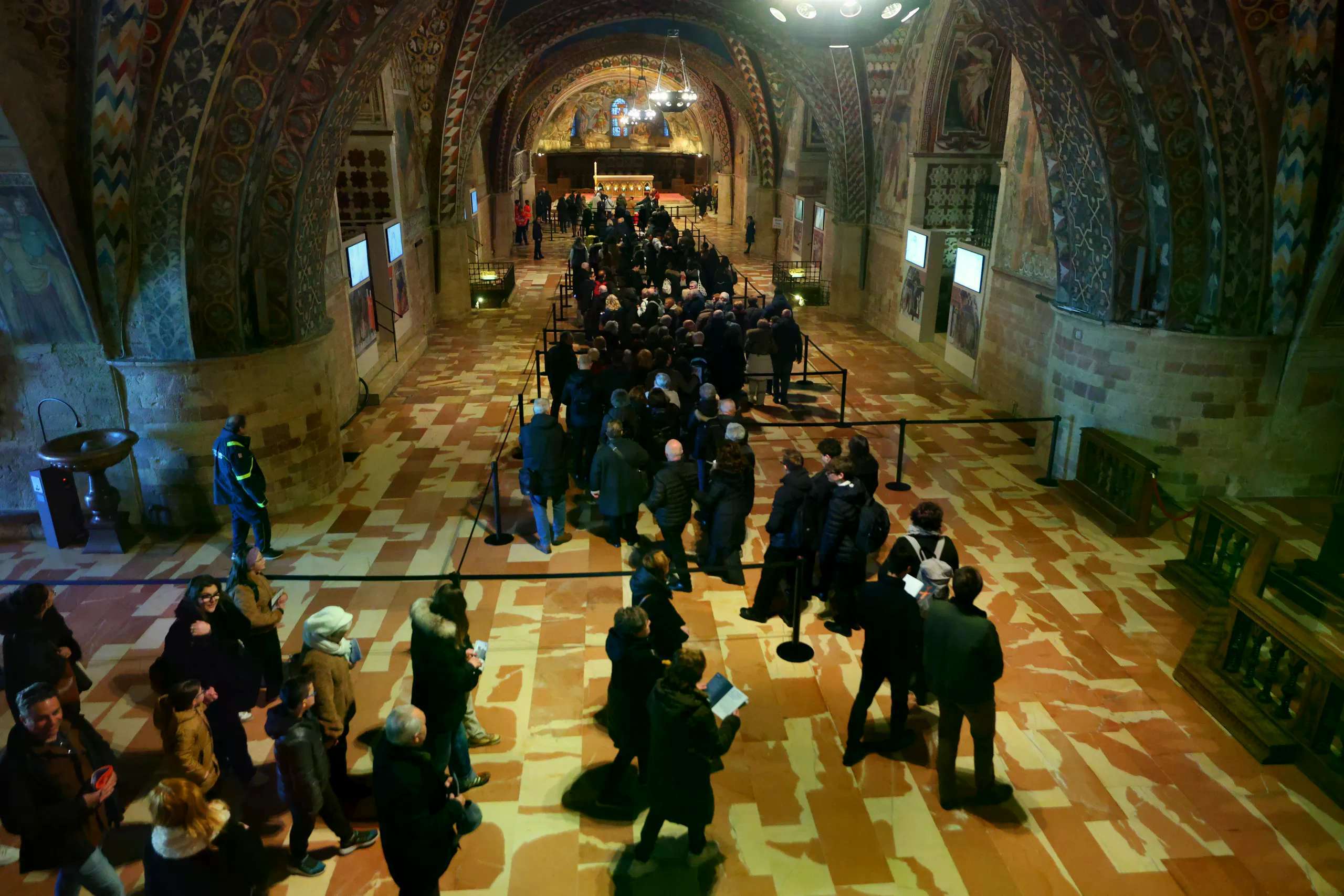
Almost 400,000 people have pre-registered to visit and venerate the bones of Saint Francis of Assisi, which are on exhibition from Feb. 22 to March 22, marking the 800th anniversary of the saint’s death, according to international media company DW.

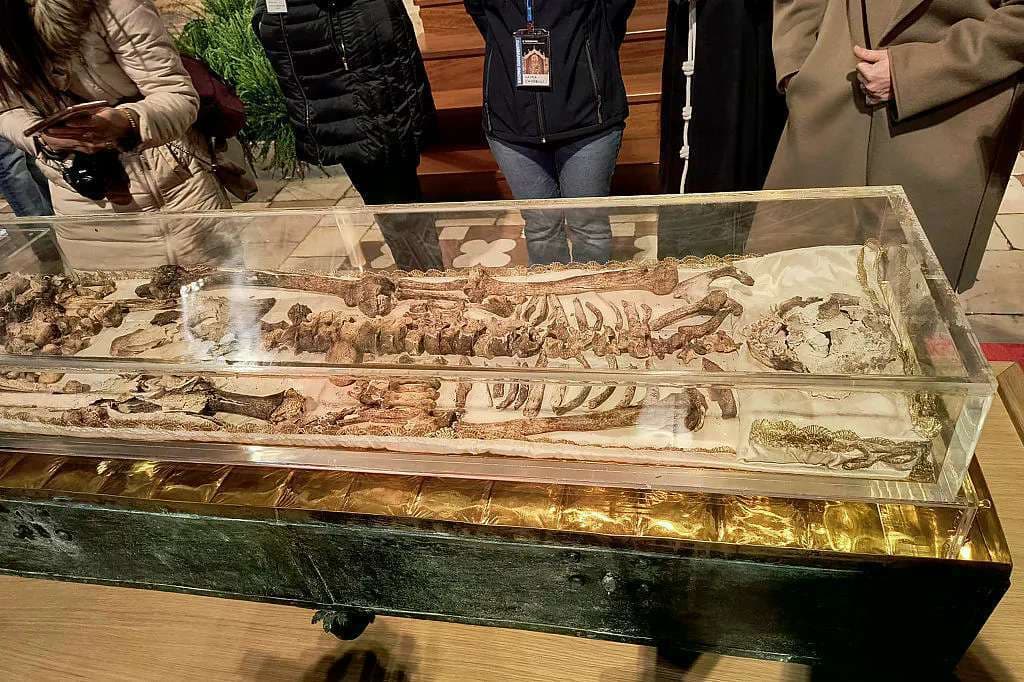
Almost 400,000 people have pre-registered to visit and venerate the bones of Saint Francis of Assisi, which are on exhibition from Feb. 22 to March 22, marking the 800th anniversary of the saint’s death, according to international media company DW.
Christians’ veneration of saints is an ancient tradition, Father Guilio Cesareo, director of the Sacred Convent of Assisi’s communications office, told Vatican News in an interview days before the exhibition began. Commenting on the impact of the event on Assisi’s local community, he noted that ahead of the massive pilgrimage event, all hotels and restaurants in Assisi were booked.
“We hope this can be an opportunity of grace, because our society constantly tells us: ‘Think of yourself.’ ‘Don’t give yourself. Don’t worry about others. Take care of yourself first.’ St. Francis says exactly the opposite, and his bones testify to this,” Fr. Cesareo said.
“They are the bones of someone who gave himself, who consumed himself, by walking, kneeling, and living in caves,” he added. “He tells us in our hearts: do not be afraid to give yourself, because in doing so you bear fruit. I think this is beautiful and deeply beneficial for all of us.”
The Diocese of Assisi and the Assisi Diocesan Foundation are also organizing guided tours for pilgrims to visit restored sites where some of the crucial moments of St. Francis’ life took place, such as where he renounced all his earthly possessions, according to an Feb. 18 emailed press release from the diocese.
The tours will take pilgrims to the underground spaces of the Bishop’s Palace, which is still under renovation but is safe for visitors.
“Although the work is not yet complete, we will allow pilgrims who come to Assisi to venerate the remains of our Saint to see the site of the renunciation, pass through the Door that Francis opened, and discover the strong bond the Poverello has with these places he entered and where he also composed the final verses of the Canticle,” Apostolic Administrator Monsignor Domenico Sorrentino said in the release.
St. Francis, known as the Poverello — “the little poor one” — was born into a wealthy family but as an adult he made a radical renouncement of all his possessions.
The release states that the Bishop’s Palace is the site of numerous key moments in the life of the saint, who visited often and spoke with Bishop Guido. It is “is where the dispossession of Saint Francis took place, where the Poverello returned in 1225 and fostered reconciliation between the local supreme ruler and the then Bishop, and finally where, in 1226, almost two months before going to die at the Porziuncola, he was welcomed and cared for by Bishop Guido, even composing the verse of the Canticle of the Creatures dedicated to ‘Sister Death.’”
According to the release, the restoration project has unearthed underground rooms and even an “ancient entrance door” into the building.
Msgr. Sorrentino said that the tours there will be “immersive” and will have “a strong spiritual involvement, so that everyone can discover among these stones the spirit of renunciation, which means, first and foremost, abandoning one's own selfishness and opening up to others.”
“To those who encounter Francis through the veneration of his body,” he said, “along with the messages of all the other sanctuaries in Assisi, we offer this further piece of the puzzle so that pilgrims can truly rediscover, through our Saint, Christ and his Gospel.”
According to a Feb. 21 press release from the diocese, the community of friars at the Sacro Convento in Assisi inaugurated the first-ever public and extended veneration of St. Francis’ body. Among those in attendance of a press conference held just before the inauguration included the mayor of Assisi, Valter Stoppini; Msgr. Sorrentio; President of the Umbria Region, Stefania Proietti, and Fra Marco Moroni, OFMConv, custodian of the Sacro Convento.
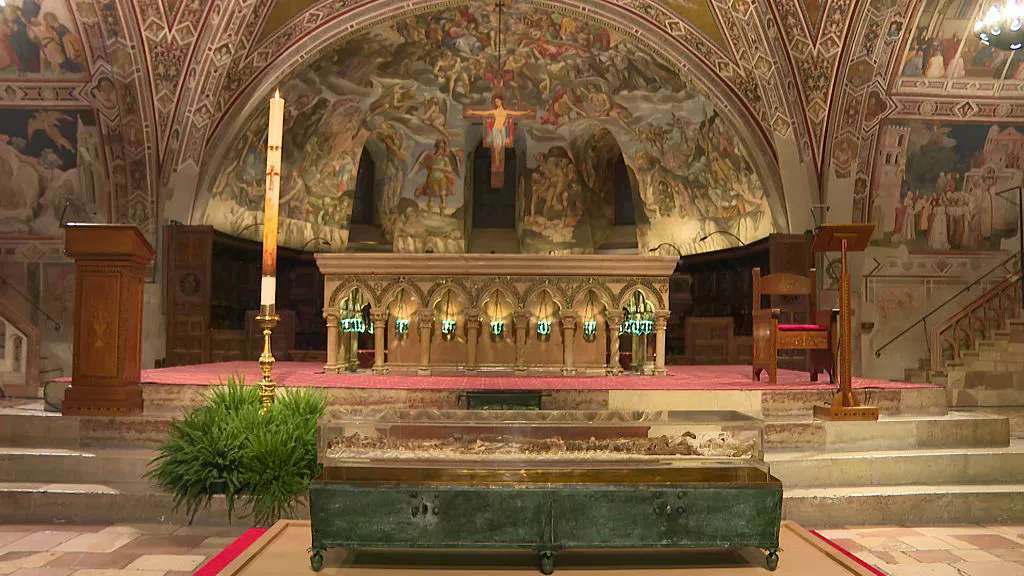
Earlier that morning, the saint’s remains were exhumed from the sarcophagus where they reside, and then “were placed on a specially prepared table in the crypt of the Basilica,” the release states.
Fr. Cesareo said in the release that devotion to St. Francis can help people to grow in hope and fraternity.
“Through him, and thanks to the inspiration we draw if we learn from him, our relationships can rediscover fraternity, the world appears to us as the Common home, and the future opens as a womb of hope,” he said. “For us, this vitality and depth of Francis find their roots solely in his sincere and profound adherence to Christ and His Gospel. Yet, even for those who do not believe, Saint Francis is good news: the concrete, historically proven possibility of a human life not based on competition but on collaboration and mutual service.”
.jpg&w=3840&q=75)


Comments