Indiana bishop denounces Notre Dame’s appointment of pro-abortion professor, 2 bishops echo his message
On Feb. 11, the bishop of Fort Wayne-South Bend, Indiana, the diocese where the University of Notre Dame is located, denounced the institution’s recent appointment of an outspokenly pro-abortion professor and called on the Catholic school “to rectify the situation” — a statement that other U.S. bishops are supporting.

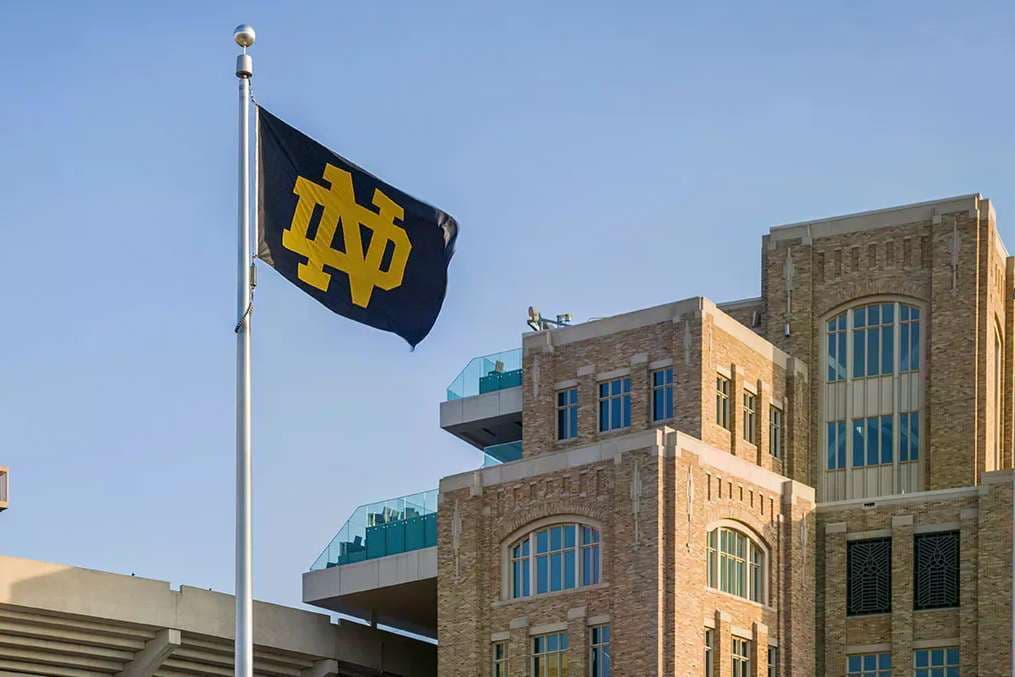
On Feb. 11, the bishop of Fort Wayne-South Bend, Indiana, the diocese where the University of Notre Dame is located, denounced the institution’s recent appointment of an outspokenly pro-abortion professor and called on the Catholic school “to rectify the situation” — a statement that other U.S. bishops are supporting.
In January, Notre Dame announced it had appointed Associate Professor Susan Ostermann as director of the Liu Institute for Asia and Asian Studies. Many Catholic students and pro-life student groups quickly objected because of her pro-abortion position.
Bishop Kevin Rhoades said in a Feb. 11 statement that following the outcry and controversy, he read a number of op-ed articles that Ostermann co-authored with another abortion activist (former Notre Dame Professor Tamara Kay), and he decided to speak out.
In response to reading them, he stated, “I must express my dismay and my strong opposition to this appointment that is causing scandal to the faithful of our diocese and beyond.”
Ostermann’s “extensive public advocacy of abortion rights and her disparaging and inflammatory remarks about those who uphold the dignity of human life from the moment of conception to natural death go against a core principle of justice that is central to Notre Dame’s Catholic identity and mission,” Bishop Rhoades said.
Bishop Rhoades’ statement was quickly supported by Bishop Robert Barron of Winona-Rochester, Minnesota, who described the university’s appointment as “repugnant” to Notre Dame’s identity.
Bishop Barron stated on X Feb. 11 that Ostermann is not simply “pro-choice” but rather “a sharp critic of the pro-life position and those who advocate it” – someone who characterizes the pro-life position as having roots in white supremacy and racism and insinuates “that the Catholic commitment to integral human development implies the support of abortion rights.”
Archbishop Samuel Aquila of Denver posted Feb. 11 to X thanking Bishop Rhoades for speaking out. Archbishop Aquila described the situation as a “most unfortunate appointment by Notre Dame that truly tarnishes Our Lady’s University [and] what it means to be Catholic.”
Archbishop Aquila added, “I pray that those who can rescind this terrible appointment will do so! Pray for the conversion of hearts!”
In his statement, Bishop Rhoades argued that Ostermann is unfit for a leadership role at the university.
He outlined how Ostermann used “outrageous rhetoric” in almost 12 co-authored op-eds, noting her claims that the pro-life position is rooted in white supremacy and racism and that misogyny is “embedded” in the movement. Bishop Rhoades said she has also “attacked pregnancy resource centers as deceptive ‘anti-abortion propaganda sites’ that harm women” and claimed that abortion “enhances freedom and flourishing for women,” and thus is supported by Catholic teaching.
“These are all outrageous claims that should disqualify her from an administrative and leadership role at a Catholic university,” Bishop Rhoades said. “I hope that Professor Ostermann will explicitly retract these claims, and I pray that she will have a change of mind and heart that will lead her to affirm the innate dignity of unborn babies as well as that of their mothers.”
He recalled how the late Pope Francis denounced the narrative that abortion benefits women as “false compassion” and emphasized instead that the deadly practice deepens women’s grief and woundedness inflicted by a secular culture that devalues “God’s gift of sexuality and the right to life of the unborn.”
The bishop later noted that Ostermann has also disqualified herself by working as a consultant for the Population Council, which is “dedicated to the promotion of abortion around the world” and played a crucial role in getting the chemical abortion pill approved by the Food and Drug Administration.
Further, the Liu Institute is a part of the Keough School of Global Affairs, which defends the Catholic social teaching principle of “integral human development.”
“Professor Ostermann has written – ludicrously – that this Catholic principle actually supports abortion on demand,” Bishop Rhoades wrote. “To the contrary, the Holy See, in statements to the United Nations, continues to defend the ‘right to life’ as one of the core ‘pillars of integral human development.’” Ostermann’s opposing view “should disqualify her” from a leadership role in the Keough School, the bishop wrote.
Bishop Rhoades also rejected the “academic freedom” argument that has been used to defend Ostermann’s appointment.
“Academic freedom concerns the liberty of faculty to conduct research according to their own professional judgment and interests,” he wrote. “This appointment, by contrast, concerns the official administrative appointment to lead an academic unit. Such appointments have profound impact on the integrity of Notre Dame’s public witness as a Catholic university.”
Underscoring the Church’s teaching that the unborn have equal dignity with all other persons, Pope Leo XIV also spoke out about the tragedy of abortion, the bishop recalled. The Pope said that “no policy can genuinely serve the people if it denies the unborn the gift of life, or if it neglects to support those in need whether in their material circumstances or in their spiritual distress.”
Bishop Rhoades added that the principle of “integral human development” is not only affirmed by Catholics, but “is embraced by many people of good will of diverse backgrounds and commitments around the world.”
He emphasized that the Catholic Church spiritually, emotionally, and materially supports women before and after pregnancy and defends mothers and unborn children’s “inalienable right to life.”
Notre Dame has publicly committed itself as a Catholic institution affirming Church teaching on the sanctity of human life from the moment of conception, the bishop noted. He said he is proud of this commitment, which is reflected in students and faculty who work to cultivate a culture of life.
“They witness to the sanctity of life at every stage, with special attention to the lives of the vulnerable, including the unborn, the poor, immigrants, the elderly, and the infirm,” he wrote. “Through these actions and witness, Notre Dame takes seriously our call from the Lord to care for the poor, welcome the stranger, visit the imprisoned, clothe the naked, heal the sick, and love our neighbor as ourselves.”
Bishop Rhoades said the appointment creates confusion about Notre Dame’s commitment to its Catholic mission. He said he has received many messages of “shock, sadness, confusion, and disappointment” from faculty, students, alumni and benefactors, and that he shares “their feelings as well as their love for Notre Dame,” noting that he has been personally involved in events at the school.
He urged the faithful to ask Our Lady of Lourdes, whose feast day is Feb. 11, to intercede in the situation.
Bishop Barron noted that he is speaking out on the situation also as someone who holds “deep affection” for the school and has strong connections to it.
“I believe,” Bishop Barron said, “that going ahead with this appointment is repugnant to the identity and mission of that great center of Catholic learning.”
Bishop Rhoades concluded his statement by saying that the university still has the opportunity to resolve the situation.
“Because I have the particular responsibility as Bishop of Fort Wayne-South Bend ‘to promote and assist in the preservation and strengthening’ of the Catholic identity of Catholic universities within my diocese, I call upon the leadership of Notre Dame to rectify this situation,” he said. “The appointment of Professor Ostermann is not scheduled to go into effect until July 1, 2026. There is still time to make things right.”
Comments