Justices Thomas, Alito accuse Supreme Court of undermining ‘Dobbs’ in abortion-pill order
In dissents issued May 14, Justices Clarence Thomas and Samuel Alito criticized the Supreme Court’s unsigned order allowing telemedicine prescriptions and mail delivery of the abortion pill mifepristone to continue while litigation proceeds.

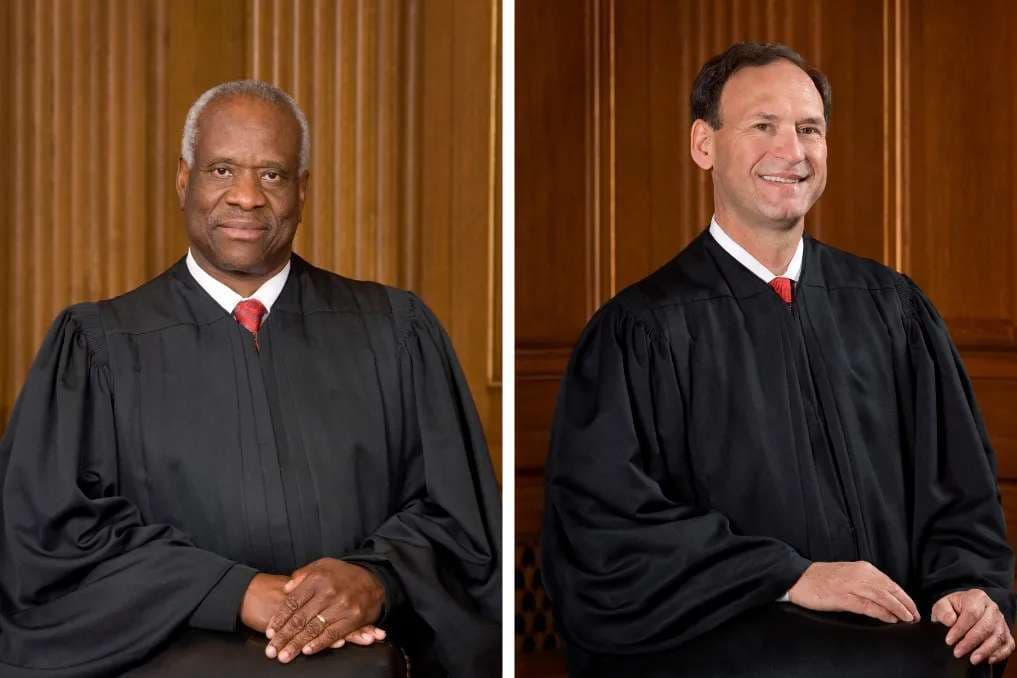
In dissents issued May 14, Justices Clarence Thomas and Samuel Alito criticized the Supreme Court’s unsigned order allowing telemedicine prescriptions and mail delivery of the abortion pill mifepristone to continue while litigation proceeds.
Both justices accused their colleagues of undermining the court’s 2022 decision in Dobbs v. Jackson Women’s Health Organization by allowing abortion pills to continue crossing into states with protections of the unborn.
As Zeale News previously reported, the court’s May 14 order stayed a 5th Circuit ruling that would have restored nationwide in-person dispensing requirements for mifepristone. The legal dispute stems from a Louisiana lawsuit arguing that the Food and Drug Administration’s (FDA) 2023 telehealth and mail-order policies violate the state’s pro-life laws by allowing the abortion drug to be shipped into the state. After the 5th Circuit ruling, mifepristone manufacturers Danco Laboratories and GenBio Pro asked the Supreme Court to intervene.
>> Supreme Court allows mail-order abortions to continue as pro-life case proceeds <<
Thomas wrote in a brief dissent that he would have denied the manufacturers’ stay applications, arguing they did not meet the legal burden for relief. He also pointed to the Comstock Act, an 1873 federal law that prohibits mailing drugs “for producing abortion.” Because shipping mifepristone for abortions is illegal under that law, Thomas argued, the manufacturers could not claim distribution restrictions cause irreparable harm.
“Applicants are not entitled to a stay of an adverse court order based on lost profits from their criminal enterprise,” he wrote. “They cannot, in any legally relevant sense, be irreparably harmed by a court order that makes it more difficult for them to commit crimes.”
Thomas also cited filings claiming that mifepristone shipped into Louisiana causes nearly 1,000 abortions every month.
Alito, in a separate dissent, criticized the majority for issuing an “unreasoned order.” He argued the order allows abortion providers and drug manufacturers to continue bypassing state abortion laws after Dobbs.
“What is at stake is the perpetration of a scheme to undermine our decision in Dobbs v. Jackson Women’s Health Organization (2022), which restored the right of each State to decide how to regulate abortions within its borders,” Alito wrote.
He described how out-of-state abortion providers, organizations performing abortions, and “shield laws” in states like New York help facilitate online prescriptions and mailed shipments of mifepristone into Louisiana.
Alito wrote that the manufacturers “are obviously aware of what is going on” and continue profiting from what he described as the drug’s “felonious use in Louisiana.”
He also wrote that mail-order abortion pill policies have contributed to an increase in abortions in Louisiana since Dobbs.
Alito said the manufacturers failed to show imminent or irreparable harm from the 5th Circuit’s order, unless the order “spurs the FDA into moving on its safety review.”
“At present,” he wrote, “it is most unlikely that the manufacturers would be at all affected by the Fifth Circuit’s order for quite some time.”






Comments