Madison’s left-wing ‘autonomous zone’ grows as city keeps streets closed
Activists have erected staffed checkpoints and makeshift barricades around a police-shooting memorial while nearby businesses report lost traffic and officials pursue a “peaceful resolution.”
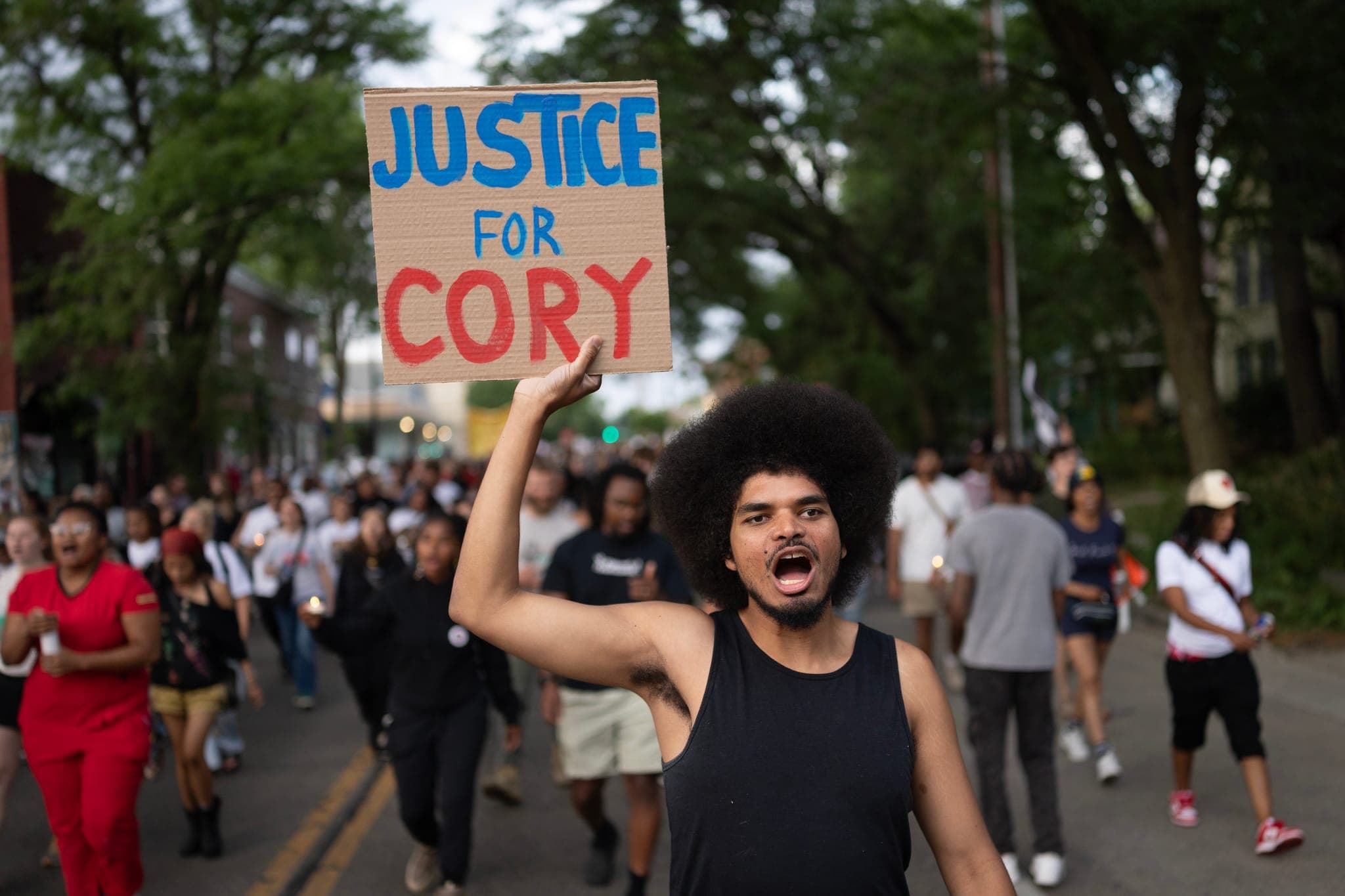
A left-wing protest encampment at Williamson and South Baldwin streets in Madison, Wisconsin, has grown into a self-described autonomous zone more than a week after a city police officer fatally shot Corey Ruiz at the intersection, leaving two blocks closed to traffic with no announced reopening date.
Some of those maintaining the site call it “CRAZE,” short for the Corey Ruiz Autonomous Zone Encampment. Volunteers have staffed tents at four entrances behind barricades made from vehicles, furniture, wood scraps, and a makeshift spike strip of nails. Tents, couches, food stations, a syringe-exchange sign, and a raised Black Lives Matter fist have appeared inside the occupied area, while activists spray-painted a street sign to rename South Baldwin Street “Corey Street.”
Fond du Lac County District Attorney Eric Toney, a Republican candidate for Wisconsin attorney general, argued that protest rights do not extend to occupying streets, restricting police, and harming neighbors’ livelihoods. He tied the encampment to what he called “dangerous rhetoric” from Democratic gubernatorial candidate and state Rep. Francesca Hong, who labeled Ruiz’s death an “execution.”
“Nobody has the right to take over a street, deny law enforcement the ability to conduct public safety functions, stop businesses from operating, and stop folks relying on that road for their livelihood during a protest,” Toney wrote. He added that Attorney General Josh Kaul, a Democrat, was “failing the leadership test with his silence” while “the people of Madison are suffering as a result.”
Kaul, whom Toney hopes to challenge in November, had spoken about the Ruiz case before Toney’s post. He defended peaceful protest, said “acts of vandalism and violence are tools of destruction, not instruments of change,” and urged the public to trust the independent state investigation. He does not appear to have addressed the autonomous zone itself.
The City of Madison says Williamson and South Baldwin streets will remain closed “until further notice,” with two bus routes diverted. The Wisconsin State Journal reported July 30 that police will not enter the encampment unless someone’s life or safety is at risk and will handle nonemergency matters by phone or virtually. Protest spokesman Alan Robinson called it “a law enforcement-free zone,” although organizers said officers responding to domestic violence would be escorted inside, and fire officials reported no trouble reaching patients.
The occupation began July 22, the night Ruiz, 38, was killed. Police said officers approached him after a report that someone was checking parked vehicles. Ruiz fled on a bicycle, and a struggle followed involving four officers. Police Chief John Patterson said Ruiz produced a fixed-blade knife and injured an officer. A Taser failed to stop Ruiz, and the injured officer fired three shots.
All four officers were placed on administrative leave. The Wisconsin Department of Justice’s Division of Criminal Investigation is conducting the state-mandated independent investigation, after which the Dane County district attorney will decide whether charges are warranted. Civil rights attorney Ben Crump, representing Ruiz’s family, contends the shooting was an excessive-force “execution” because Ruiz was already on the ground.
The Party for Socialism and Liberation, Wisconsin Bail Out the People Movement, and other left-wing groups have promoted the protests. Published demands include arresting the shooting officer, compelling Madison police and state investigators to give requested evidence to the city’s independent police monitor, and granting a civilian oversight board disciplinary power. Other protesters have also demanded that Madison defund its police department.
Wisconsin Bail Out the People Movement has asked supporters to keep “holding space” at the intersection until the demands are met. The camp has served as the base for repeated marches, including one that drew hundreds downtown and another that interrupted Concerts on the Square.
The prolonged shutdown has increasingly burdened residents and merchants. The city acknowledged July 28 that businesses were closed, workers faced financial hardship, residents were navigating “a variety of challenges,” and streets were unsafe places for people sleeping in tents. A nearby restaurant worker told WMTV that customers were avoiding the area, while one resident called it a “disrespectful occupation” that had become a “lawless zone and homeless encampment.”
City officials have supplied a portable toilet, collected garbage, placed unhoused residents in hotels, and temporarily used salt trucks instead of police cruisers as sturdier street barriers. District 6 Alder Davy Mayer said July 29 that he had received hundreds of messages and was still meeting with organizers to find a peaceful way forward. Organizers instituted overnight quiet hours, and most trash carts initially used in the barricades have been returned.
The CRAZE name has invited comparisons to Seattle’s 2020 Capitol Hill Autonomous Zone, later called CHOP. Seattle cleared that police-free occupation after 23 days and a series of shootings that left two teenagers dead. Madison’s camp has not seen comparable violence; in the latest reported disturbance, organizers detained an outsider accused of striking protesters and summoned police, who made an arrest without incident.
For now, the city has set no deadline to dismantle the barricades. Madison’s Aug. 4 Common Council meeting will be held virtually after officials received threats and the city received messages threatening protesters and law enforcement.







Comments