Mamdani’s America 250 address draws sharp Catholic condemnation for Marxist themes
After New York City Mayor Zohran Mamdani marked America’s 250th birthday by casting the nation’s history as a struggle between ordinary working people and the wealthy and powerful, CatholicVote President and CEO Kelsey Reinhardt said the speech embraced a “communist faith” at odds with Catholicism.

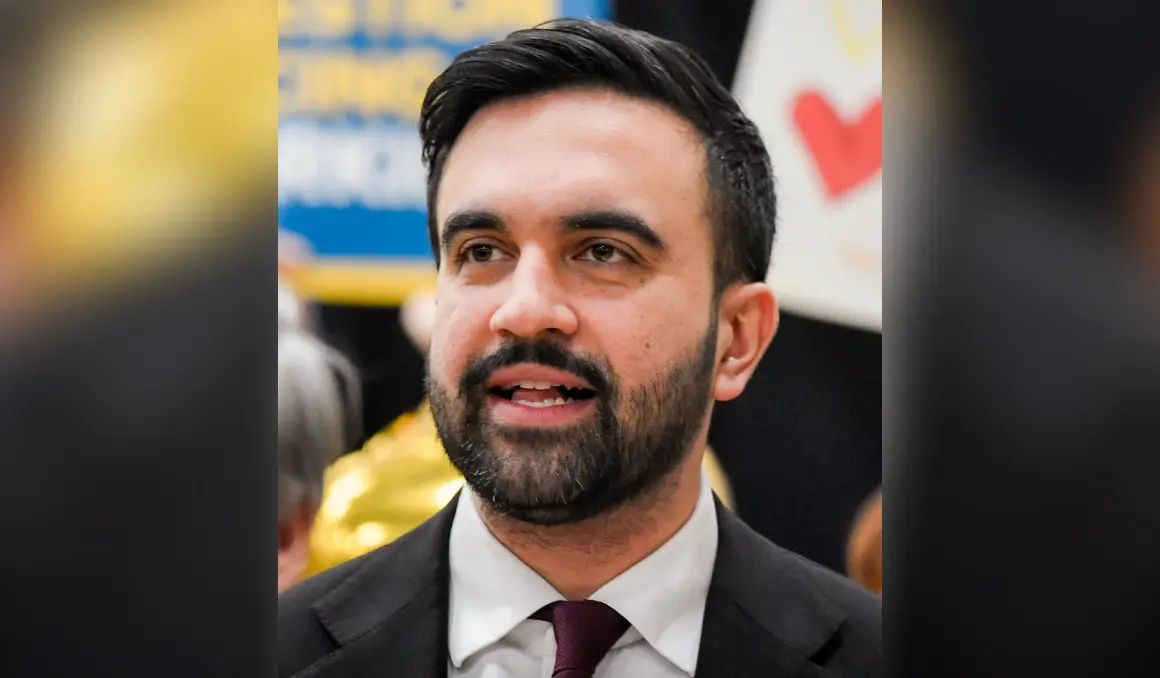
New York City Mayor Zohran Mamdani delivered a July 3 address for America’s 250th anniversary that framed the nation’s history through a lens of unrelenting oppression, class division, and elite exploitation, prompting strong rebukes from Catholic leaders who said the speech was steeped in Marxist ideology.
Mamdani, seated behind a desk in City Hall that once belonged to George Washington, argued during the roughly 15-minute speech that America is exceptional not because it is “richer, stronger, more powerful than everyone else,” but because “nothing is fixed into place.” He said the work of fulfilling the values enshrined in the Declaration of Independence remains unfinished.
Flanked by newly naturalized U.S. citizens holding American flags, Mamdani described America as a nation full of “contradictions,” where monopolies “dominate every industry,” oligarchs “buy elections,” and “children go to sleep hungry while the world’s first trillionaire hungers for more.”
The mayor repeatedly contrasted workers, immigrants, tenants, and the poor with the wealthy and powerful. He said America’s wealth was built by laborers with “calloused, dirt-streaked hands” while “so much of that wealth” is now held instead “in the soft hands of a precious few.”
Mamdani also criticized “corporate landlords,” a health insurance industry that he said “exploits the sick,” federal spending on “bombs and bailouts,” and elections he said are sold “to the highest bidder.”
The remarks leaned heavily on left-wing populist themes, particularly in Mamdani’s focus on class conflict, corporate power, and the idea that ordinary working people must reclaim political control from elites.
“Every American who still believes this country belongs to we, the people,” Mamdani said, is also part of the America he sees.
He also attacked immigration enforcement, accusing “masked agents” of “terrorizing our streets, eating food cooked by our undocumented neighbors before spiriting them away in unmarked vans.”
He criticized leaders who support stronger immigration restrictions, saying some do not view America as “an asylum for the persecuted” but as a country that “persecutes those seeking asylum.”
Mamdani, who became a naturalized U.S. citizen nearly a decade ago, invoked his own immigrant background, saying his family came to New York when he was 7.
“Even from the air, we could make out the promise of America — the promise of the beautiful, patriotic work of rendering America, year after year, a little more faithful to its founding ideals,” he said.
“There are some who respond to those who ask for more from America with a simple refrain: ‘Love it or leave it,’” Mamdani said. “But patriotism has never been about pretending our nation is without flaws.”
“Patriotism is every act of righteous dissent,” he said. “It is every march led under the heavy sun. It is every protest held a decade before its time. It is precisely because we love this nation that we will not leave it. After all, who loves America more than those who have sacrificed so much to make it free?”
Mamdani closed by recounting the reading of the Declaration of Independence in New York City on July 9, 1776. America’s founding ideals, he said, are “strong enough to endure any authoritarian regime, but only if we reach for them.”
“Ours is a nation working each day towards the perfection in which it was conceived,” he said. “A nation striving each day to better itself. Therein lies the work of America — the striving, the bettering, the reaching towards perfection.”
Catholic leaders contrast Marxist themes with Catholic teaching
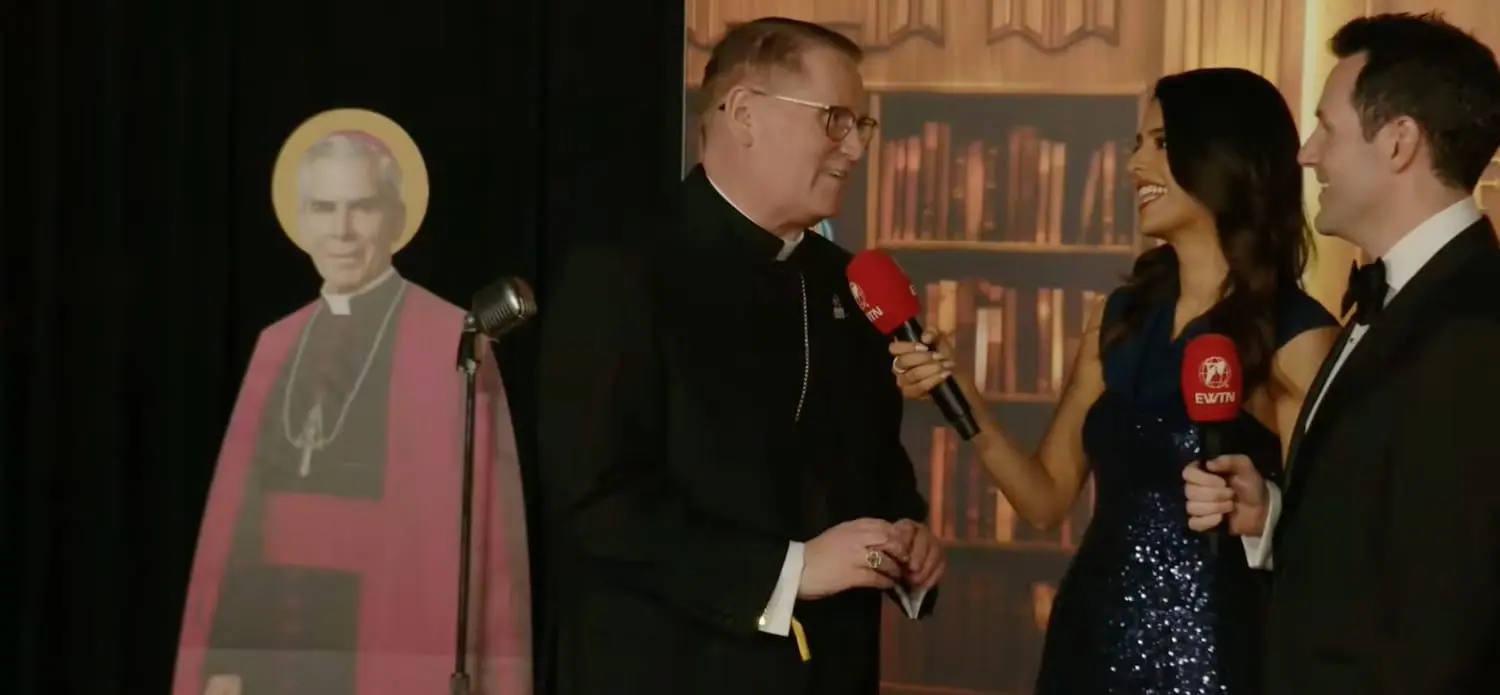
Bishop Robert Barron of the Diocese of Winona-Rochester in Minnesota condemned the address as “appalling” in a statement on X.
Bishop Barron compared Mamdani’s remarks to the view of a “dark, oppressive country” advanced by historian Howard Zinn and his “like-minded colleagues in the universities,” who, the bishop said, portrayed America as a place “where common people are denigrated by tyrants and oligarchs, where immigrants are treated with contempt, where those with ‘soft hands’ hold the wealth created by those with dirty hands.”
“No sensible person would claim that our country is without flaws, but the relentlessly negative picture painted by Mayor Mamdani is just absurd,” Bishop Barron added. “And it is the fruit of the Marxism that, sadly, is all the rage today.”
CatholicVote President and CEO Kelsey Reinhardt echoed the bishop’s critique, contrasting Mamdani’s worldview with Catholic teaching.
“Blessed to belong to the Catholic faith rather than the communist faith,” Reinhardt stated.
“The communist vision of who are sinners in this video (the wealthy, the American born, law enforcement) and who are the saints (the undocumented, the alien, the lawbreaker) as well as who provides redemption (the state) is radically different from the belief that all have sinned and fallen short of the glory of God but that all can become saints if they unite themselves to Jesus Christ and find redemption through the church he founded,” she said.
Communism, Reinhardt continued, recognizes “only one paradigm with no nuance: the division of the classes” and argues for equality based only on “one thing: envy.”
By contrast, Catholicism has “canonized both poor and rich, both aristocrat and peasant,” she explained. “True equality is rooted in God-given human dignity.”
Reinhardt also commented on communism’s lack of hope, saying the ideology seeks to overthrow the social order merely to “rectify injustice” rather than encourage personal repentance and call others higher.
“Throughout this nation’s history, the Catholic saint has stood in the face of injustice and true oppression and worked not to blame others and call out others’ sins alone but to begin with repentance in their own life and give away his or her life to raise others up,” she said. “THAT is the hope we need on this America 250.”
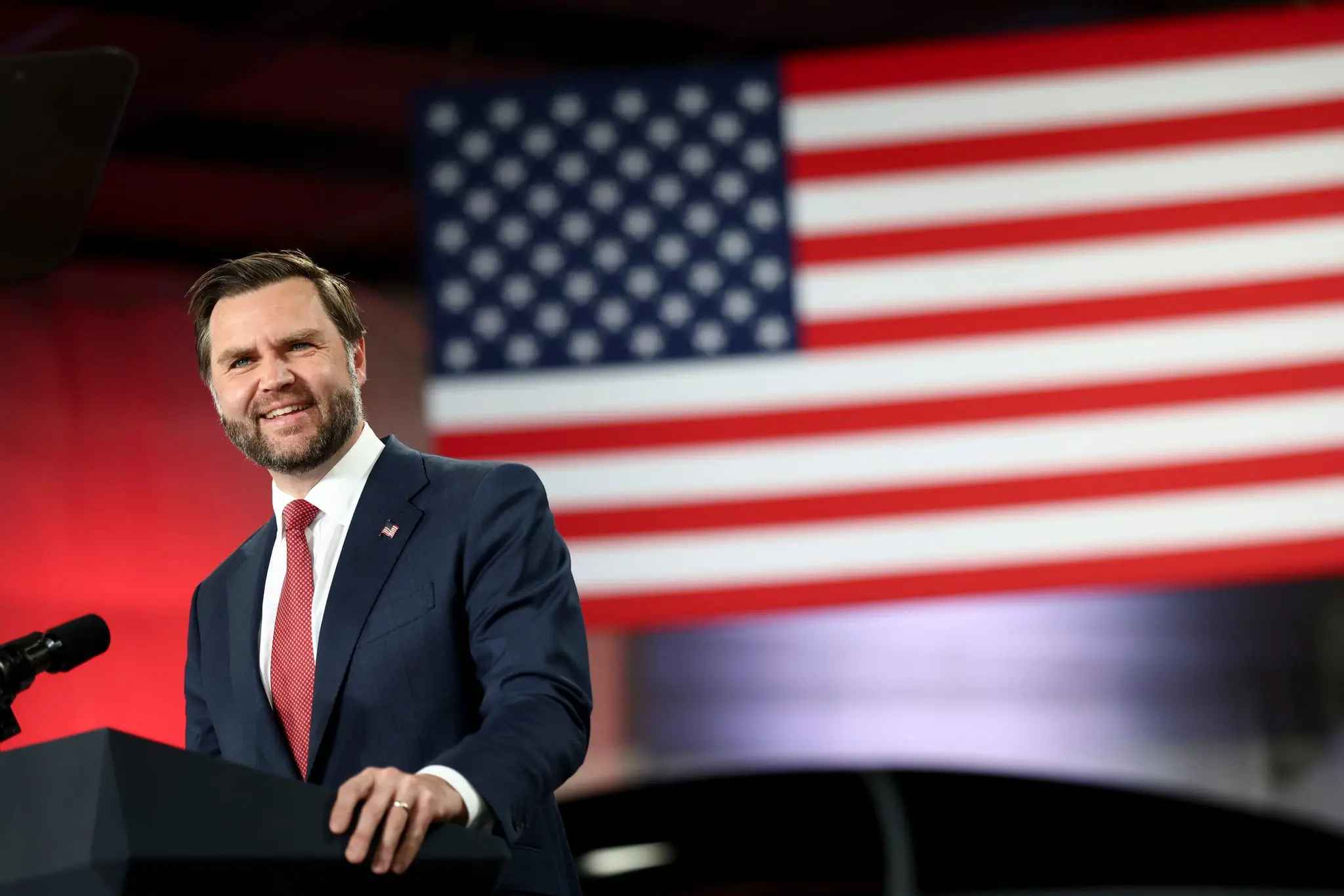
Vice President JD Vance, also a Catholic, delivered a July 4 speech in New York Harbor one day after Mamdani’s remarks. While Vance did not name Mamdani, he warned that Americans would “hear a couple small but loud voices today speak obsessively not of our national greatness, but of our national imperfections,” as Zeale News previously reported.
Those voices, Vance said, would speak of “the powerless and the dispossessed” and argue that America “is just another country, where the weak struggle against the strong.” He added that while they “talk about America’s sins with the anger and zeal of a brimstone preacher,” they offer none of the “grace or forgiveness that must be present in the Christian faith.”
Vance urged Americans to reject this “two-dimensional view” of the country and instead take pride in the nation’s “grace and greatness.”


.jpg&w=3840&q=75)
Comments