My country tis of thee: Understanding and defending the values that make America great
We should never be embarrassed about being proud of our country. In order to love and defend her, though, we must know our history and heroic founders, and understand the foundational virtues upon which our freedoms are secured. Only then will we be prepared to preserve and promote her unique greatness.
A Gallup poll this summer found that only one-third of U.S. adults are “extremely proud” to be American, the smallest group in 25 years. Even including respondents who are “very proud” only brings the number up to just above half of American adults who have high levels of pride in their homeland. Last year, a survey by the U.S. Chamber of Commerce Foundation found that 58% of American adults failed a basic U.S. civic test. We cannot love what we don’t know. Even those of us who do love our country ought to be able to explain why she is worth loving and defend her goodness to others.
America is “a nation with the soul of a church,” according to G.K. Chesterton. It is “the only nation in the world that is founded on a creed.” This “creed” is the Declaration of Independence — 1,458 words that form the most radical document of its time, and possibly since. America was the first country founded on a written claim, rather than a shared bloodline. The founders meticulously wrote the founding documents to not only explain their righteous justification for separation from Great Britain, but also to establish the rights and liberties that would be secured for all citizens for all time. Americans today must read and know these documents, internalize their contents, and understand the great risk taken by those 56 delegates who signed such a radical statement as the Declaration.
Building the foundation
Here are five foundational values all Americans must understand if we are to persuasively and winsomely address dissenters and “form a more perfect Union.”
1. Rights come from God, not the government.
This novel approach to government, acknowledging that all men “are endowed by their Creator with certain unalienable rights…” is the central tent of the Declaration of Independence. Rights that come from the government can also be taken away by the government. If, however, those rights are endowed by God, no majority nor king has any standing to revoke them. The source of our freedoms is secured in our Creator; to disbelieve that notion destroys the very foundation upon which this country was founded.
2. Every person is equal in dignity.
The Declaration states unequivocally, “All men are created equal,” but what does “equal” mean? Equal in talent, wealth, or status? No; equal in dignity, worth, and value, as seen through God’s eyes. Despite slavery not being abolished until the 19th century, the founders still thought it necessary to establish the standard of equal dignity in the country’s very first document.
3. Ordered liberty – freedom for something.
The founders were very specific when documenting which freedoms belong to citizens and which duties belong to the government. They recognized that the fallenness of mankind requires some form of government (see Federalist Paper 51). However, they assumed citizens would govern themselves with minimal force, securing freedoms to worship, speak, raise children, and to build and keep a life. Long before St. Pope John Paul II lived, the founders created a government that embraced his definition of freedom — “Freedom consists not in doing what we like, but in having the right to do what we ought.” These unique liberties are promoted and protected so that citizens can order their lives, society, and government toward truth, goodness, and beauty.
4. Self-government and the consent of the governed.
The Declaration opens with three simple, yet profound words: “We the people.” The founding documents offered a radical approach to authority, setting up the people, rather than a monarch, as the source of authority. This reality places great responsibility in the hands of every citizen. Thomas Jefferson emphasized, “An educated citizenry is a vital requisite for our survival as a free people.”
5. Virtue is the price.
The founders were very frank that this American experiment works for only a particular kind of people. "Our Constitution was made only for a moral and religious people,” said John Adams. “It is wholly inadequate to the government of any other." From the very start, it was universally acknowledged that this new nation must be grounded in a faith-filled people. French philosopher Alexis de Tocqueville noted as much upon his visit to the young country, "Despotism may govern without faith, but liberty cannot."
These values were not invented in Philadelphia in the 18th century. They were inherited from Scripture, Athens and Rome, the ideas of the Enlightenment, and centuries of Christian thought by some of the greatest thinkers. The founders beautifully wove them together and documented them, but they didn’t originate them. This is encouraging news because we as Americans are not defending any particular political program or philosophy. We’re merely defending a claim about the human person.
While understanding these concepts is important, the hard part comes when someone asks you to defend them. We must prepare ourselves to be able to answer that challenge well.

Winsome is not weak
Apologetics comes from the Greek word apologia meaning a reasoned defense. The Declaration itself is an apologia, laying out the reasons for separation from England.
It is not sufficient to offer merely a reasoned defense, though. The virtue of patriotism is a species of charity, which “is patient and kind.” (1 Corinthians 13) A defense of America made with contempt is not a stronger or greater patriotism — it’s a contradiction of what we’re called to be. "Always be prepared to make a defense to anyone who asks you for a reason for the hope that is in you; yet do it with gentleness and respect." (1 Peter 3:15) We know the truth. We have great hope as both Christians and Americans. Such confidence makes it even more important that we speak the truth with love, rather than anger. We can win an argument, but lose the person. Our goal is to change hearts and minds, not win a debate.
Responding to the hard questions
When engaged in dialogue or debate, follow St. Thomas Aquinas’ lead in the Summa, where he states his opponent’s case in its strongest form before his own. This is a courtesy, a winsome habit that will help influence hearts and minds. Keep reading for some of the common objections you may face.
“Rights are whatever the government says they are.”
If that is the case, then they aren’t rights; they’re granted permissions. Ask whether the government could vote away their personal beliefs. Almost nobody would say yes — that alone is an American claim.
“America was founded on slavery.”
Don’t flinch and do not minimize. America was founded by sinful men in a broken world; of course she will not be blameless. The Declaration of Independence boldly stated an ideal the country at the time could not obtain: “all men are created equal.” This statement is the central claim of America’s foundation. Abolitionists didn’t argue against the Declaration; they argued from it. Frederick Douglass wrote the fiercest indictment of America ever written in his address “What to the Slave is the Fourth of July?” (1852), yet refers to the Constitution as “a glorious liberty document.”
“Freedom means doing whatever I want.”
Freedom with no object devours itself. Ordered liberty is freedom to worship, work, raise a family, and serve.
“The founders were hypocrites.”
A hypocrite is a man who holds a standard he fails to meet. The founders recognized their sin; they wrote a document that outed themselves. Federalist 51 states very plainly, “If men were angels, no government would be necessary.” No principality on this earth will ever be perfect in this broken world. How could it? It’s governed by imperfect men. Yet America’s broken men recognized their sin and failures and enshrined in our founding documents a status for all people they had yet to achieve themselves.
“Isn’t teaching this to young children indoctrination?”
Every child is formed by someone teaching them something; there is no neutral. Teaching them that 2+2=4 is indoctrination by its very definition; it is teaching them reality. The question was never whether children would be taught — only by whom and toward what.
At the dinner table
Whether with your children around your daily dinner table, or surrounded by extended family for the holiday, be prepared to engage respectfully and lovingly when questions come up about America and her greatness. Here are some practical tips to keep in mind and close at hand.
1. Ask before you assert
“What do you mean by that?” “How did you come to that conclusion?” Clarifying questions settle tempers and show you want to learn their perspective.
2. Concede the true part first and fast.
Ceding small elements allows you to win larger ones. “It is true that… but not necessarily this.”
3. Never compromise on the truth.
You can disagree. You can argue. But do not allow uncomfortable situations to stop you from remaining firm in your knowledge of the truth.
4. Never defend an administration when you mean to defend a country.
An administration may reflect many values the founders intended for this country, but the moment your case rests on an officeholder, it can easily be beaten. Even America’s founders defended the principles undergirding her, not the men managing things.
5. Tell a story instead of arguing.
Good stories are the best avenues for teaching and learning, and not just for children.
6. Show instead of tell.
Nobody has ever been talked into loving something; they must be shown. Show why you love your country. Show its fruits.

Raising educated Americans
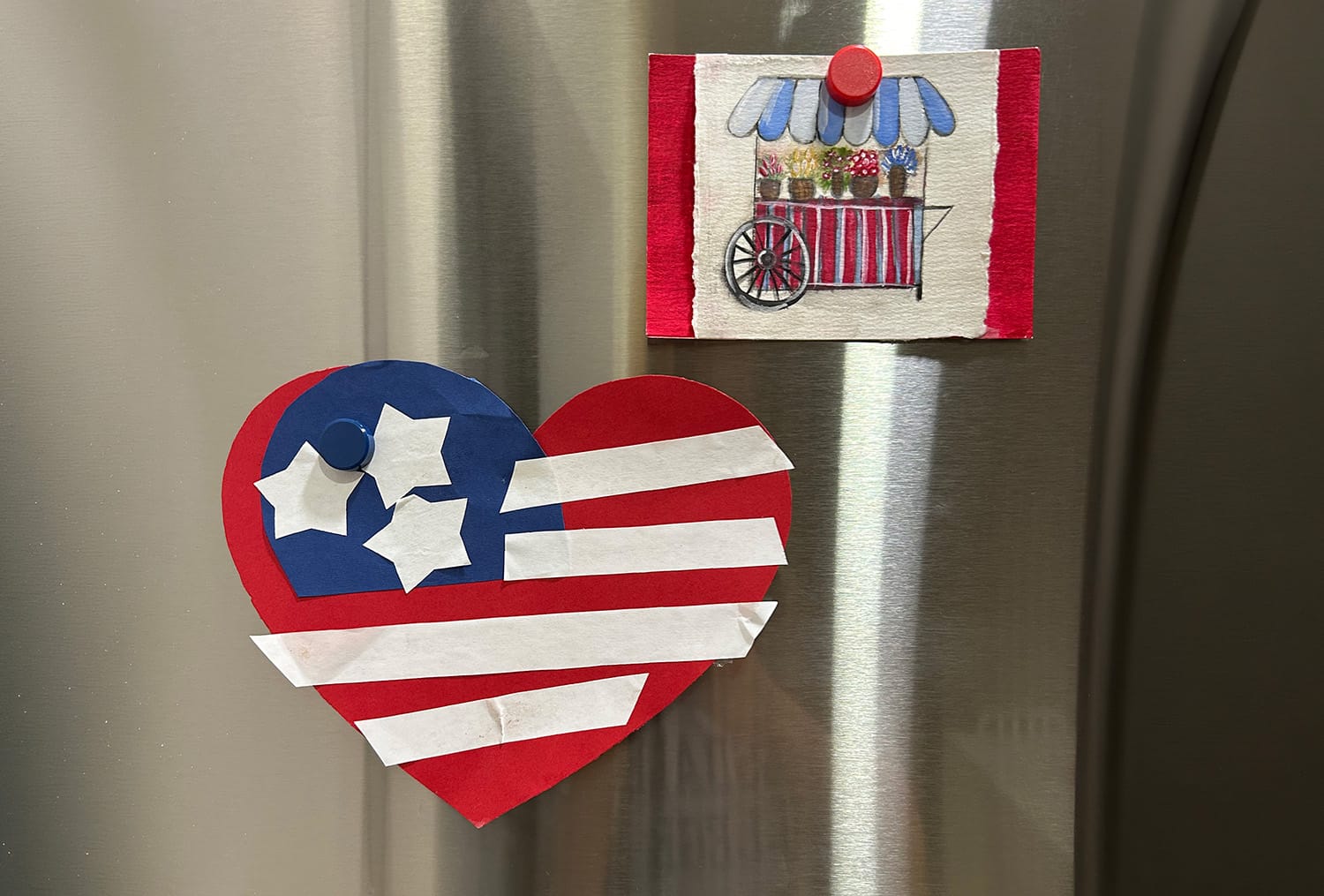
We have an incredible mission field right in our home. The best way to raise children who love their country is to educate them about it. To know America is to love her, but we must be informed. Even our youngest children can understand the eternal values at the heart of this nation: freedom, liberty, perseverance, bravery, courage, and rebellion. Make learning about this country fun! Do crafts, sing songs, visit an American history museum. Teach them the beautiful and tragic parts of our history. Don’t sugarcoat it. Remind them of man’s fallen nature and that there will be no utopia on earth; there can’t be. Remember, one of the best ways to teach our children to be patriots is to be one ourselves. Read books. Study history. Hang a flag on your front porch. Thank a veteran. Those little acts of patriotism set an example for who we wish for them to be.
We should never be embarrassed about being proud of our country. We have every reason to celebrate this great nation we call home. But we must understand why it is so. We must know its history, its heroic founders, its foundational virtues upon which our freedoms are secured. These are passionate topics to discuss, and it is easy to get upset when discussing the home we love so dearly. But may we all seek the higher route, the one Jefferson penned in the Declaration, offering “a decent respect to the opinions of mankind.”
Katie Broussard is a wife, mother, author, and founder of The Littlest Statesmen, an American family company dedicated to raising the next generation of educated, virtuous, and thoughtful Americans. Now a devoted wife and mother to three young children, Katie endeavors to cultivate a profound love and respect for her nation in her home. She is the author of The Great George Washington, the first book in the Founder’s Collection, which seeks to expose our youngest generation to the men and women who sacrificed and risked their lives, fortunes, and sacred honor to build this great nation.






Comments