‘My Name Is Lazarus’: Former Charlottesville rally participant says Catholic faith, Chesterton led him away from neo-Nazism
The man whose photograph became one of the most widely circulated images from the 2017 Unite the Right rally in Charlottesville, Virginia, says the photograph that defined him publicly also marked the beginning of his conversion to Catholicism.

The man whose photograph became one of the most widely circulated images from the 2017 Unite the Right rally in Charlottesville, Virginia, says the photograph that defined him publicly also marked the beginning of his conversion to Catholicism.
In a March 2 essay in Crisis Magazine, Peter Cytanovic VI, now 29, recounts his years-long descent into what he now calls neo-Nazism, the shame and isolation that followed the Charlottesville rally, and the intellectual and spiritual path that he says led him into the Catholic Church.
“I invite the reader to Google my name,” Cytanovic wrote, acknowledging that his photograph has become “part of the visual shorthand for white supremacy in contemporary America.”
The image was taken at the rally when he was 20. “Despite the passage of time, many continue to see me only through that image,” he wrote, explaining why he decided it was time to tell “how I became Catholic and how I found joy after the despair.”
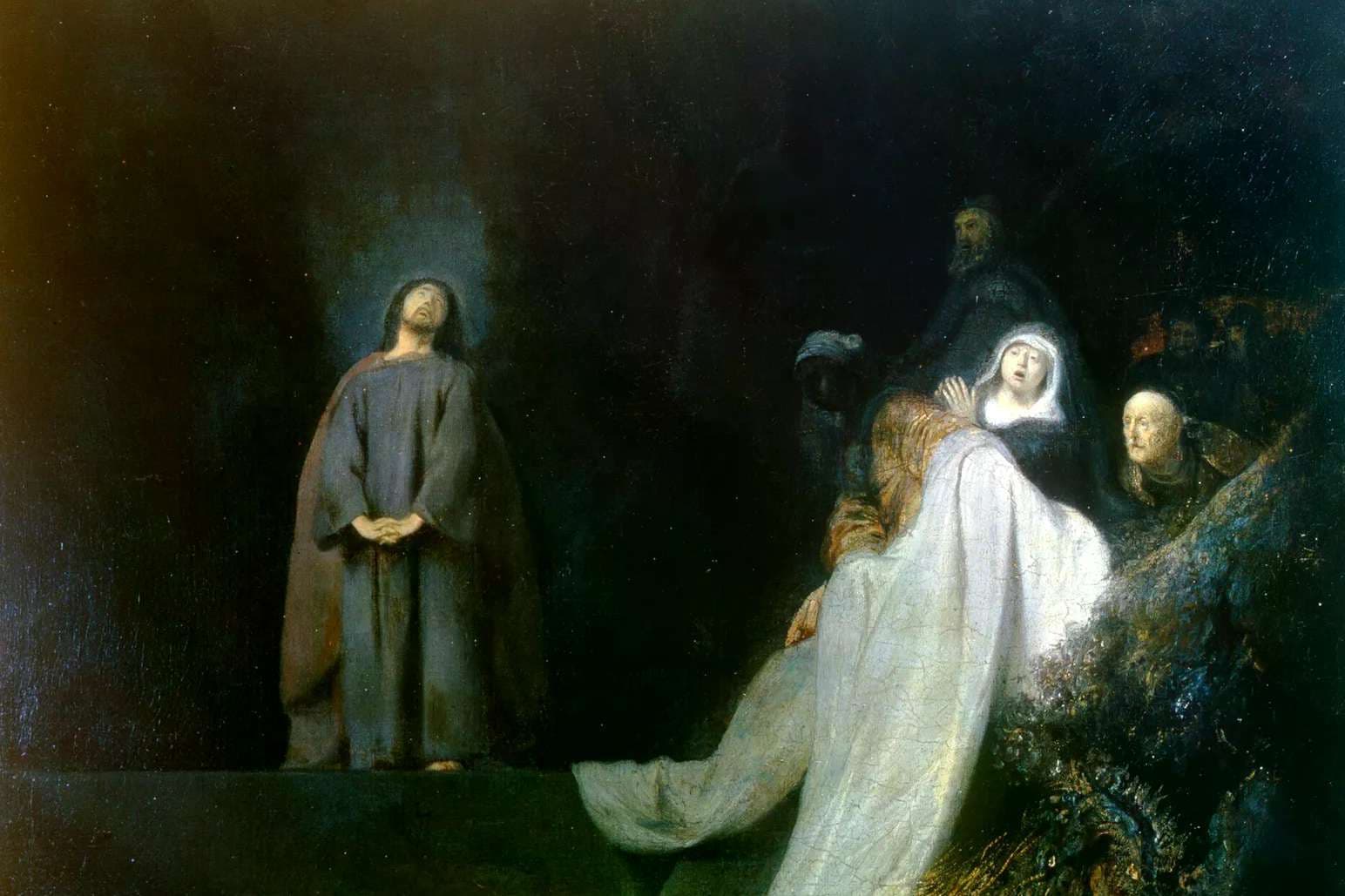
Invoking the name of the man in the Gospel of John whom Jesus raised from the dead, Cytanovic wrote: “My name is Lazarus, and this is the story of my journey to Christ and rebirth.”
Cytanovic wrote that his decision to attend the rally was “the culmination of years of poor choices.” Raised in what he described as a loving but economically strained home and without religious formation, he said he sensed injustice in the poverty around him but lacked the moral framework to understand it.
“There was a part of me that understood that there was injustice in the poverty I saw around me,” he wrote. “Yet, I did not have the language or moral formation to articulate what made it unjust.”
He described himself as religiously unaffiliated — “a ‘none’ who was culturally Christian as a vague abstraction” — and searching for justice without understanding its meaning.
“I wanted justice, but I did not know what justice truly was,” he wrote. “I had no plan, no goal, and that absence of direction became the soil in which my radicalization took root.”
Over time, he acknowledged, he embraced “hateful ideas” that he justified as “necessary to protect what I perceived as my community: the white community.” Though he said he never formally joined a neo-Nazi organization, he became involved with Identity Evropa, a white nationalist group, in 2017.
Even during what he described as his descent into extremism, Cytanovic wrote that he sensed “a faint call to something better.” In quiet moments between classes and time spent in online radical spaces, he said he felt a persistent sense that he was on the wrong path. He said he occasionally admired a local cathedral and attended Mass with friends from a campus pro-life group, though he said he did not yet believe.
“There was an off-ramp,” he wrote, “a different answer to the justice I sought.”
At the rally, he was photographed shouting, his face contorted in anger, as violence unfolded.
“That image captured my anger and hatred in a single frame,” he wrote. “I believe that it was divine providence that this photograph was taken and that I was forced to confront the consequences of my actions. I was held accountable; and through that painful reckoning, I was given the possibility of a new beginning.”
That faint call he had previously heard became more clear.
“As the weight of those consequences fell upon me, I finally understood what that quiet voice had been,” he wrote. “It was Christ, calling me to Him. After the rally, I realized that unless I changed course, I would destroy myself. That fall, I entered RCIA and began the long journey home to the Catholic Church.”
He was received into the Catholic Church the following Easter. But he wrote that though he believed the Church’s teachings, living as a Catholic in daily life was something he was still learning. He found he could not immediately undo years of anger and poor habits, so he “resolved to begin again from the ground up” in cultivating his intellectual and moral life.
He later enrolled at the London School of Economics (LSE), where he encountered the writings of Catholic author G.K. Chesterton for the first time and began studying Catholic social teaching and distributism.
Alongside Chesterton’s work, he wrote that friendships within the University of London Catholic community, including with the Fr. James Walters of the LSE Faith Centre, gave him what he described as concrete experiences of forgiveness and community.
“They offered me grace,” he wrote, “and, in return, the opportunity to fill my heart with charity.”
When the COVID-19 pandemic forced isolation and paused ordinary life, Cytanovic said he immersed himself in Chesterton’s writings, which “became my guide out of the racial zeal and blind rage that had once dominated my life.”
After returning to the U.S., Cytanovic said he struggled to rebuild his life as his past followed him digitally and socially. He described being fired, having job offers rescinded, being rejected from military service, and being turned away from some volunteer Catholic organizations skeptical of his conversion.
“I felt trapped, convinced that my life was effectively over before it had truly begun,” he wrote. Yet he said he continued returning to Chesterton’s writings, which helped him rediscover joy in ordinary life and reorient his understanding of justice toward solidarity, labor, and the common good.
Nearly nine years after Charlottesville, Cytanovic is a doctoral candidate in politics at The Catholic University of America in Washington, D.C., studying labor and Catholic social thought, he shared. He identifies as a distributist and cooperativist committed to serving the common good.
For years, he wrote, he avoided telling his story publicly, not wanting to “profit from notoriety” or present himself as a victim. But he concluded that his past remains inseparable from his name.
“Despair no longer defines me,” he wrote. “Through Christ’s love and forgiveness, I have been given the grace to become a new man. My name is Lazarus, and I am alive.”
Comments