Pope Leo begins four-day apostolic journey to France: ‘That the world may have life’
Pope Leo warned French authorities that scientific advances that lack ethical guidance can threaten human dignity, expressing concern about assisted suicide and surrogacy. He also said authentic secularity makes room for faith in public life and lets the state and religious institutions come together for the common good.

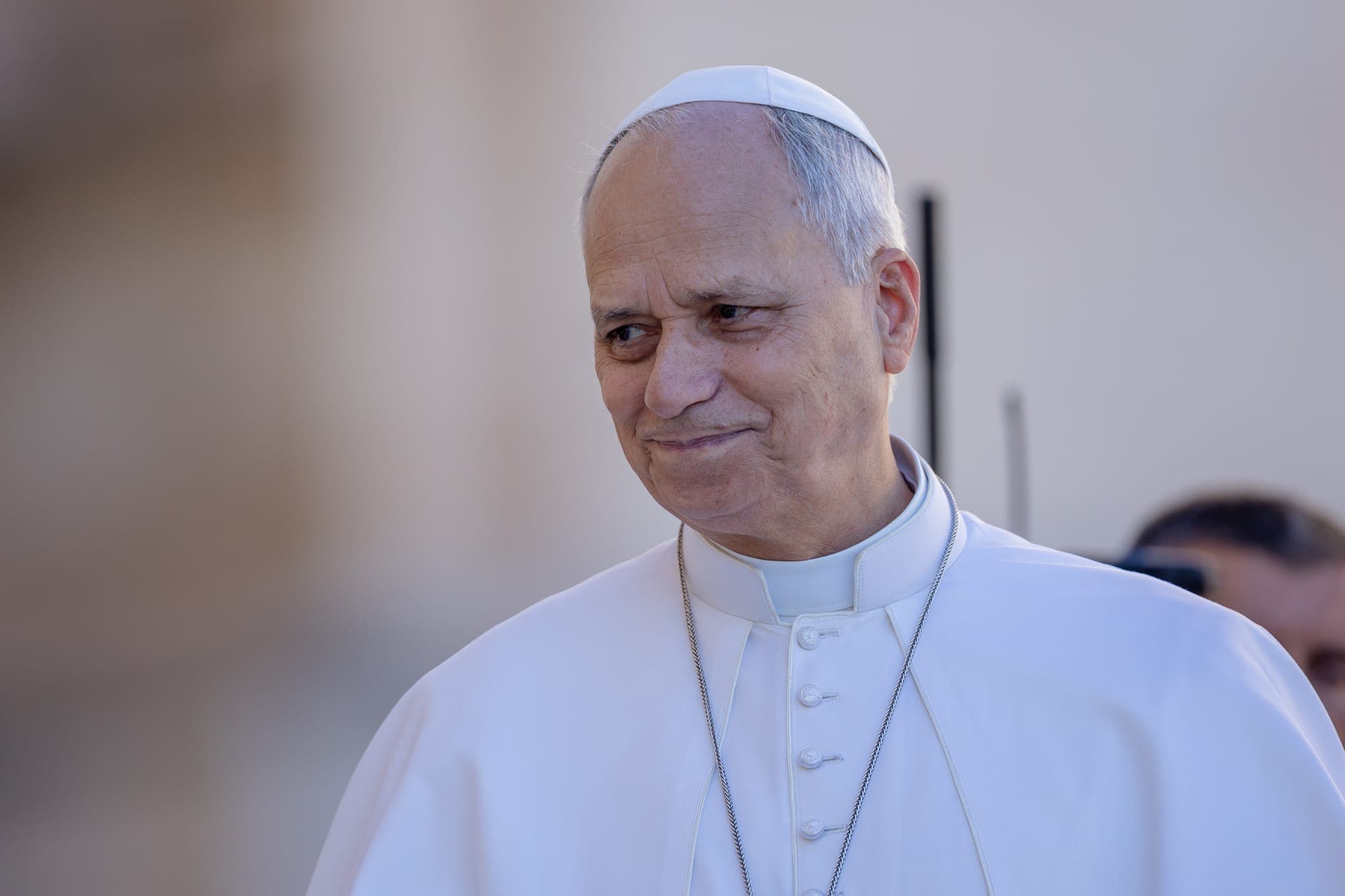
Pope Leo XIV began his four-day Apostolic Journey to France Sept. 25, meeting President Emmanuel Macron and civil authorities in Paris, where he called on the country to protect human dignity, make room for religion in public life, and work for peace.
Speaking to reporters aboard the papal flight from Rome to Paris, Pope Leo said he was traveling to the country as he would travel anywhere: as “a follower of Jesus Christ wanting to proclaim peace, the peace of Christ throughout the world.” He said that message carried particular importance now.
The Sept. 25-28 visit bears the motto: “That the world may have life,” according to Cardinal Secretary of State Pietro Parolin, who spoke to Vatican News ahead of the visit. Cardinal Parolin told the outlet that the motto calls attention both to spiritual life and to the dignity of every human life, which must be “welcomed, loved, and cared for from conception to natural death.”
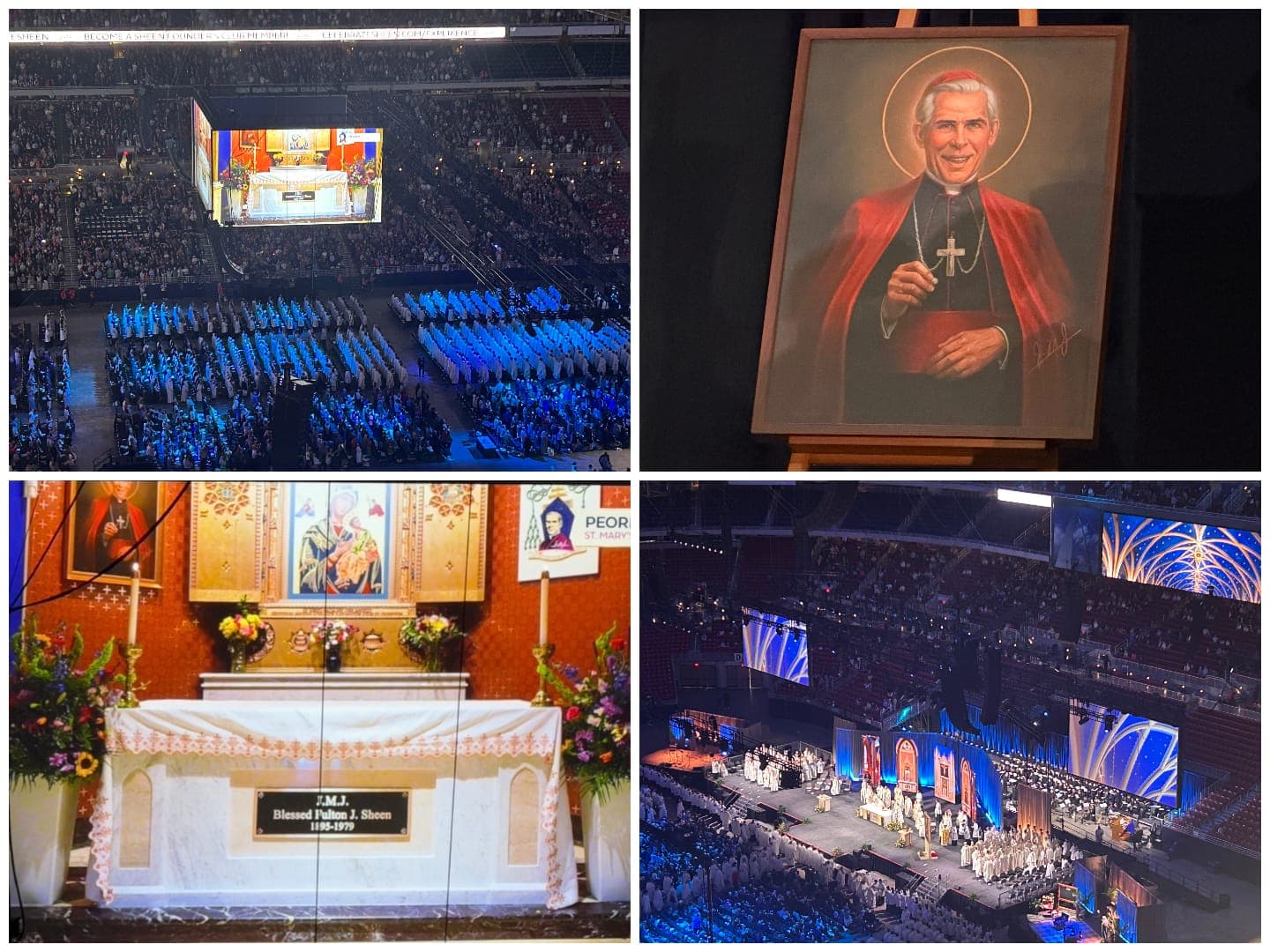
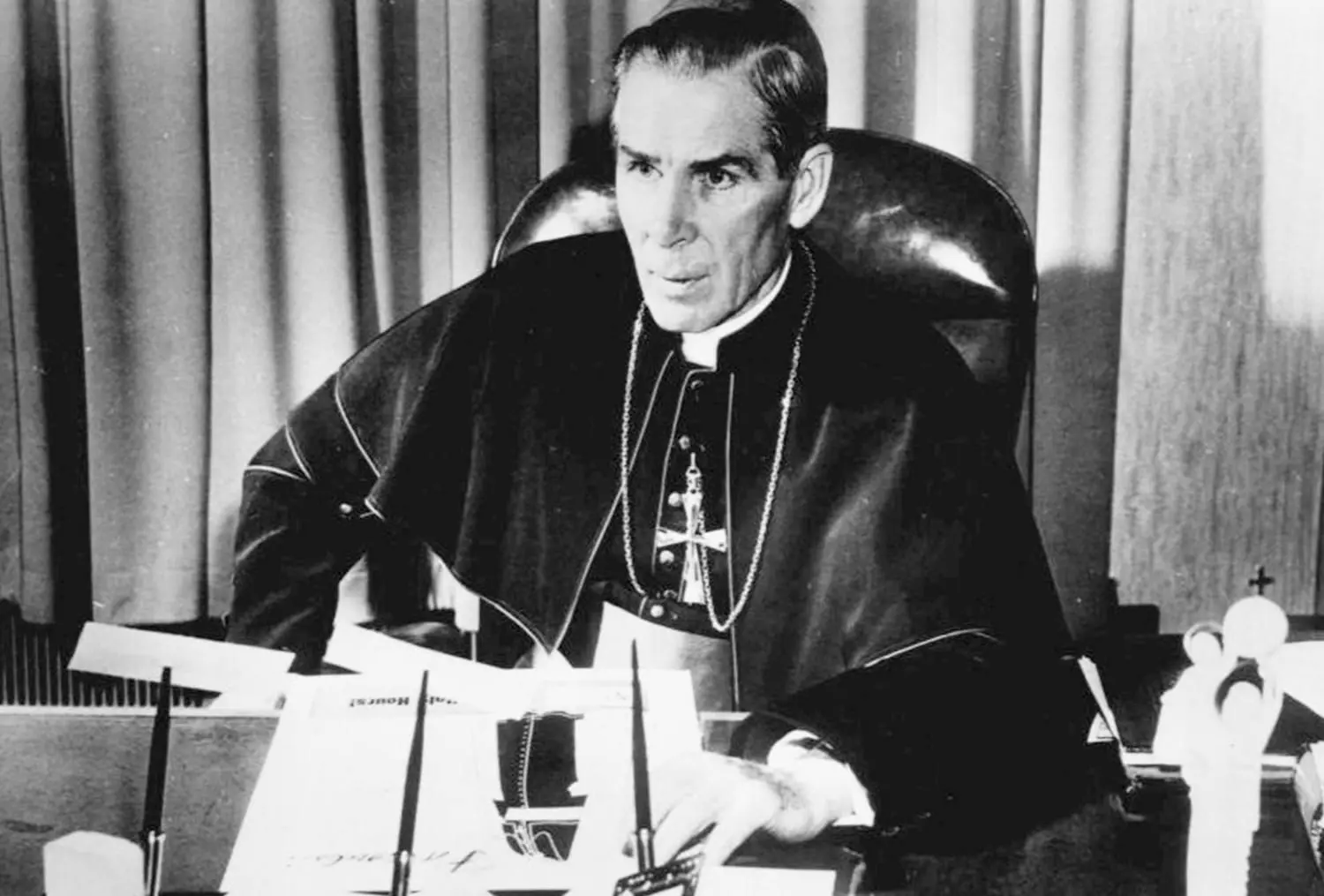
During the flight, Pope Leo reflected on Blessed Archbishop Fulton Sheen’s Sept. 24 beatification. He recalled watching Blessed Sheen on television with his family and said the archbishop’s teaching “really came home to people.”
In remarks to reporters, the Pope also discussed the need to ensure artificial intelligence (AI) remains a “tool for human beings” rather than something that could “displace or ultimately destroy humanity.”
Asked about an upcoming basketball game in Rome between his alma mater, Villanova University, and Notre Dame, Pope Leo joked that “God will be very strong on the Villanova side.”
>> Fulton Sheen declared Blessed during historic Mass in St. Louis <<
Pope urges France to defend human life and welcome faith in public life
After meeting privately with Macron at the Élysée Palace, Pope Leo gave an address to French authorities, civil society representatives, and diplomats.
He began by praising France’s cultural and Christian heritage, saying that the work of French scholars who were also faithful Catholics shows how the sciences and the arts can serve humanity when directed toward beauty, goodness, and truth. He pointed to the restoration of Notre-Dame Cathedral after the 2019 fire as an example of cooperation and renewed hope.
Pope Leo then connected France’s national motto — liberty, equality, and fraternity — to the dignity of every person, saying those ideals express ethical duties that find their source of inspiration and fulfillment in the Gospel.
The Holy Father devoted much of the address to the dignity of the human person as society confronts new technology. Recalling his encyclical Magnifica Humanitas, he said AI makes education in ethical judgment more urgent so that technological progress serves people and respects their freedom.
“If we are to avoid losing our humanity amid a ‘paradise of machines’ invading and conditioning our daily lives,” he said, “there is an urgent need for education in ethical discernment and the capacity to acknowledge the moral good.”
He warned that science and technology need to be “guided by a deeper wisdom,” because when they are not, they attempt to offer “immediate solutions that apparently address people’s wishes and their pain, but can seriously divert them from the greater good to which they aspire.”
The Holy Father also expressed concern about “trends in society that risk turning science and technology into profit-driven ventures promoting genetic manipulation, surrogacy, the trade in human organs, or the possibility of arranging one’s own death.”
According to Reuters, Catholic leaders have expressed concern in recent years over France’s enshrining a “right” to abortion in its constitution in 2024 and the government’s passage of a law legalizing assisted dying for adults with incurable illnesses.
Respect for and protection of human life is “a duty incumbent upon each and every one of us,” Pope Leo said.
Pope Leo also challenged an understanding of French secularism that would push religion out of public life. Addressing France’s tradition of laïcité, he said Christians can draw on their faith in public service without threatening national unity.
“Indeed, authentic secularity does not exclude religion but is capable of valuing it as an educational resource,” he said.
“An authentic secularity, then, consists not in excluding religion from the public sphere or from education,” Pope Leo emphasized, “but in striving to ensure that the State and religious institutions maintain dialogue and join forces in the service of the common good, that the world may have life.”
According to the BBC, Macron does not plan to attend any of Pope’s Masses, citing France’s separation of church and state.
The Pope thanked France for its longstanding cooperation with the Church in supporting Christians and educational institutions in the Middle East, including a project the Pope said has supported seven universities in Lebanon and the University of Bethlehem. He then turned to people suffering amid the region’s continued conflicts.
“We cannot remain indifferent in the face of their pain, which offends human dignity and cries out to God for justice,” he said.
He closed by calling for an end to the arms race, quoting St. John XXIII's appeal that “nuclear weapons must be banned.” Peace, he said, is built “day by day through dialogue and justice” rather than maintained through “a balance of power.”
In his conclusion, Pope Leo quoted Macron’s 2018 address to French bishops, in which the president said that “a Church that claims to be uninterested in temporal matters would not be fulfilling her vocation; and that a President of the Republic who claims to be uninterested in the Church and in Catholics would be failing in his duty.”
“Be assured of my fervent prayers for your great nation,” the Holy Father said. “May God grant it peace, unity, and prosperity, that the world may have life.”
Pope Leo was also scheduled to visit UNESCO’s headquarters, celebrate Vespers at Notre-Dame Cathedral, and attend a prayer vigil with young people at the Stade de France in Saint-Denis later Sept. 25. He will remain in Paris Sept. 26, celebrating Mass at the Place de la Concorde before traveling to Lourdes that evening. He will then travel to Metz Sept. 28 for an interreligious meeting and give an address on Europe, peace, and unity before returning to Rome.


Comments