Pope Leo suggests those responsible for war should examine their consciences, go to Confession
In a March 13 address, Pope Leo XIV suggested those responsible for armed conflicts should examine their consciences and go to Confession.

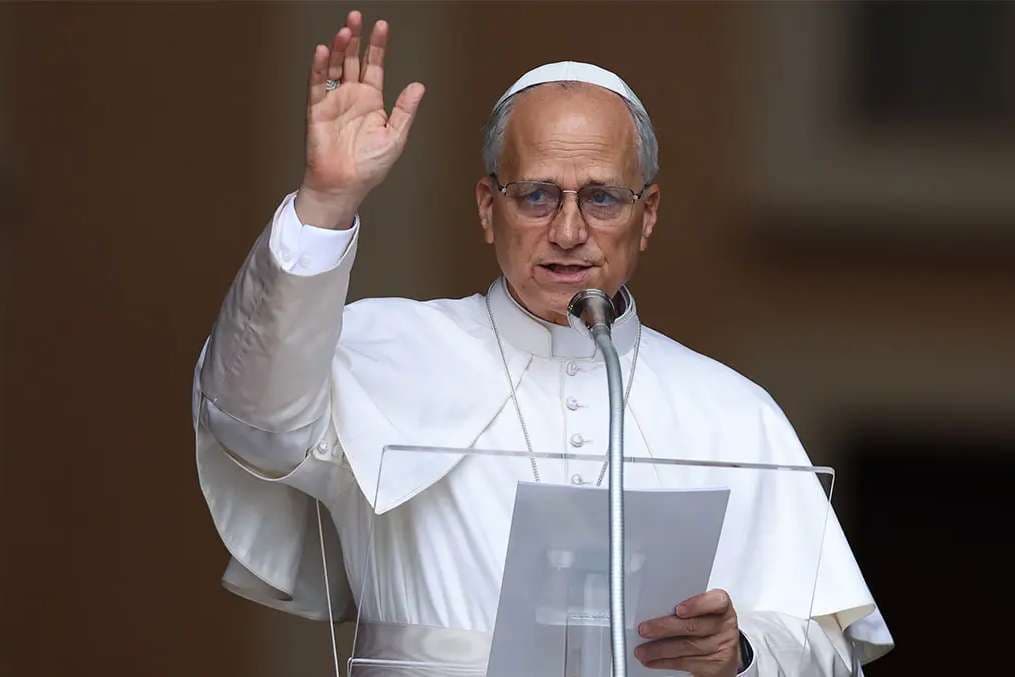
In a March 13 address, Pope Leo XIV suggested those responsible for armed conflicts should examine their consciences and go to Confession.
He noted that the sacrament of Confession can be received repeatedly but Christians do not always take advantage of opportunities to receive God’s forgiveness.
“It is as though the infinite treasure of the Church’s mercy remained ‘unused’ due to a widespread distraction among Christians who, not infrequently, remain in a state of sin for a long time, rather than approaching the confessional with simplicity of faith and heart to receive the gift of the Risen Lord,” Pope Leo said in the address to new priests and those being trained as confessors.
He recalled that the Fourth Lateran Council established in 1215 that Christians are required to go to Confession at least once a year and that the Catechism reiterated that principle after the Second Vatican Council.
Taking responsibility for one’s sins and repenting of them unites a person to God and therefore puts him in harmony with Christ, the Pope said. Here, Pope Leo brought up the importance of Confession for those who bear grave responsibility for war.
“The Sacrament of Reconciliation is thus a ‘workshop of unity’: it restores unity with God through the forgiveness of sins and the infusion of sanctifying grace,” the Holy Father said. “This fosters the inner unity of the individual and unity with the Church; consequently, it also promotes peace and unity within the human family.
“One might well ask: do those Christians who bear grave responsibility in armed conflicts have the humility and courage to make a serious examination of conscience and to go to confession?”
Pope Leo went on to reflect on how sin breaks spiritual unity with God but cannot break the sinner’s total dependence on Him.
“This dependence, when recognized, can open the way to conversion,” he said. “Rather, sin breaks spiritual unity with God: it is turning one’s back on him, and this dramatic possibility is as real as the gift of freedom that God himself has bestowed upon human beings. To deny the possibility that sin truly breaks unity with God is, in reality, a failure to recognize the dignity of man, who is – and remains – free and therefore responsible for his own actions.”
The Pontiff also said that through Confession, in which the penitent reconciles with God and the Church, the Church “is edified and enriched by the renewed holiness of her repentant and forgiven children.”
For an individual to have inner unity, he or she must have unity with God and the Church – especially in the current “age of fragmentation,” Pope Leo said.
He added that, especially among younger generations, there is a genuine desire for inner unity.
“The unfulfilled promises of unbridled consumerism and the frustrating experience of a freedom detached from the truth can, through divine mercy, be transformed into opportunities for evangelization: by bringing to the surface a sense of incompleteness,” he said, “they allow us to awaken those existential questions to which only Christ can give a full answer.
“God became man to save us, and He does so also by nurturing our religious sense, our irrepressible longing for truth and love, so that we may embrace the Mystery in which ‘we live and move and have our being’ (Acts 17:28).”
Peace among peoples and nations, he emphasized, requires unity with God.
“Only a reconciled person is capable of living in an unarmed and disarming way! Those who lay down the weapons of pride and allow themselves to be continually renewed by God’s forgiveness become agents of reconciliation in everyday life,” he said. “In him or her are fulfilled the words attributed to Saint Francis of Assisi: ‘Lord, make me an instrument of your peace’.”
The Pope’s full address can be read here.



Comments