Vatican doctrinal chief says SSPX bishop consecrations will be ‘schismatic act’ and incur excommunication
Cardinal Victor Manuel Fernández, prefect of the Dicastery for the Doctrine of the Faith (DDF), issued a statement May 13 declaring that the bishop ordinations the Priestly Society of Saint Pius X (SSPX) has scheduled for July 1 do not have the permission of the Pope and “will constitute ‘a schismatic act’” with grave consequences for those who formally adhere to it.

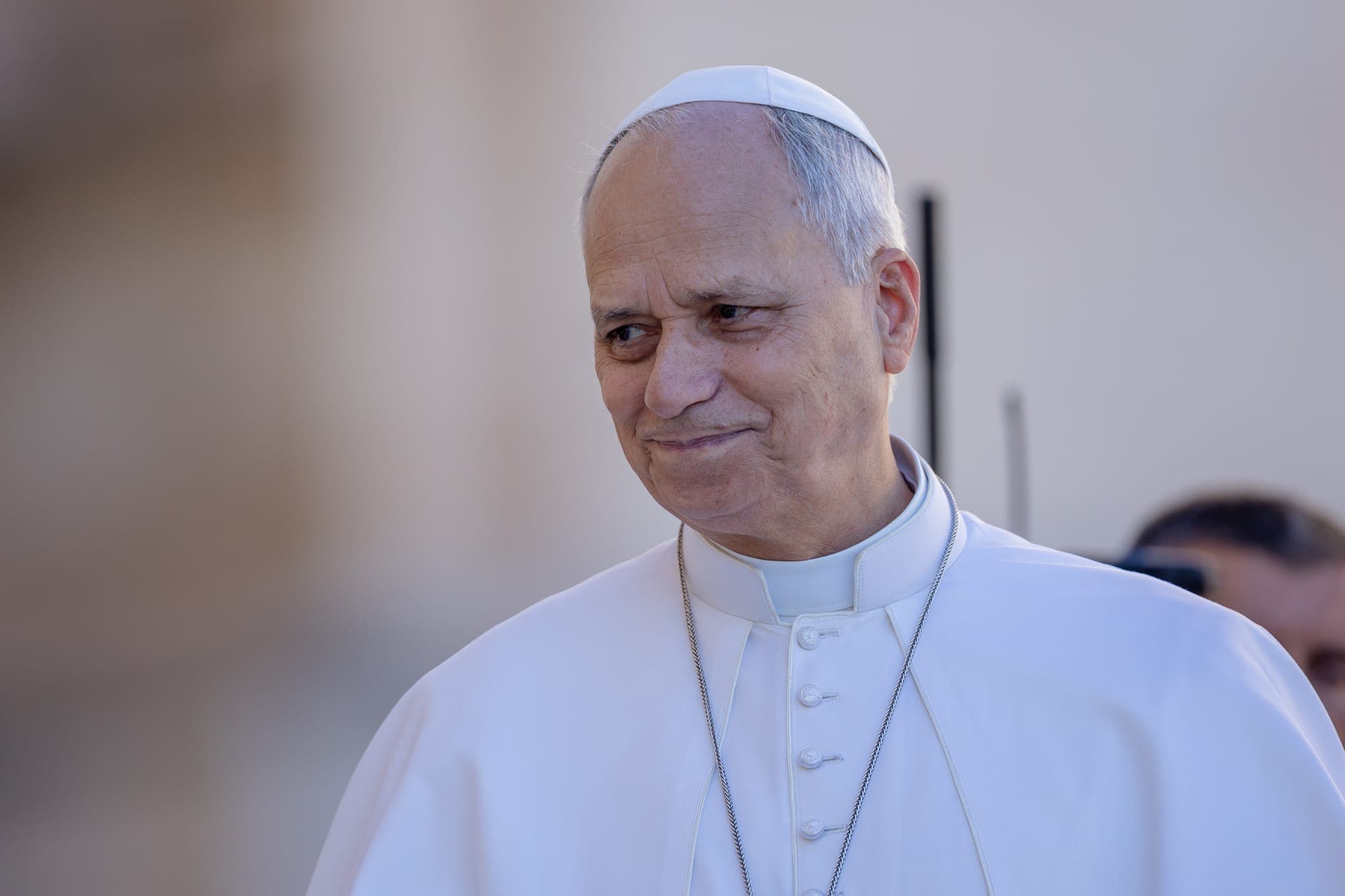
Cardinal Victor Manuel Fernández, prefect of the Dicastery for the Doctrine of the Faith (DDF), issued a statement May 13 declaring that the bishop ordinations the Priestly Society of Saint Pius X (SSPX) has scheduled for July 1 do not have the permission of the Pope and “will constitute ‘a schismatic act’” with grave consequences for those who formally adhere to it.
“With regard to the Priestly Fraternity of Saint Pius X, we reiterate what has already been communicated,” the DDF prefect stated in the message posted by the Holy See Press Office. “The episcopal ordinations announced by the Priestly Fraternity of Saint Pius X do not have the requisite papal mandate.”
“This act will constitute ‘a schismatic act,’” he continued, citing Pope John Paul II’s 1988 apostolic letter on the SSPX called Ecclesia Dei, “and ‘formal adherence to the schism constitutes a grave offence against God and entails the excommunication established under Church law.’”
The second quote he attributed to a 1996 explanatory note of the Pontifical Council for Legislative Texts.
Pope Leo XIV is praying for the SSPX leaders amid this crucial moment in their decision-making, Cardinal Fernández concluded.
“The Holy Father continues in his prayers to ask the Holy Spirit to enlighten those responsible for the Priestly Fraternity of Saint Pius X so that they may reconsider the extremely grave decision they have taken,” he said.
The statement raises questions especially regarding excommunication, Father Gerald Murray, a canon lawyer in the Archdiocese of New York, commented to Rome-based Catholic journalist Diane Montagna on May 13. He said the Vatican needs to clarify exactly what “formal adherence” means, as there is currently no canonical definition for it, though it definitely implies “some recognizable action.”
He said the priests and laity would need to be instructed by the Holy See “well in advance, as to what constitutes ‘formal adherence, so that they might know how to avoid incurring the penalty.”
Cardinal Fernández met with Father Davide Pagliarani, SSPX superior general, in mid-February to try to find a tenable path forward. The DDF prefect proposed a path of dialogue that required the suspension of the episcopal consecrations. Several days later, Father Pagliarani informed Cardinal Fernández that after having considered the proposal with the SSPX General Council, they decided that the episcopal consecrations would proceed.
The SSPX announced on Feb. 2 the intention to consecrate new bishops in July, despite not having the permission of the Pope. The announcement quickly sparked concern of excommunication for the involved clergy, as is what happened when the SSPX founder, Archbishop Marcel Lefebvre, illicitly consecrated four bishops in 1988. Along with Archbishop Lefebvre, the four bishops were also automatically excommunicated since the consecrations took place without Pope John Paul II’s permission.
Dialogue between the SSPX and the Vatican was sought in the following years. Archbishop Lefebvre died in 1991. In 2009, Pope Benedict XVI lifted the excommunications of the four SSPX bishops, writing in a letter that the initial excommunication was done “with the aim of calling those thus punished to repent and to return to unity.” He said that sadly the goal had not yet been accomplished, so now lifting the excommunication “has the same aim as that of the punishment: namely, to invite the four bishops once more to return.”
Lifting the excommunication “was possible once the interested parties had expressed their recognition in principle of the Pope and his authority as Pastor,” he explained, “albeit with some reservations in the area of obedience to his doctrinal authority and to the authority of the Council.”
The SSPX has expressed criticism for decades of some of the documents of the Second Vatican Council, arguing that their contents are contrary to Church Tradition. The SSPX published a May 12 statement by Father Patrick Troadec of the SSPX, saying that the SSPX “was founded in a context of unprecedented religious crisis.”
The SSPX argued that naturalism, liberalism, modernism, and ecumenism had been denounced by numerous popes before the Second Vatican Council and yet by the time of the meeting, “these errors were so deeply ingrained in the minds of many prelates that they eventually seeped into some of the Council's documents. And after the Council, the guidelines set by recent popes have led Church leaders to dilute their teaching through an exaggerated desire for closer ties with members of other religions and for harmony with the world.”
According to the SSPX website, nearly 600,000 members of the laity attend SSPX Masses across the world and the society has 590 priests. The May 12 statement outlines how the SSPX sees the episcopal consecrations as justified, in part by citing the scale of the society.
Father Troadec argued in part that “since the official authorities of the Church are still steeped in modern errors, the Society of Saint Pius X is more necessary than ever to allow the maximum number of souls to benefit from the treasures of Tradition and, given its worldwide expansion, two bishops aged nearly 70 are no longer sufficient to meet the expectations of all the faithful and seminarians.”
Regarding the consecrations taking place without a papal mandate, Father Troadec wrote, “Exceptional circumstances call for exceptional measures. The consecrations of July 1st, performed without papal mandate, are an exceptional measure linked to the unprecedented crisis facing the Church.”
In the weeks that followed the SSPX’s Feb. 2 announcement, Cardinals Gerhard Müller, Joseph Zen, and Robert Sarah issued statements on the situation. Cardinal Sarah, who is prefect emeritus of the Dicastery for the Divine Worship and the Discipline of the Sacraments, urged the SSPX to stay in unity with the Pope, even when it is difficult.
Cardinal Müller issued a lengthy statement recognizing both the faithful’s right to critically engage with certain documents from Rome and the importance of defending Church teaching within communion with the Holy See, not outside of it. The cardinal, who is former prefect of the Congregation (now Dicastery) for the Doctrine of the Faith, recalled the Protestant argumentation at the time of the Reformation, stressing that it is fundamental to maintain communion with the Pope as a Catholic.
Cardinal Zen, bishop emeritus of Hong Kong, emphasized in his statement that two crucial factors must be weighed in this situation: one, that “a schism must be avoided with every effort, because it will cause serious and lasting damage to the Church,” and two, that “a major issue of conscience must be also be respected,” noting one cannot be forced to follow teachings conflicting with the Church’s Tradition. He expressed hope and encouraged trusting that Pope Leo will help work toward resolutions clarifying and improving the implementation of the documents of the Second Vatican Council.

Comments