2 Latin Mass-devoted organizations respond to SSPX’s plan to consecrate bishops without Vatican approval
Two international organizations that support Catholics with a devotion to the Traditional Latin Mass issued a joint statement Feb. 3 expressing concern at the news that the General House of the Priestly Society of Saint Pius X (SSPX) will consecrate new bishops in July despite not receiving permission from Pope Leo XIV.

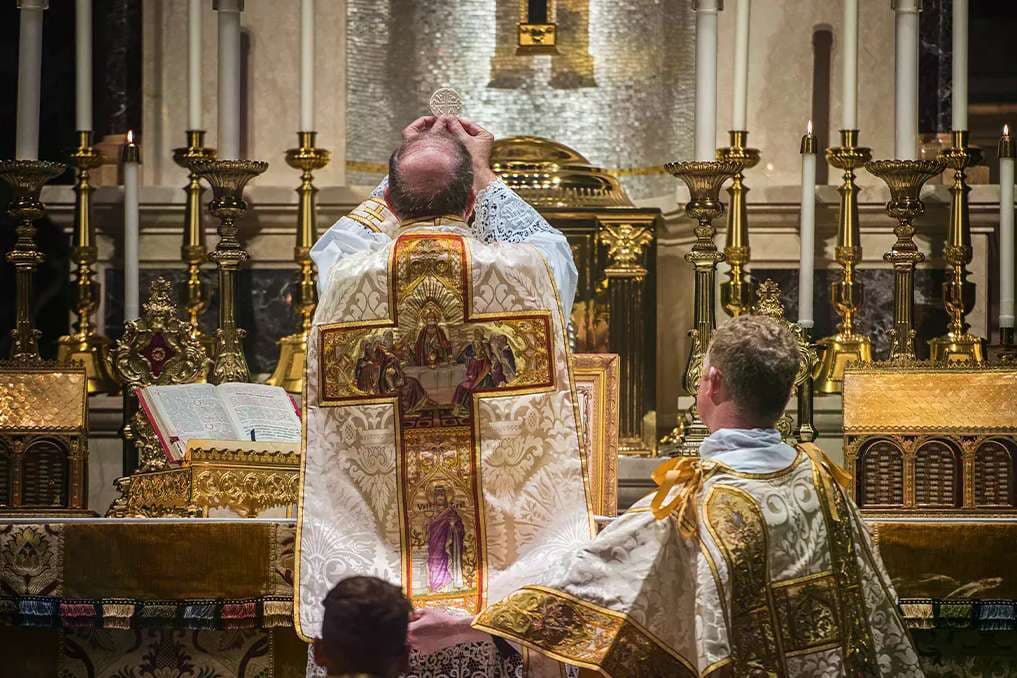
Two international organizations that support Catholics with a devotion to the Traditional Latin Mass issued a joint statement Feb. 3 expressing concern at the news that the General House of the Priestly Society of Saint Pius X (SSPX) will consecrate new bishops in July despite not receiving permission from Pope Leo XIV.
International Federation Una Voce and the Latin Mass Society (England and Wales) said in the statement that they “have heard with concern” the SSPX’s recent announcement about the intention to consecrate new bishops.
“Our ardent wish, shared by many Catholics of good will, is for the canonical regularisation of the SSPX, which would enable its many good works to bear the greatest possible fruit. This announcement is an indication that this outcome is a more distant prospect than it has seemed for many years,” reads the message signed by Joseph Shaw, president of Una Voce International and chairman of the Latin Mass Society, and four other leaders from the organizations.
International Federation Una Voce is self-described as “the Catholic world association of faithful attached to the Traditional Mass in the Extraordinary Form of the Roman Rite.” It is comprised of more than 40 Latin-Mass supporting lay associations around the world. The Latin Mass Society, an organization founded in 1965 to support the ongoing celebration of the Traditional Latin Mass, is a member of International Federation Una Voce.
The SSPX press release announcing the plans for future episcopal consecrations also spotlighted a November 2024 address from Father Davide Pagliarani, its superior general, in which he said the SSPX “responds adequately to the specific needs of an unprecedentedly tragic era.”
>> Holy See Press Office comments on SSPX plan to consecrate bishops without Vatican approval <<
The Feb. 3 statement signatories wrote that they share the SSPX’s goal “that the Church’s ancient liturgy be made available as widely as possible for the good of souls. We do not share the SSPX’s analysis of the crisis of the Church in all its details.”
“In particular we know many Catholics able to attend the Traditional Mass with all the necessary permissions from the Church’s hierarchy, such that it is not necessary for them to seek it in any irregular context,” they added.
At the same time, other Catholics face extensive difficulties in being able to attend the Traditional Latin Mass (TLM), even when local qualified priests desire to celebrate this liturgy and even when the local bishop is willing to permit its celebration, the signatories said, adding, “This creates an environment in which the SSPX argument of a ‘state of emergency’ gains sympathy.”
“We urge our bishops, and above all His Holiness Pope Leo XIV, to be mindful of these pastoral realities, which are at this moment precipitating a crisis whose consequences no one can foresee,” they said.
The desire held by Catholics who have a devotion to the Mass celebrated with the pre-1962 missal “is not some harmful or novel liturgical form,” the signatories concluded. “Pope St John Paul II called our desire for this Missal a ‘rightful aspiration’ (Ecclesia Dei, 1988), and later Pope Benedict XVI described it as a source of ‘riches’ (Letter to Bishops, 2007). The time to act is now.”
The other signatories of the statement are Monika Rheinschmitt, Una Voce International’s vice president and treasurer; Andris Amolins, secretary of Una Voce International; David Forster, treasurer of the Latin Mass Society; and Selina Fang, the society’s secretary.
Zeale News previously reported that some commentators warn that the involved clergy of the forthcoming SSPX episcopal consecrations risk automatic excommunication because of the illicit nature of the consecrations.
The SSPX was founded in 1970 by Archbishop Marcel Lefebvre, who in 1988 consecrated four bishops without the approval of Pope Saint John Paul II. Archbishop Lefebvre and the four bishops incurred automatic excommunications.
Pope John Paul II wrote in the 1988 apostolic letter “Ecclesia Dei” that the Church learned of illicit consecrations “with great affliction,” saying they frustrated all previous efforts — which had recently been particularly intense — to ensure the SSPX’s full communion with the Church.
“In itself, this act was one of disobedience to the Roman Pontiff in a very grave matter and of supreme importance for the unity of the church, such as is the ordination of bishops whereby the apostolic succession is sacramentally perpetuated,” Pope John Paul II wrote. “Hence such disobedience — which implies in practice the rejection of the Roman primacy — constitutes a schismatic act.”
Pope John Paul II noted that the root of this schismatic act involves holding an “incomplete and contradictory notion of Tradition” particularly because of how it views Tradition and communion with the pope.
Pope John Paul II said, “Especially contradictory is a notion of Tradition which opposes the universal Magisterium of the Church possessed by the Bishop of Rome and the Body of Bishops. It is impossible to remain faithful to the Tradition while breaking the ecclesial bond with him to whom, in the person of the Apostle Peter, Christ himself entrusted the ministry of unity in his Church.”
The pontiff appealed to all persons associated to Archbishop Lefebvre’s movement to cease their support of it and carry out “the grave duty of remaining united to the Vicar of Christ in the unity of the Catholic Church,” mindful of the fact that formal adherence to the schism incurs excommunication and is a grave offense against God.
Pope John Paul II also expressed in the letter his desire to pastorally support those with a devotion to the TLM, emphasizing his commitment to upholding their ability to have access to it. He urged that “respect must everywhere be shown for the feelings of all those who are attached to the Latin liturgical tradition, by a wide and generous application of the directives already issued some time ago by the Apostolic See for the use of the Roman Missal according to the typical edition of 1962.”
Pope John Paul II concluded the letter by invoking a phrase that Pope Leo XIV has repeatedly and prayerfully emphasized since beginning his pontificate.
“As this year specially dedicated to the Blessed Virgin is now drawing to a close, I wish to exhort all to join in unceasing prayer,” the Polish pope wrote, “that the Vicar of Christ, through the intercession of the Mother of the church, addresses to the Father in the very words of the Son: ‘That they all may be one!’”


Comments