Pope Leo highlights twofold nature of Sacred Scripture: Divine and human
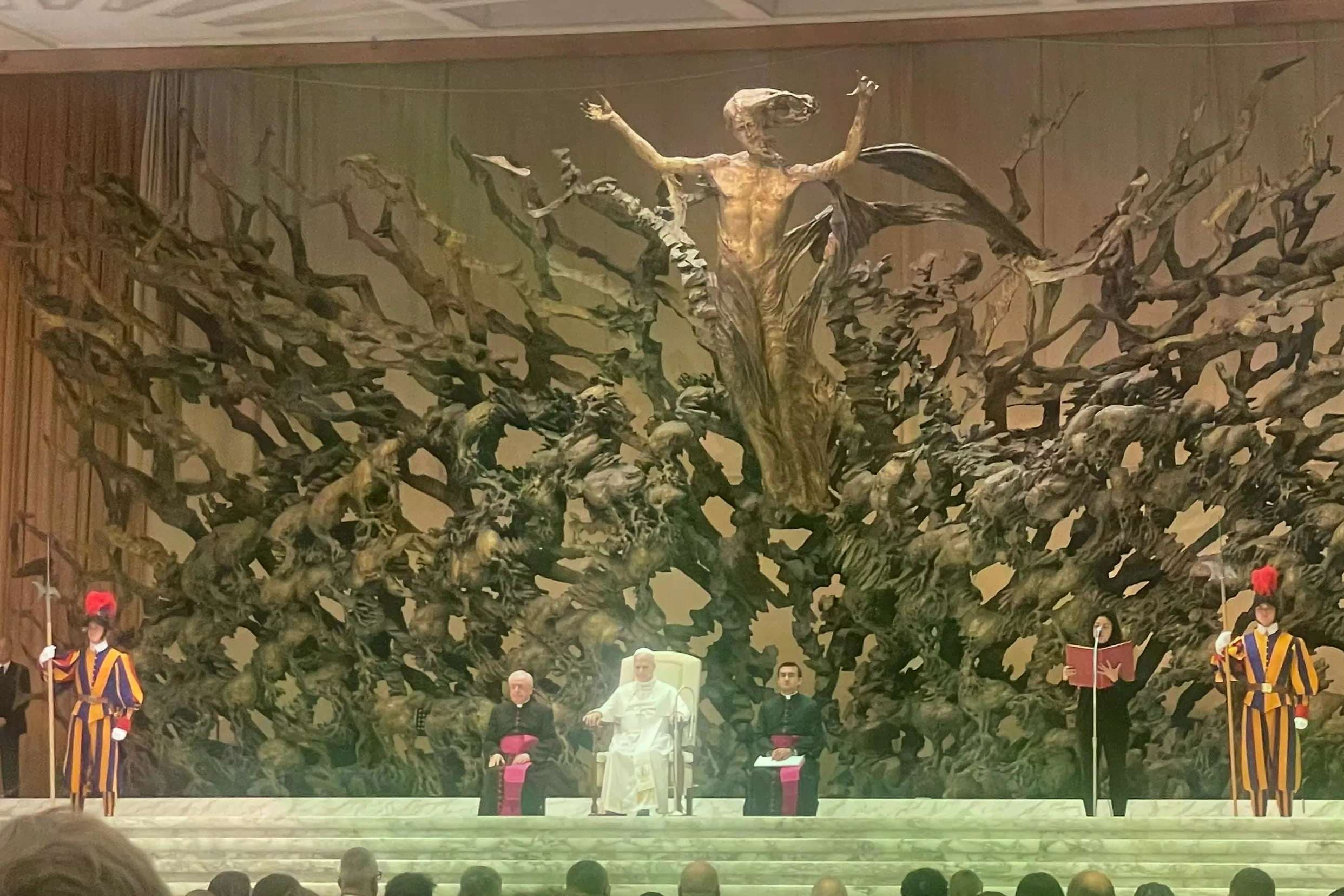
In his Feb. 4 General Audience, Pope Leo reflected on Sacred Scripture as having a divine origin expressed in a human context to bring about an encounter with God.

Top takeaways
- In his Feb. 4 General Audience, Pope Leo emphasized that Sacred Scripture has a twofold nature — divine and human, teaching that God’s Word is inspired by the Holy Spirit but communicated through human authors in human language.
- Citing Vatican II Conciliar Constitution Dei Verbum, he warned against interpretations that reduce Scripture to only its divine or only its human dimension, noting that both must be held together for a correct understanding of the Bible.
- The Pope cautioned that dismissing Scripture’s human context risks fundamentalism or spiritualism, while ignoring its divine origin reduces the Bible to a mere historical text disconnected from believers’ lives.
- Following the catechesis, Pope Leo appealed for prayers for Ukraine and called for a follow-up to the New START Treaty before its Feb. 5 expiration to prevent a renewed nuclear arms race.
More details
Pope Leo continued his catechesis on the documents of the Second Vatican Council during his Feb. 4 General Audience, reflecting on Sacred Scripture as having a divine origin expressed within a human context to bring about an encounter with God.
The Pope emphasized that the Bible was not written “in a heavenly or superhuman language” but rather is communicated through human authors, making God’s Word accessible to all. Citing the Vatican II Conciliar Constitution Dei Verbum, he reminded listeners that Sacred Scripture echoes the Incarnation of the Eternal Word, who “took to Himself the flesh of human weakness” and became fully man.
“Therefore, not only in its content, but also in its language, the Scripture reveals God’s merciful condescension towards men, and his desire to be close to them,” Pope Leo said.
The Pope cautioned against understanding the authors of Sacred Scripture as “merely passive tools of the Holy Spirit” and noted that Dei Verbum calls them “true authors” of the books of the Bible. He also warned against reducing the reading of Scripture to either its divine origin or its human composition, stressing that both dimensions must be held together for a correct interpretation.
If the Bible’s human language is dismissed, he said, the study of Scripture risks becoming fundamentalist or spiritualist, while the spoken proclamation of the Word of God “loses touch with reality, with human hopes and sufferings,” and becomes “ineffective.” Conversely, if the study of Scripture understands it “as a mere human teaching” and overlooks its divine origin, it becomes simply a historical manuscript. He said that Scripture “is intended to speak to today’s believers, to touch their present lives with their problems, to enlighten the steps to be taken and the decisions to be made.”
“This becomes possible only when believers read and interpret the sacred texts under the guidance of the same Spirit who inspired them,” he added.
Pope Leo said the twofold understanding of Scripture “serves to nurture the life and charity of believers” and reminded listeners that the Gospel “cannot be reduced to a mere philanthropic or social message, but is the joyful proclamation of the full and eternal life that God has given to us in Jesus.”
“Dear brothers and sisters, let us thank the Lord because, in his goodness, he ensures our lives do not lack the essential nourishment of his Word, and let us pray that our words, and even more so our lives, do not obscure the love of God that is narrated in them,” he concluded.
The Pope followed his address with an appeal for prayers for Ukraine as bombings resume in the country. He also called for peace in light of the Feb. 5 expiration of the New START Treaty signed in 2010 by the U.S. and Russia, which he said “represented a significant step in containing the proliferation of nuclear weapons.” Pope Leo urged both parties to seek a follow-up to the treaty.
“The current situation requires that everything possible be done to avert a new arms race that would further threaten peace among nations,” he said. “It is more urgent than ever to substitute the logic of fear and distrust with a shared ethos capable of guiding choices towards the common good and to make peace a treasure to be cherished by all.”


Comments