Rand Paul proposes amending the Constitution to end birthright citizenship
Sen. Rand Paul, R-Ky., introduced a joint resolution April 30 proposing a constitutional amendment to restrict birthright citizenship under the 14th Amendment.

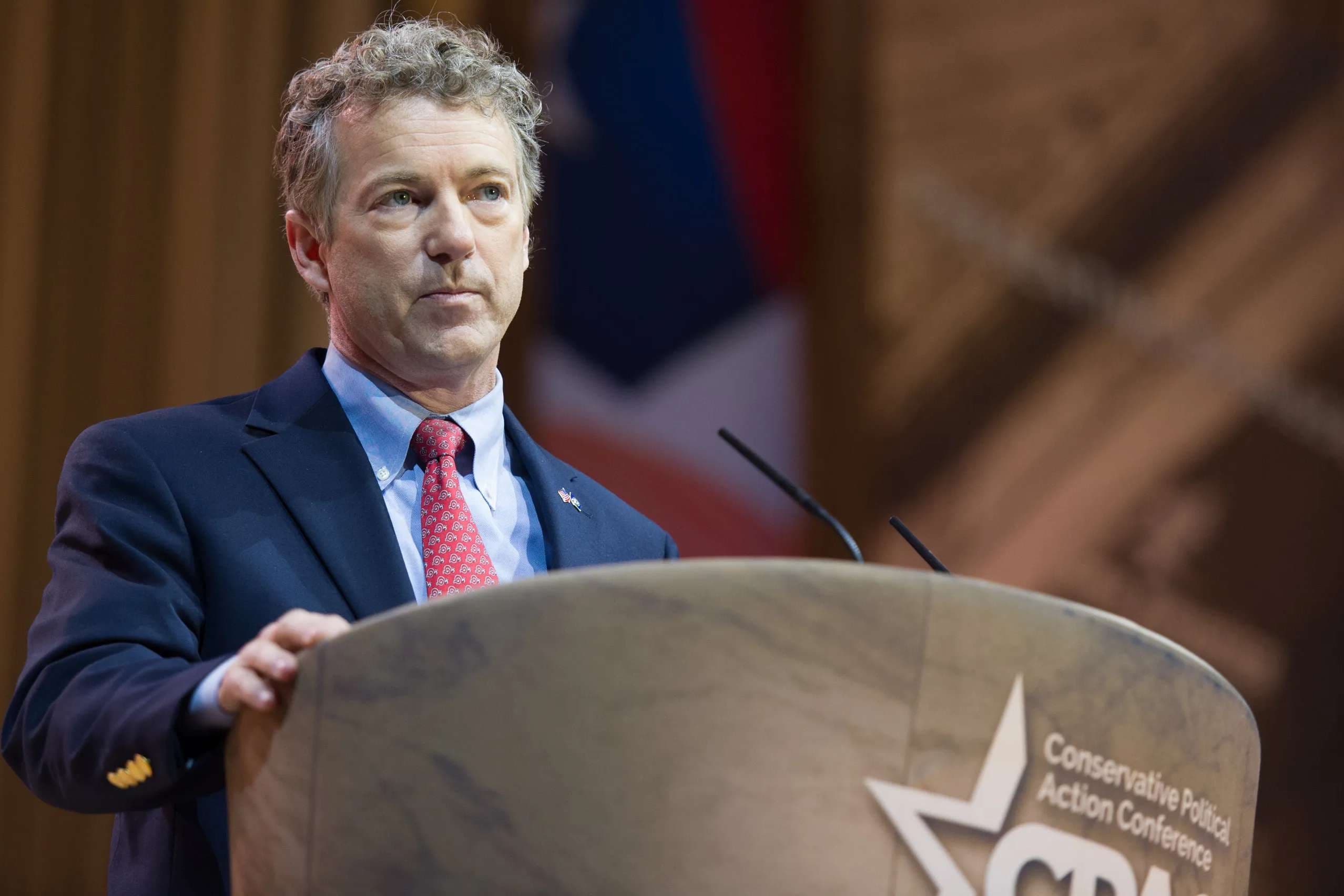
Sen. Rand Paul, R-Ky., introduced a joint resolution April 30 proposing a constitutional amendment to restrict birthright citizenship under the 14th Amendment.
The amendment would limit automatic U.S. citizenship for children born in the country, making only those with at least one parent who is a U.S. citizen, a lawful permanent resident, or an active-duty member of the military eligible.
The measure aims to clarify the 14th Amendment’s Citizenship Clause, which grants citizenship to “all persons born” in the U.S. “and subject to the jurisdiction thereof.” Paul argues its current application to children of undocumented immigrants or temporary visa holders is “wrong and not at all the intent” of the framers.
In a post on X announcing his proposal, Paul said, “We are a country filled with immigrants, and legal immigration is valuable and should be protected. But we are also a country whose borders have been too open and our generosity exploited too often.”
He described his amendment as a safeguard “in case the Supreme Court fails to address this issue correctly,” referencing ongoing litigation over President Donald Trump’s executive order on the issue.
Differences from Trump’s efforts and other proposals
On the first day of his second term, Trump issued an order directing federal agencies not to recognize birthright citizenship for certain children — specifically, those born to a mother who is unlawfully present (or temporarily present on a visa) and a father who is neither a citizen nor a lawful permanent resident.
The order relied on an interpretation of the 14th Amendment similar to Paul’s. Lower courts have blocked the measure, and the Supreme Court heard arguments in Trump v. Barbara in early April 2026, with many observers expecting the justices to reject or sharply limit the order.
Paul’s proposal is a constitutional amendment, directly amending the Constitution rather than interpreting it. Constitutional amendments require two-thirds approval in both chambers of Congress and ratification by three-fourths of the states.
While hundreds of amendments have been proposed, no amendments have cleared both hurdles since 1992. If successful, Paul’s effort would be the first amendment to be ratified in 34 years.
The birthright citizenship debate
As Zeale News reported, the United States Conference of Catholic Bishops called Trump's executive order restricting birthright citizenship "immoral" and unconstitutional in an amicus brief with the Supreme Court.
Other critics argue the administration’s effort is an attempt to revive a legal theory that was already rejected by the Supreme Court over 125 years ago, with several of the Court's conservative justices expressing skepticism. For example, Chief Justice Roberts called the administration's arguments "quirky" and noted it's "the same Constitution" regardless of modern policy concerns.
Proponents say ending the way birthright citizenship is currently practiced would reduce incentives for illegal immigration.
As Zeale News previously reported, Missouri Sen. Eric Schmitt, a Republican and a Catholic, argued that U.S. citizenship should be reserved as a “privilege” for those with a “permanent and lawful bond to the United States.” Schmitt contended that extending citizenship to children born to tourists or those in the country illegally “has betrayed both the text of the 14th Amendment and the intent of its drafters.”
In a brief filed Jan. 23 alongside Texas Republican Rep. Chip Roy, Schmitt wrote that “only aliens who have been permitted to make the United States their domicile can be ‘subject to the jurisdiction thereof’” and therefore stand to benefit from the citizenship clause of the 14th Amendment.
>> Catholic senator urges Supreme Court to uphold Trump’s birthright citizenship order <<





Comments