Republicans outraise and outspend Democrats in final weeks before midterm elections
Recent U.S. Supreme Court rulings have paved the way for Republican campaigns and allies to get the most bang for their buck as November looms, but experts warn that even major cash reserves don’t guarantee Republican victories.

With high-stakes midterm elections only weeks away, Republicans are raising and spending record dollar amounts in a bid to keep both the House of Representatives and the Senate. Speaker of the House Mike Johnson, R-La., raised $30 million in the past quarter, according to Axios, amassing a $156 million war chest for this election cycle alone.
According to his campaign team, Johnson has raised more than any other Republican congressional leader at this point in an election cycle.
Axios reported that Johnson has funneled $21.5 million directly to incumbents and their campaigns, $7 million to Republican candidates challenging Democratic incumbents, and $46 million to the National Republican Congressional Committee (NRCC).
“We are focused on getting unprecedented resources to the Districts that will decide the majority,” Johnson said in a statement to Axios. “With this continued momentum, we are in place to defy history and defend the House to save America from the far-left!”
The House Speaker is also traveling to 40 different congressional districts in 22 different states to campaign for Republicans.
According to Punchbowl News, Rep. Brandon Gill, R-Texas, raised $4.68 million for the quarter. A freshman representative in a non-competitive district, Gill transferred an estimated $1.1 million to the NRCC and has dispersed approximately $300,000 directly to fellow Republicans’ campaigns.
The Democratic National Committee, Democratic Senatorial Campaign Committee, and Democratic Congressional Campaign Committee have raised a cumulative $613 million this election cycle, according to a Ballotpedia review of Federal Election Commission (FEC) filings, while the Republican National Committee, National Republican Senatorial Committee (NRSC), and NRCC have raised $714 million.
The Democratic committees initially edged out the Republicans in spending, dropping $540 million against Republicans’ $532 million as of the end of August, but Republican campaigns hold more cash on-hand while Democrats’ campaigns have often reported more debt than cash.
Republicans are also expected to get a major boost through outside and political action committee (PAC) spending. According to a CNBC analysis of FEC data, 14 of the 20 largest donor groups are either donating more to Republican campaigns than to Democratic campaigns or else exclusively funding Republicans over Democrats — and only three of those donor groups are giving predominantly to Democrats.
Of the nearly $1.2 billion spent by megadonors this cycle, roughly $830 million has gone to Republican candidates and campaigns and Republican-aligned PACs. Hungarian-born billionaire George Soros and both the House and Senate arms of the Majority Forward PAC accounted for nearly $225 million in spending for Democrats.
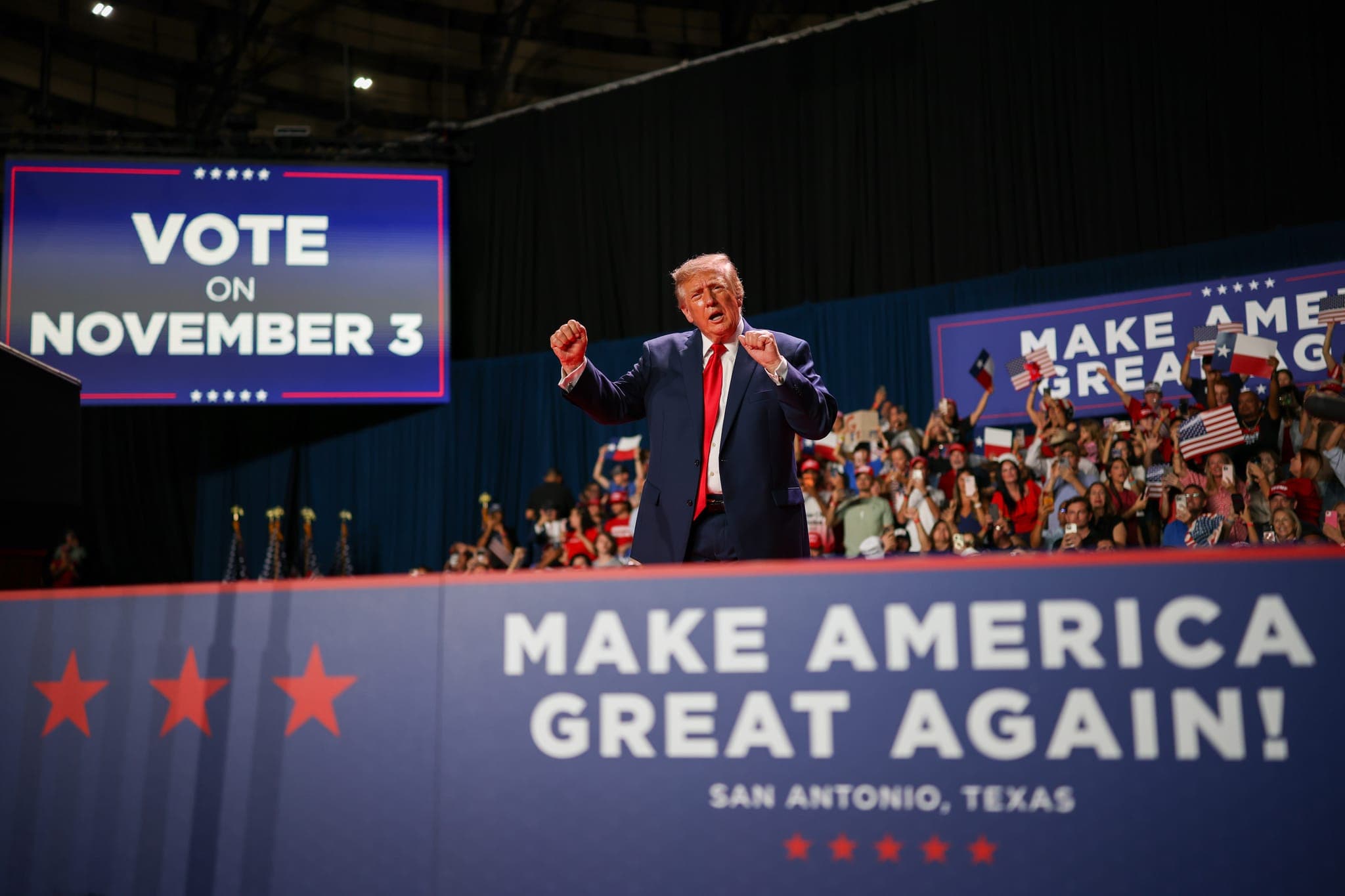
The MAGA Inc. PAC, affiliated with President Donald Trump, is also expected to make significant contributions in the final weeks before the election. As of the beginning of September, MAGA Inc. held approximately $416 million in cash.
In June, the U.S. Supreme Court determined in NRSC v. FEC that Federal Election Campaign Act limitations on how much money political parties can spend on campaigns in coordination with their candidates violated the First Amendment. The ruling opened the door for MAGA Inc. and other Republican-run PACs to pour larger amounts of cash into campaigns.
In early September, another Supreme Court action followed, restoring a Federal Communications Commission policy that allows political parties and joint fundraising committees access to discounted broadcast ad rates.
Former FEC chairman Trey Trainor told Zeale News that the Supreme Court’s activity “will matter in races that are within a few points. It will not, by itself, stop a wave.”
First, he said, the Supreme Court ruling in NRSC v. FEC means that “committee cash is no longer trapped behind the old caps.”
“Coordinated money is more efficient than an independent expenditure: the candidate controls the message, the buy can often be placed at the candidate rate, and it can be moved quickly into a race that tightens,” Trainor said.
“Second, the final weeks are when a cash advantage actually shows up on television, streaming, and mail,” he continued. “Early money builds the campaign. Late money fills the gaps: it defends seats that were supposed to be safe, it forces the other side to spend defensively, and it keeps races in play that would otherwise fall off the map.”
While the Republicans’ significant cash advantages are beneficial and may play a role in defending Republican-held congressional seats, Trainor warned that cash reserves are not enough on their own.
“A financial edge used that way narrows the battlefield,” he said. “It does not guarantee the outcome.”
.jpg&w=3840&q=75)

Comments