Supreme Court backs Trump’s mail-in ballot executive order — for now
The ruling is likely to allow the President’s election integrity initiative to take effect, at least temporarily, but later legal challenges may stymie the effort.
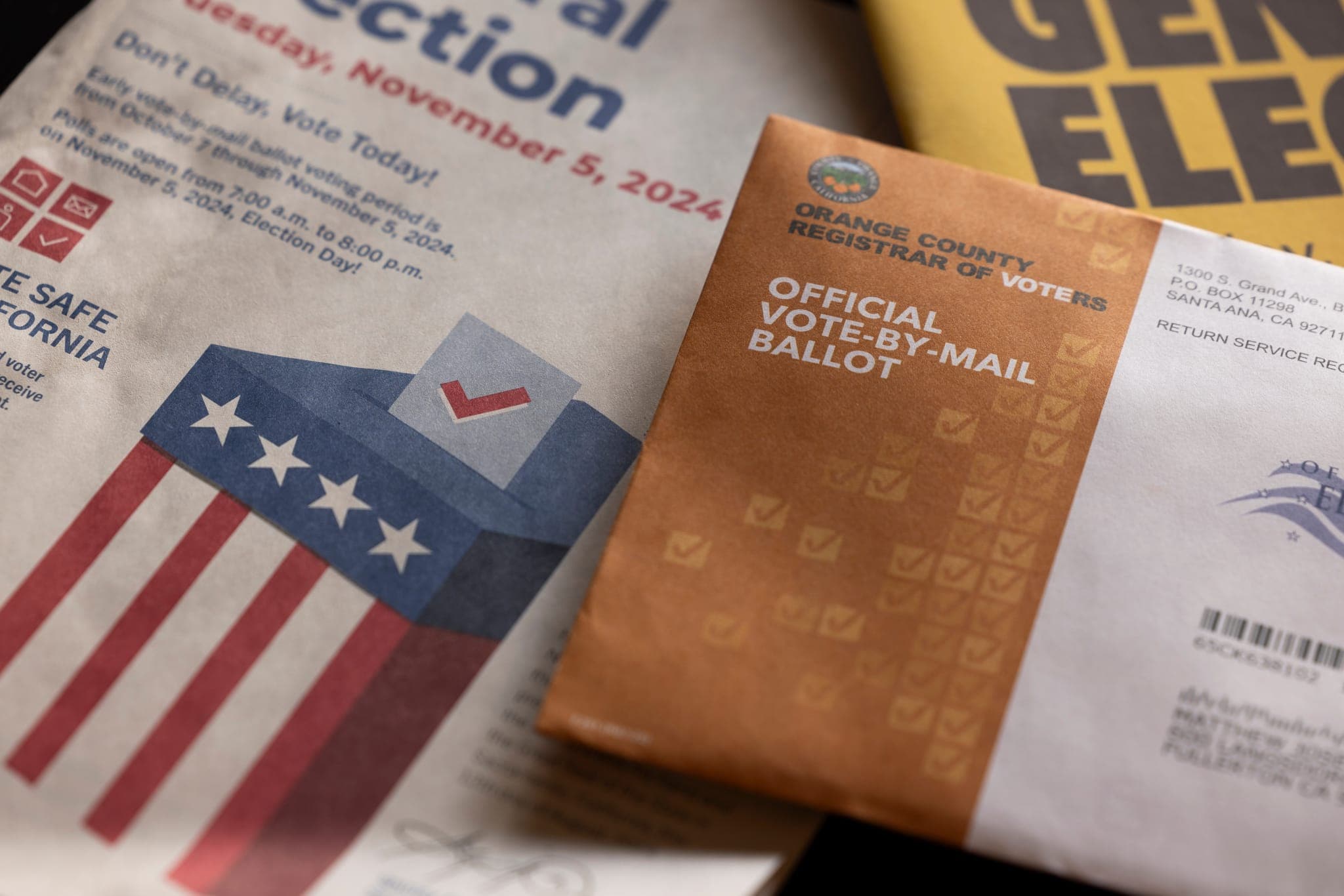
The U.S. Supreme Court is handing President Donald Trump and his administration an election integrity victory, although it may prove to be a short-lived win. Late Monday, the Supreme Court handed down a per curiam ruling in the case Trump v. California, allowing the U.S. Postal Service (USPS) to finalize a rule ensuring that mail-in ballots are only received and returned by U.S. citizens.
The rule change would require states requesting mail-in ballots from USPS to cross-check their voter rolls against “State Citizenship Lists” provided by the Department of Homeland Security — to ensure that foreign nationals are not given ballots by mail — before receivingbeing given mail-in ballots fromby USPS.
California and a cadre of other blue states were quick to sue in an effort to block the provision from takinggoing into effect, arguing that the federal government had overstepped its bounds. While a federal judge at the district court judgelevel agreed with the blue state coalition, the Supreme Court did not, staying the lower court’s injunction on Monday.
The states argued that multiple sections of Trump’s executive order directing the USPS rule change were “unconstitutional and sought to enjoin their implementation; the Government countered that the States’ suit is not justiciable because the Order does not injure them,” the Supreme Court’s majority observed in the ruling.
“As to the first factor: The Government is likely to prevail on the merits of its argument that the District Court lacked jurisdiction to enter the judgment,” the cCourt determined.
“Two related doctrines of justiciability block the States’ suit. One is standing, which requires an injury that is concrete, particularized, and imminent rather than ‘conjectural or hypothetical,” the Court continued. (Internal citations omitted.) “The other is ripeness, which forbids federal courts to adjudicate disputes that are dependent on contingent future events that may not occur as anticipated, or indeed may not occur at all.” (Internal citations omitted.)
Since the USPS rule change had not been finalized yet, the lower court was premature in ruling in favor of California and the other blue states, according to the Supreme Court. An unfinalized rule change could not cause a “concrete, particularized, and imminent” injury to the states. Additionally, the fact that the rule change had not been finalized precludes judicial intervention. However, the Supreme Court determined that the Trump administration would likely suffer “irreparable harm” if the inferior court’s injunction were permitted to stand.
“The Court’s disposition of this application does not mean that any measure taken by the Government to implement the Order will necessarily be lawful. On that score, time will tell,” the Supreme Court cautioned. “But the Order itself does not harm the States, so the District Court lacked jurisdiction to bar the Government from trying to implement it.”
>> Trump signs executive order restricting mail-in voting ahead of 2026 midterms <<
Justice Sonia Sotomayor wrote a brief four-page dissent, joined by Justices Elena Kagan and Ketanji Brown Jackson, arguing that the proposed rule change is all but certain to be finalized by the Trump administration, so that the states’ lawsuit was not “speculative.”
Jackson also authored a solo dissent of 22 pages, claiming that Trump’s original executive order is blatantly unconstitutional and arguing that the majority’s ruling “violates well-established precedents … and needlessly injects chaos and uncertainty into the upcoming midterm elections.” She accused the majority of creating a “Kafkaesque nightmare” and establishing unique or unlawful precedents to benefit the Trump administration.
Don Palmer, a senior legal fellow for election integrity at the Heritage Foundation, told Zeale News that the Supreme Court’s ruling “is an important first step in the implementation of the Trump Administration's executive order regarding the security of mail ballots.”
“The Supreme Court held that the lower court inappropriately blocked the order in that the order was not ripe for adjudication and the states lacked standing to challenge the ongoing rulemaking process,” he addedcontinued.
“The Supreme Court opinion formally halted the lower court’s ruling and allows the USPS to issue a final rule on uniform postal standards in the security, transparency, and accuracy of mail ballot delivery across the country,” Palmer concluded. “Federal courts, and ultimately the Supreme Court, will determine the constitutionality and timeliness of the rule in the coming weeks. The 2026 Election is 70 days away, and mailing deadlines are quickly approaching.”
In effect, while the appellate process plays out in court, USPS can finalize its rule change, and the Trump administration can begin implementing its election integrity initiative — at least until another blue state coalition files a lawsuit.
.jpg&w=3840&q=75)



Comments