Supreme Court strikes down Louisiana congressional map in racial gerrymandering ruling
The Supreme Court ruled April 29 that Louisiana’s congressional map, which included a second majority-black district, is an “illegal” racial gerrymander, narrowing when states may intentionally draw majority-minority districts to comply with the Voting Rights Act of 1965.

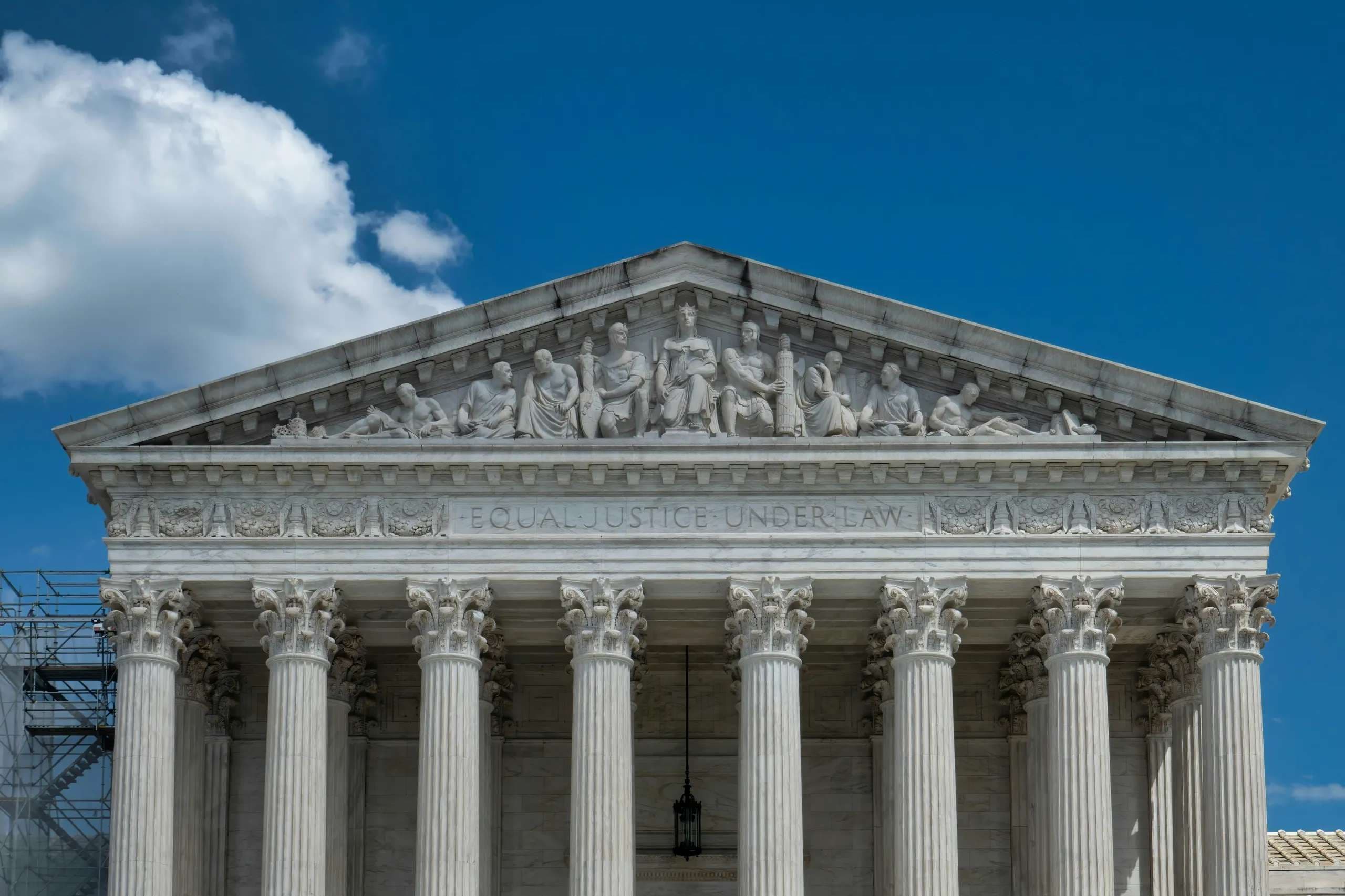
The Supreme Court ruled April 29 that Louisiana’s congressional map, which included a second majority-black district, is an “illegal” racial gerrymander, narrowing when states may intentionally draw majority-minority districts to comply with the Voting Rights Act of 1965.
In a 6-3 decision in Louisiana v. Callais, the high court held that the state’s 2024 map violated the Equal Protection Clause of the Fourteenth Amendment because race predominated in the drawing of district lines without sufficient justification.
Writing for the majority, Justice Samuel Alito said the map amounted to an “unconstitutional gerrymander, and its use would violate the plaintiffs’ constitutional rights.” He added that lower courts had interpreted the Voting Rights Act too broadly by requiring race-based districting.
Alito was joined by Chief Justice John Roberts and Justices Clarence Thomas, Neil Gorsuch, Brett Kavanaugh, and Amy Coney Barrett.
In dissent, Justices Elena Kagan, Sonia Sotomayor, and Ketanji Brown Jackson called the ruling a “now-completed demolition” of the law’s protections for minority voters.
The ruling does not overturn Section 2 of the Voting Rights Act, which was intended to protect minority voters from discrimination and has driven the creation of majority-minority districts. Instead, Alito described the court’s decision as an “update” to how the provision is applied, determining states must show a strong basis for concluding that federal law actually requires such districts before making race the driving factor in a map.
Louisiana Attorney General Liz Murrill, a Republican, praised the decision in a statement on X and said she would work with Republican Gov. Jeff Landry and the state legislature to “provide guidance as we move forward to adopt a constitutionally compliant map.”
“The Supreme Court has ended Louisiana’s long-running nightmare of federal courts coercing the state to draw a racially discriminatory map,” Murrill wrote. “That was always unconstitutional — and this is a seismic decision reaffirming equal protection under our nation’s laws.”
The case stems from a dispute over whether Louisiana was required to create a second majority-black congressional district after a lower court found its prior map — which included one majority-black district out of six — likely violated federal law. State lawmakers approved a revised map in 2024 to comply with that ruling, but challengers argued it relied too heavily on race. The justices first heard arguments in March 2025 and then deferred a decision and ordered a rehearing for October 2025.
The decision is expected to have implications beyond Louisiana, potentially affecting congressional districts and local election maps nationwide. According to The New York Times, Republicans could gain up to 12 more U.S. House seats across the south in future elections.
The Times reported it is “unclear” whether the ruling will affect the 2026 midterms, as primaries have already taken place in some states and filing deadlines have passed in others. Still, the decision could reshape maps for the 2028 cycle and beyond.
The ruling also comes as redistricting disputes intensify ahead of the 2026 midterm elections, with both parties pursuing maps in several states. In Florida, the state Legislature on April 29 passed a newly proposed congressional map, according to Politico. The new lines could give Republicans up to four U.S. House seats.





Comments