Weigel: WSJ political analysis of Pope Leo misses the mark
Catholic commentator and author George Weigel sharply criticized a recent Wall Street Journal profile of Pope Leo XIV, arguing that portraying the Pontiff primarily as a political opponent of President Donald Trump distorts his true mission of preaching Christ.

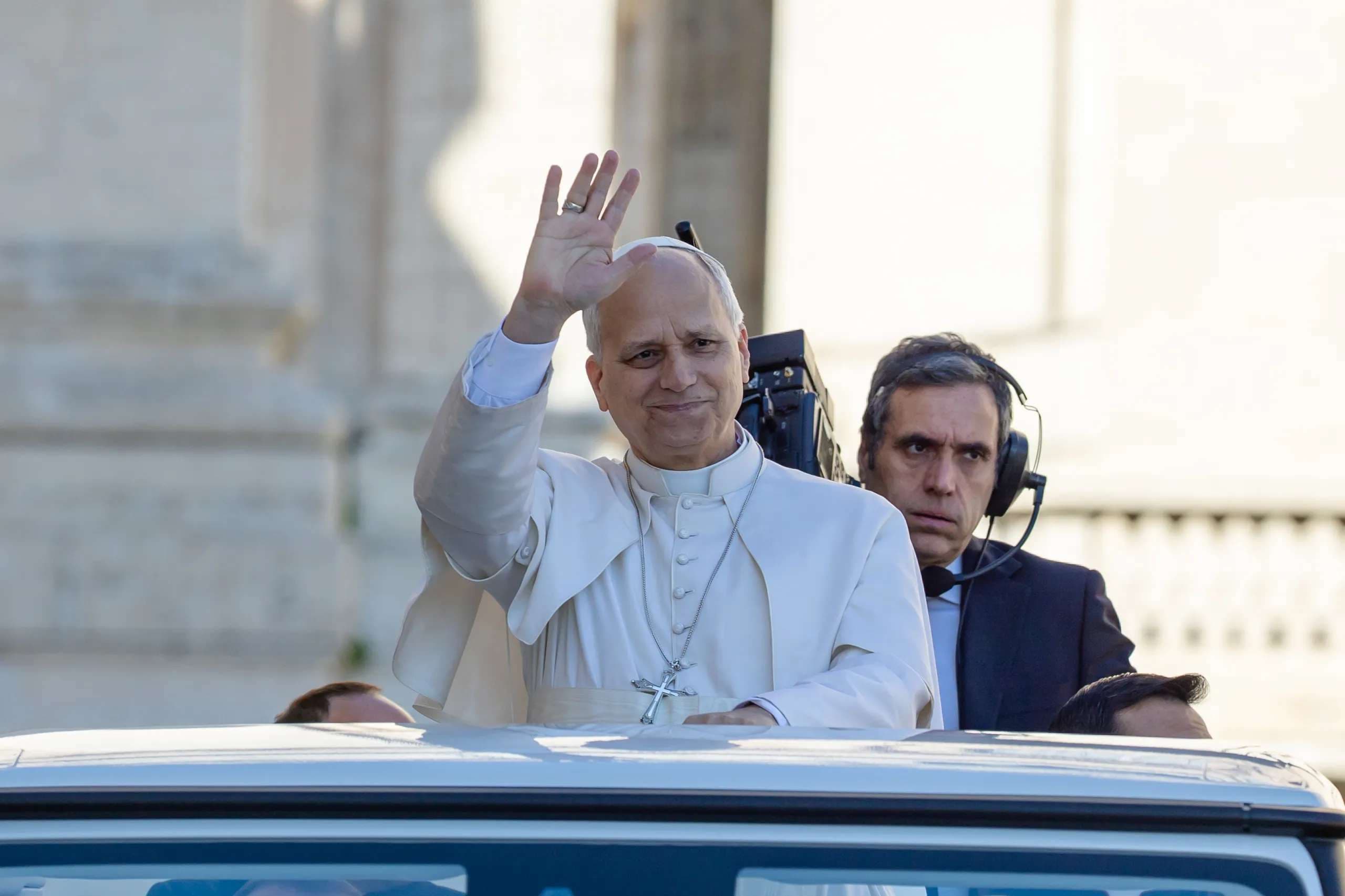
Catholic commentator and author George Weigel sharply criticized a recent Wall Street Journal profile of Pope Leo XIV, arguing that portraying the Pontiff primarily as a political opponent of President Donald Trump distorts his true mission of preaching Christ.
In an April 8 essay titled “What the Wall Street Journal Didn’t Print,” Weigel contended that the March 21 Journal “Saturday Essay” (which was published online March 20) — with the subtitle “Pope Leo XIV pushes back against President Trump. Can the pontiff from Chicago make a difference in an era of power politics?” — reduces a complex religious leader to a one-dimensional foil. He said the article portrayed the Pope “as the over-against of the president, with Leo’s statements and actions filtered through that primarily political analytic prism.”
Weigel, a senior fellow of the Ethics and Public Policy Center, likened the approach to framing the Dalai Lama as the antithesis of Chinese leader Xi Jinping, or to framing Rabbi Meir Soloveichik as the counterpoint to New York Mayor Zohran Mamdani.
“Would that get you inside the mind and heart of the leader of an ancient, complex religious tradition?” he asked of the Dalai Lama example. “Of course not.”
Turning to his example of a rabbi as the opposite of Mamdani, he added, “Would that reveal the essential truths about America’s leading exponent of Modern Orthodoxy? Of course not. So why frame Pope Leo XIV as the un-Trump?”
Weigel noted that Trump’s dominance in the media since 2015 has warped coverage of nearly everything — including the papacy.
“Is there anything that isn’t to be parsed or explained by reference to him?” he said of Trump. “This obsession distorts reality. It certainly distorts the reality of Pope Leo, who has insisted that his mission is to preach Christ and invite others into friendship with him."
Weigel said he had email exchanges with one of the essay’s authors before it was published. The reporter, he said, had sought from Weigel a “conservative American perspective” on several Catholic issues. Weigel obliged but said that none of his responses — which he reprinted in his essay — appeared in the final article.
First, Weigel was asked whether Pope Leo had succeeded in reducing tensions between progressive and conservative Catholics. Weigel said in response that the Pope is “very much his own man, and very much a man committed to the fullness of the Catholic truth.” Slotting him into outdated ideological boxes, he said, makes no sense.
“Normality has certainly returned to the patterns of governance in the Vatican, and that is a very good thing,” Weigel added.
Addressing U.S. bishops’ criticism of the Trump administration’s immigration policies, Weigel said the Pope and bishops have offered moral, not political, arguments “in an evolving situation in which the Administration is constantly moving the goal posts.”
“Perhaps when the Administration settles on a stable immigration policy with achievable goals,” he said, “a real conversation about real-world alternatives — and the moral implications of each — can be engaged.”
The reporter then asked Weigel whether the Holy Father is “right to insist on dialogue and mediation, multilateralism and international law, and to denounce a ‘zeal for war.’”
“I hope that, as his pontificate unfolds, Pope Leo will institute a bottom-up review of Vatican thinking about the dynamics of 21st-century world politics and how the Holy See best responds to them as a moral witness and teacher,” Weigel responded.
In response to a follow-up question about just war theory and what direction a bottom-up review should take, Weigel proposed grounding any discussion in Saint Augustine’s concept of peace as “the tranquility of order,” which consists of security, justice, and freedom.
"As a son of St. Augustine, Pope Leo should be in a strong position to initiate that broader discussion, and then help ‘fit’ a renewal of the just war tradition of moral reflection (which addresses the complex question of how the proportionate and discriminate use of armed force can help restore or establish that peace) into the conversation.”

Comments