Pope Leo XIV at Easter Vigil: God answers the hardness of sin with the power of His love
During the Easter Vigil on Holy Saturday, April 4, 2026, at St. Peter’s Basilica, Pope Leo XIV reminded Catholics around the world that God responds to the destructive hardness of sin not with abandonment, but with a love powerful enough to unite what sin divides and restore what sin wounds.
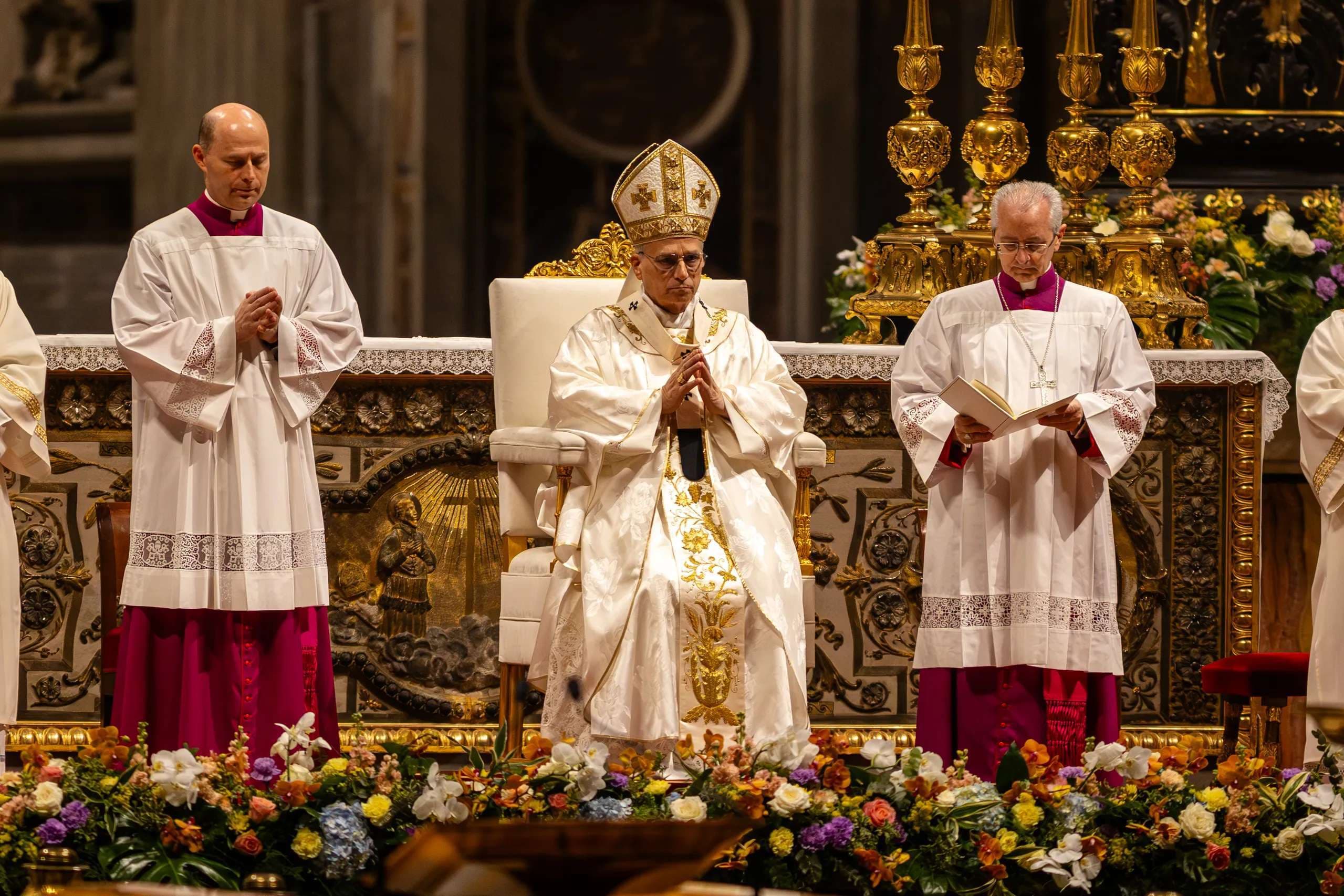
During the Easter Vigil on Holy Saturday, April 4, 2026, at St. Peter’s Basilica, Pope Leo XIV reminded Catholics around the world that God responds to the destructive hardness of sin not with abandonment, but with a love powerful enough to unite what sin divides and restore what sin wounds.
During the liturgy — the longest and most symbol-laden celebration of the Catholic calendar — the Pope received 10 adults into the Catholic Church, conferring on them the sacraments of Baptism, Confirmation, and First Holy Communion.
Reflecting on the light of the Paschal Candle at the start of the Vigil, Pope Leo said the faithful had all received their flames from the same fire, a sign of the risen Christ’s power to gather His people into one.
“From this single Candle, we have all lit our own lights; and, each bearing a small flame drawn from that same fire, we have illuminated this great Basilica,” the Pope said. “It is a sign of the Paschal light, which unites us within the Church as lamps for the world.”
The Pope described the Easter Vigil as the Church’s great proclamation of Christ’s victory over death, following the Passion of the One who became for our sake a “man of sorrows,” “despised and rejected by men,” tortured and crucified. Yet the Cross, he said, is also the fullest revelation of divine charity.
“Is there any greater charity? Any more total self-giving?” Pope Leo asked. “The Risen One is none other than the Creator of the universe who, just as, at the dawn of history, He called us into existence out of nothing, so too, upon the Cross, in order to demonstrate His boundless love for us, He bestowed upon us the gift of life.”
Tracing the arc of salvation history through the 14 Vigil readings, the Pope recalled creation, Abraham, the Exodus, and the prophets, showing how God repeatedly meets human failure with mercy. Even after man failed to answer God’s plan through sin, Leo said, “the Lord did not abandon him; rather, He revealed His merciful face to him -in forgiveness- in an even more surprising way.”
At the center of the homily was the Pope’s clearest theological claim: “In all these moments of salvation history, we have seen how God, confronted by the hardness of sin, which divides and kills, responds with the power of love, which unites and restores life.”
Pope Leo then turned to St. Matthew’s account of Easter morning, describing sin as “a heavy barrier that confines us and separates us from God, attempting to stifle within us His words of hope.” But the women who went to the tomb did not allow fear and grief to stop them. Through faith and love, they became the first witnesses of the Resurrection.
“In the earthquake and in the angel seated upon the overturned stone, they beheld the power of God’s love; a love stronger than any power of evil, capable of ‘driving out hatred’ and ‘bringing the mighty to their knees,’” the Pope said. “Man may kill the body, but the life of the God of love is eternal life; it transcends death, and no tomb can hold it captive.”
The Pope insisted that this is not only the Church’s Easter message, but her mission in the world today. “This, too—dear brothers and sisters—is our message to the world today,” he said, calling Christians to bear witness “through words of faith and deeds of charity,” and to proclaim with their lives the “Alleluia” they sing with their lips.
He also connected that mission to the 10 adults who entered the Church during the liturgy, saying those baptized were “reborn in Christ to become new creatures,” witnesses to the Gospel.
In the homily’s closing section, Pope Leo applied the Resurrection to the wounds of the present age. “Even in our own day, there is no shortage of tombs to be opened,” he said, naming “mistrust, fear, selfishness, and resentment,” as well as “war, injustice, and the isolation of peoples and nations,” as the stones that still imprison hearts and societies.
“Let us not allow them to paralyze us!” Instead, he urged the faithful to draw strength from the grace of the Risen Christ so that “everywhere and always, throughout the world, the Paschal gifts of harmony and peace may grow and flourish.”
Comments