Pope Leo celebrates his first Holy Thursday Mass of the Lord's Supper
Presiding over the Mass of the Lord’s Supper at the Basilica of Saint John Lateran, Pope Leo XIV said Jesus’ act of washing His disciples’ feet reveals God’s power in service rather than dominance.

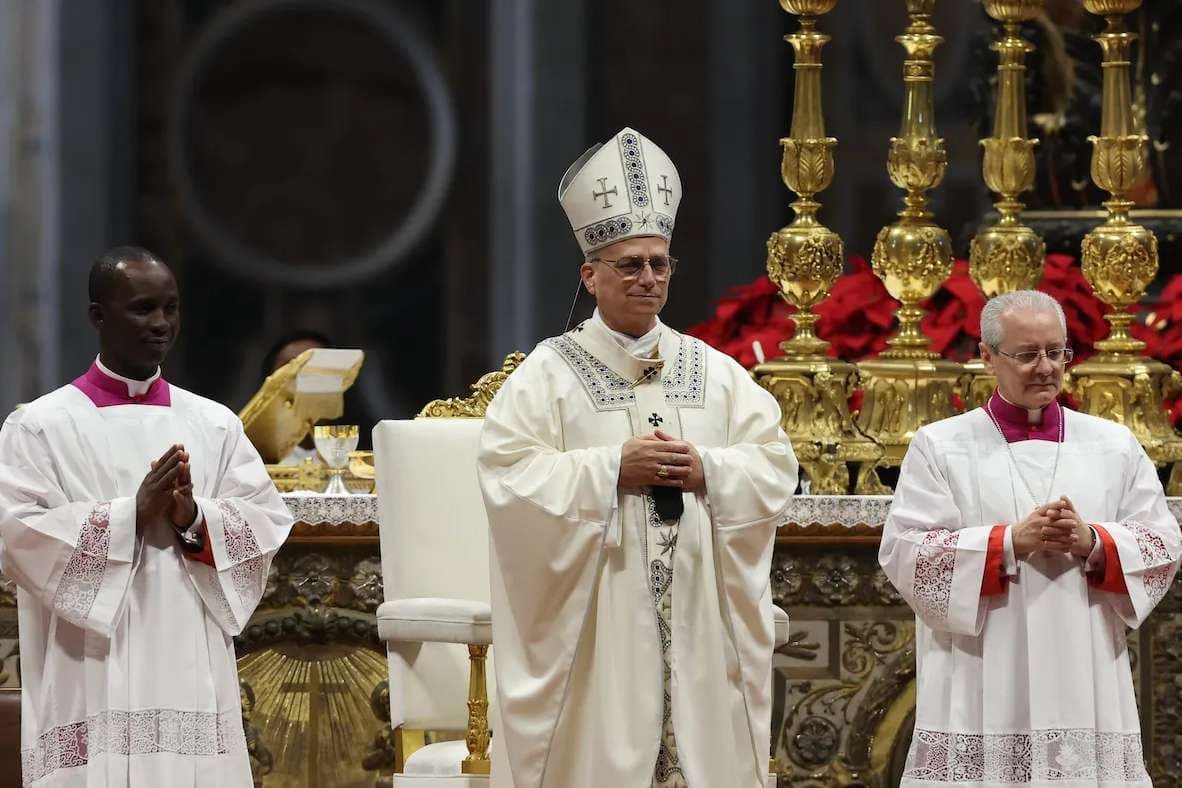
Presiding over the Mass of the Lord’s Supper at the Basilica of Saint John Lateran, Pope Leo XIV said Jesus’ act of washing His disciples’ feet reveals God’s power in service rather than dominance.
As Holy Thursday commemorates both the institution of the Eucharist and the institution of the priesthood, the Mass of the Lord’s Supper often includes the washing of feet, a ritual reenacting Jesus washing the feet of His apostles as recounted in the Gospel of John.
Pope Leo washed the feet of 12 priests at the Basilica, marking his first Holy Thursday as pontiff with a rite that had not featured priests since 2012.
As Zeale News previously reported, the late Pope Francis expanded the footwashing to include prisoners, migrants, women, and non-Catholics during his pontificate. Pope Leo’s return to washing the feet of clerics came alongside a homily that drew on the Gospel’s account of the Last Supper.
“We cross this threshold not as mere spectators,” the Pope said, but as those “personally invited by Jesus Himself” to a banquet where “His love becomes both gesture and nourishment for all.”
Centering his message on Christ’s washing of the apostles’ feet, the Holy Father said the act was not simply symbolic; it serves as a model for Christian life that overturns worldly conventional ideas of power and success.
“By taking on the condition of a servant, the Son reveals the Father’s glory, overturning the worldly standards that so often distort our conscience,” the Pontiff said.
He quoted Pope Benedict XVI's 2008 Holy Thursday homily on the human tendency to expect a triumphant God rather than a suffering one.
"We systematically desire a God of success and not of the Passion," Pope Benedict said. Pope Leo cited the line as a candid acknowledgment that "we are always tempted to seek a God who 'serves' us, who grants us victory, who proves useful like wealth or power.”
He emphasized instead that God’s greatness is revealed through humble service.
“This is the true omnipotence of God,” he said, pointing to Christ kneeling before His disciples.
"We tend to consider ourselves powerful when we dominate, victorious when we destroy our equals, great when we are feared," Pope Leo said. "In contrast, as true God and true Man, Christ offers us the example of self-giving service and love."
The Pope also directly addressed the current condition of the world midway through his homily.
"As humanity is brought to its knees by so many acts of brutality, let us too kneel down as brothers and sisters alongside the oppressed," he said.
He spoke of Christ's love as unconditional and offered freely, prior to any human response.
"The Lord's love precedes our own goodness or purity; He loves us first, and in that love, He forgives and restores us," the Holy Father said. "His love is not a reward for our acceptance of His mercy; instead, He loves us, and therefore cleanses us, thereby enabling us to respond to His love."
Toward the close of the homily, Pope Leo turned to the theology of Holy Orders, noting that Holy Thursday commemorates both the founding of the Eucharist and of the priesthood. He cited the Second Vatican Council's constitution Sacrosanctum Concilium, calling the Eucharist "a sacrament of love, a sign of unity, a bond of charity, a paschal banquet in which Christ is received, the mind is filled with grace, and a pledge of future glory is given to us."
He addressed the priests gathered in the basilica directly, saying that through the priesthood, “there is made present the sign of His charity towards the whole People of God.”
"Beloved brothers in the priesthood,” he told them, “we are called to serve the People of God with our whole lives.”

Comments