‘Why I’m Done’: Retired Notre Dame professor says university is failing its Catholic mission
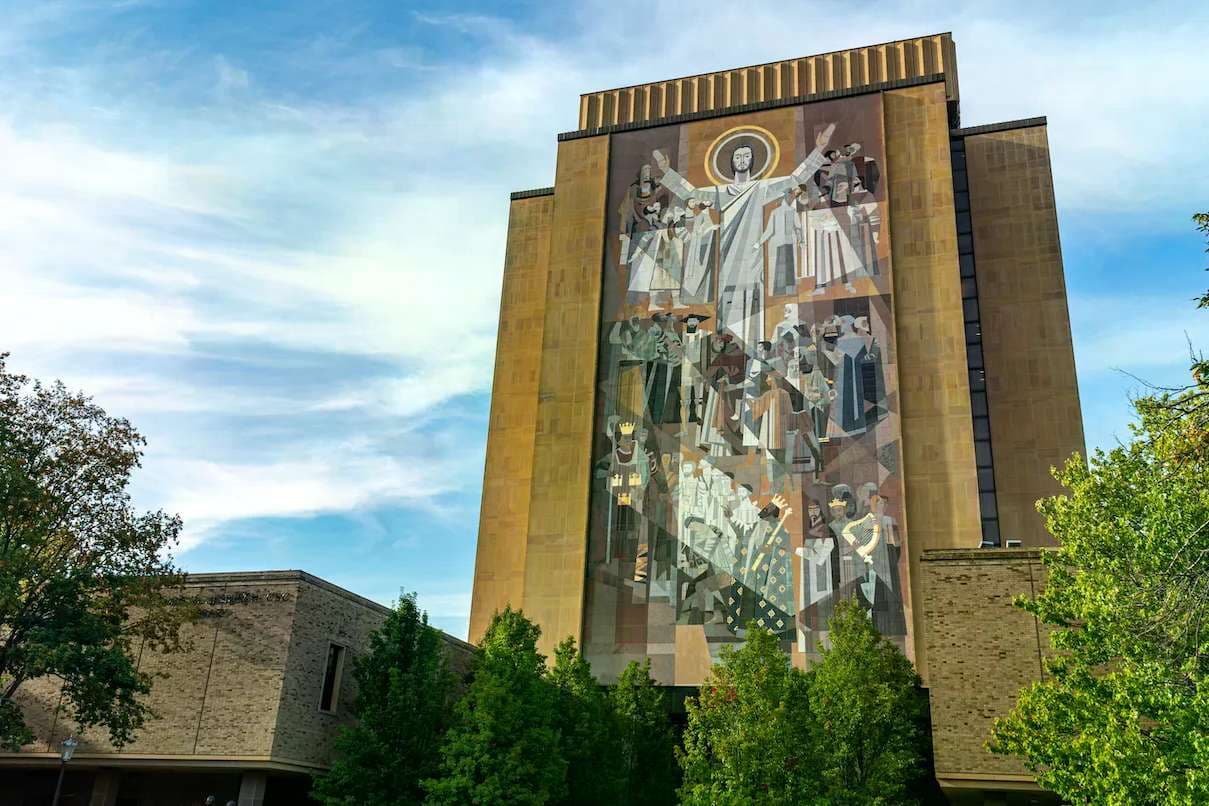
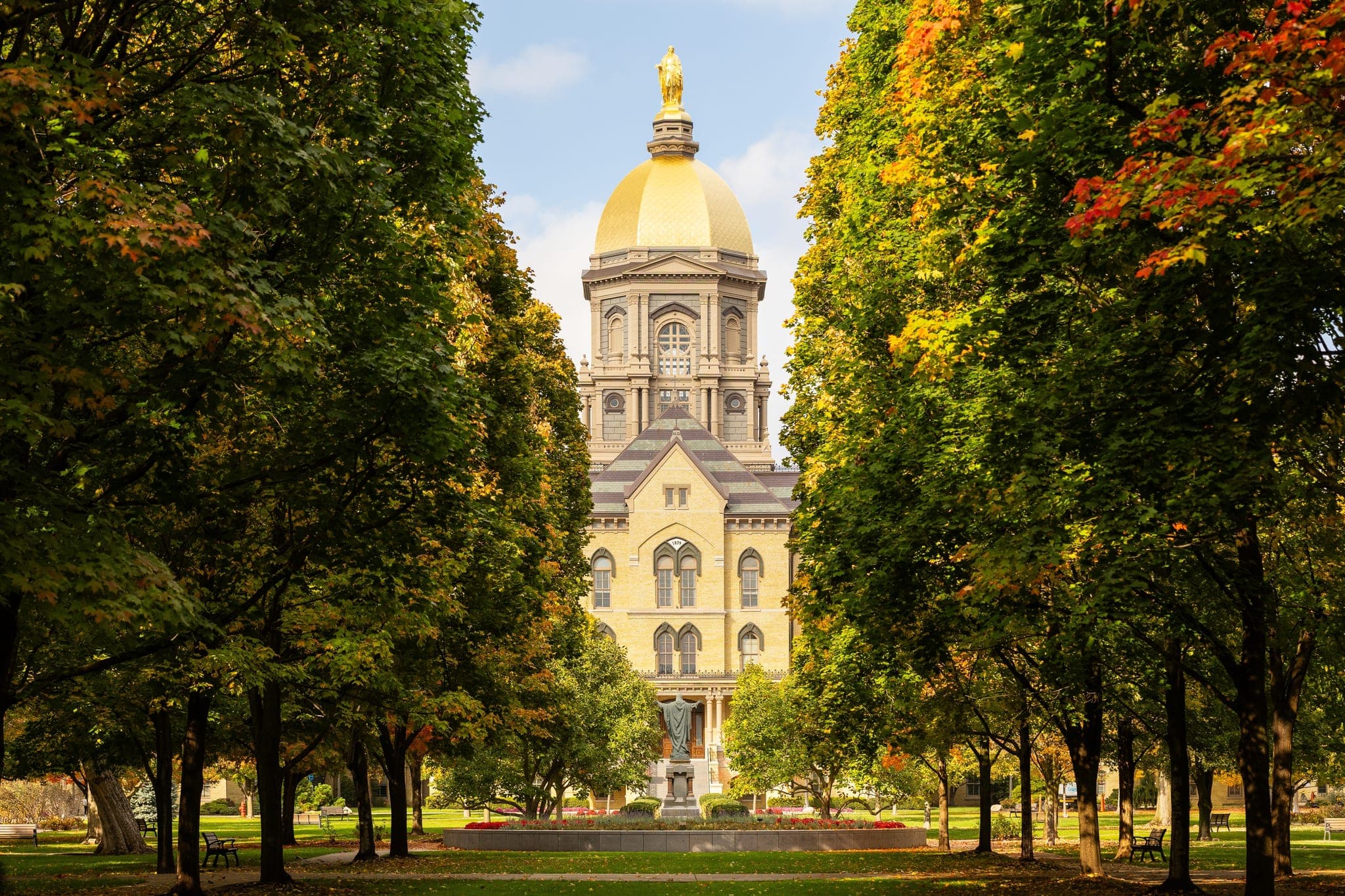
Christian Smith, a longtime University of Notre Dame sociology professor, wrote in an essay published Feb. 13 that he left the institution at the end of 2025 after two decades on the faculty because he believes it has failed to live up to its Catholic mission.

Christian Smith, a longtime University of Notre Dame sociology professor, wrote in an essay published Feb. 13 that he left the institution at the end of 2025 after two decades on the faculty because he believes it has failed to live up to its Catholic mission.
Smith’s essay, “Why I’m Done with Notre Dame,” was published in First Things. It comes amid heightened scrutiny of Notre Dame’s Catholic identity in the wake of its announcement in January that it had appointed pro-abortion professor Susan Ostermann as director of the Liu Institute for Asia and Asian Studies. She is slated to take the position in July.
Several bishops, students, campus groups, and former faculty have criticized the decision. On Feb. 13, the president of the U.S. Conference of Catholic Bishops (USCCB) joined a growing chorus of voices speaking up in support of Fort Wayne-South Bend Bishop Kevin Rhoades’ call for the university to reverse course on Ostermann’s appointment.
Smith wrote that his decision to leave stemmed from longstanding concerns about the university’s direction.
“I retired from the University of Notre Dame at the end of 2025. More accurately, I left,” he wrote at the outset of the essay.
Smith, 65, said he held an endowed chair, was well funded in his research, enjoyed teaching and mentoring students, and was publishing some of the best work of his career, all while earning what he described as an enviable salary.
“Almost any faculty member similarly situated would continue working five, ten, or fifteen more years,” he wrote.
Instead, Smith left “not happily, not with a sense of fulfillment or closure, but disappointed and vexed.”
Smith argued that his departure stemmed from what he described as a gap between what he directly experienced at Notre Dame on the one hand and the university’s official commitments to its Catholic identity on the other.
Intellectual life and academics: ‘Where Notre Dame largely fails to be Catholic’
While commending Notre Dame’s liturgical life, campus chapels, and charitable initiatives, Smith argued that those features are not what ultimately define a Catholic university.
“A university’s heart and soul are not found primarily in its atmosphere, humanitarian efforts, or HR policies, but in its intellectual life,” he wrote. “Yet the intellectual life of the university is precisely where Notre Dame largely fails to be Catholic.”
According to Smith, Catholic identity must shape the university’s academic core — its research, teaching, and scholarly formation — not simply its worship life or campus culture.
“A Catholic university is Catholic only insofar as its scholars, however diverse their frameworks and methods, maintain a serious engagement with the Catholic intellectual tradition,” he wrote, arguing that the driving question should be how Catholic thought and the various academic disciplines inform and challenge one another.
He noted that Notre Dame’s leaders frequently articulate that same vision in official documents. The university’s mission statement calls on faculty to respect the institution’s objectives and enter into the kind of intellectual conversation that gives it character. The statement also states that scholars at a Catholic university have a particular responsibility to pursue the religious dimensions of human learning so that Catholic intellectual life can flourish across disciplines.
Smith contended that those aspirations are not consistently reflected in practice at the school.
“The central problem at Notre Dame is that these fine words are not acted upon in a remotely consistent and thoroughgoing manner,” he wrote. “Notre Dame’s leaders are equivocal about that Catholic mission and make decisions and pursue practices that undermine it.”
Faculty and the Catholic mission
University leaders have called for a “preponderance” of Catholic faculty and serious engagement with the Catholic intellectual tradition, but those goals are not consistently pursued in hiring, tenure, or faculty formation, according to Smith.
“In my experience, talk of ‘mission hires’ at departmental faculty meetings sometimes involves strategizing ways to recruit colleagues we want for reasons unrelated to Notre Dame’s Catholic mission, who might nevertheless pass ‘mission muster’ in the dean’s office,” he wrote.
He described what he called a “tick the box” approach to counting Catholic faculty, and said administrative reviews “scrutinize faculty research records but pay little attention to contributions to the Catholic mission.”
Fear, prestige, and research ambition
Smith also argued that fear of controversy has contributed to institutional drift at Notre Dame.
“Notre Dame’s leadership is petrified by the prospect of conflict,” he wrote, arguing that administrators often avoid disputes that might arise from asserting a distinct Catholic identity.
At the same time, he said, the university seeks acceptance among elite research peers.
“The second factor undermining the Catholic mission at Notre Dame is a craving for mainstream acceptance, especially by ‘peer’ institutions,” he wrote, listing universities such as Duke, Northwestern, and Stanford. “The ‘Catholic bit’ is an embarrassment.”
Smith further argued that Notre Dame’s push to become what it calls a “globally pre-eminent research university” has forced trade-offs that undercut its Catholic mission.
Drawing on the project-management concept known as the “Iron Triangle,” he wrote that institutions typically cannot maximize three goals at once without sacrificing one. In Notre Dame’s case, he said, the university is trying to combine elite undergraduate education, rapid research expansion, and a deeply integrated Catholic intellectual identity — an effort he believes cannot be sustained all at once.
According to Smith, building a top-tier research faculty requires intense specialization, heavy publication demands, and competition within secular academic norms. He argued that asking faculty to also devote significant time and intellectual energy to engaging the Catholic intellectual tradition places them at a disadvantage compared with peers at secular institutions focused solely on research productivity.
“Notre Dame admits that its project is ‘ambitious.’ It should rather admit that it is impossible,” he wrote, contending that “the imperatives of Catholic mission are impediments to the success of a modern research university.”
Marketing and identity
Beyond mission concerns, Smith criticized the school for trying to pursue its “out-of-control branding, marketing, public relations, social media, fashion line, entertainment, and merchandizing” on top of everything else. He pointed to changes in the campus bookstore and high-profile events, writing that Notre Dame “increasingly operates in a world of curated appearances with little connection to academia or Catholicism.”
“I love the motto of my former state of North Carolina: Esse Quam Videri, ‘To be rather than to seem,’” he wrote. “Notre Dame’s public image and marketing machine promotes the opposite imperative, ‘To seem rather than to be.’”
Smith's warning
Smith reported that he also experienced what he called a thinning of intellectual life, with faculty “too harried — by careerist competition and bureaucratic demands — to sit down and talk ideas.”
“Goal displacement is happening at every university,” he wrote. “But it is acute at Notre Dame — and deleterious to its Catholic mission.”
Smith emphasized that his critique is not partisan.
“None of my analysis privileges Catholic conservatives over liberals, or even religious people over secularists,” he wrote. “I’m concerned about the integrity of a distinctive institution, not positions on a political or theological spectrum.”
He added that “the most fundamental issue at stake is not gays or abortion, but serious engagement with the Catholic intellectual tradition in academic work.”
In closing, Smith wrote that whether Notre Dame realizes or squanders its opportunity “to become a genuinely Catholic university — that is on Notre Dame.”
“I am certain that the last thing the world needs is yet another pretty-good-but-not-great research university, ‘Catholic’ or otherwise,” he wrote. “For those who still care about Notre Dame, perhaps this postmortem will be of value. But I advise: Don’t get your hopes up.”

Comments